Canada Reaffirms Support for Yemen’s Sovereignty Amid Concern Over Unauthorized Iranian Flights
 Yemen Herald News
Canada has reaffirmed its support for the sovereignty of Yemen’s internationally recognized government and raised concern over unauthorized Iranian flights into the country, aligning Ottawa with a growing group of states that have criticized attempts to operate air links into Houthi-held territory without the approval of the state’s legitimate institutions.
The statement lands amid the most serious confrontation over Yemen’s airspace in years. On Monday, July 13, the armed forces of the internationally recognized government said they struck the runway of Sanaa International Airport to prevent an Iranian passenger aircraft carrying a senior Houthi delegation from landing in the Houthi-held capital without state authorization. The government briefly closed every airport under its control that day before reopening them, and its civil aviation authority has since reiterated that all operators must obtain prior permission before entering Yemeni airspace.
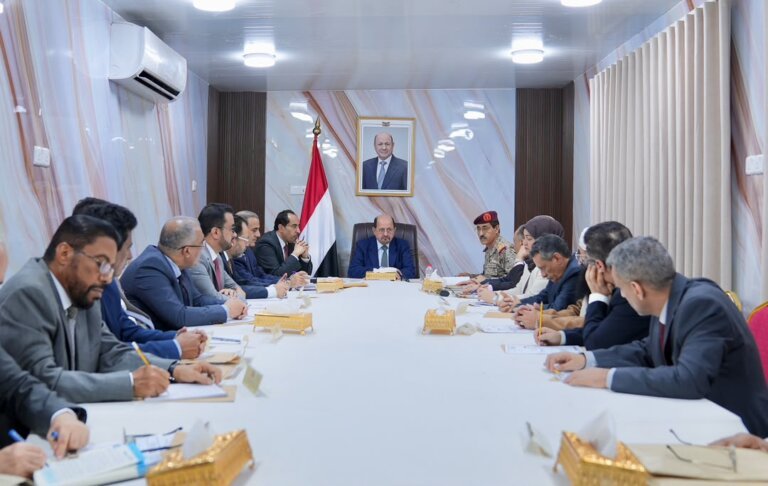
Yemen’s Presidential Leadership Council, chaired by President Rashad al-Alimi and seated in Aden, has framed the dispute as a matter of national sovereignty rather than a quarrel over a single airport. The council says it rejects any Iranian flights to Sanaa outside approved legal frameworks and has pledged political, diplomatic and military measures to prevent what it describes as attempts to violate the country’s sovereignty and impose outside influence beyond the authority of the state.
Canada’s statement also expressed solidarity with Saudi Arabia in the face of threats from the Houthi movement. The Houthis blamed Riyadh for the strike on the Sanaa runway, and the group’s military spokesman, Yahya Sarea, warned that the attack would not go unanswered. A spokesman for the Saudi-led coalition said that Saudi air defenses had responded to ballistic missiles launched by the Houthis toward the kingdom’s southern regions.
Ottawa’s posture rests on a formal legal foundation. On December 2, 2024, the Government of Canada listed Ansarallah, as the Houthi movement is officially known, as a terrorist entity under the Criminal Code. The listing prohibits dealings related to terrorist financing, travel and recruitment, and official documents noted the group’s close links to Iran’s Islamic Revolutionary Guard Corps-Qods Force and to Hezbollah, both of which Canada had already designated. The addition brought the number of entities on the Canadian list to 79.
That designation followed the Houthi campaign against commercial and naval vessels in the Red Sea and Gulf of Aden, which began in November 2023 and disrupted traffic through the Bab al-Mandab strait, one of the world’s busiest shipping chokepoints. Canadian officials cited those attacks, along with strikes against Israel, when explaining the decision. For Western governments, the security of the southern Red Sea corridor has become inseparable from the question of who controls Yemen’s territory and skies.
The wider war dates to late 2014, when the Houthis seized the capital, prompting a Saudi-led coalition to intervene the following March in support of the government. A truce brokered by the United Nations in April 2022 sharply reduced front-line fighting, and although it formally lapsed, its main provisions have continued to shape the conflict. The current confrontation over flights is widely seen as the most serious test of that fragile calm in years.
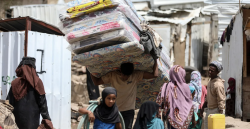
Behind the diplomacy stands a humanitarian emergency that remains among the world’s most severe. According to United Nations estimates, more than 18 million people in Yemen need humanitarian assistance and some 4.5 million remain internally displaced, while recurring outbreaks of cholera and measles strain a health system hollowed out by more than a decade of war. Aid agencies have warned that renewed escalation would deepen the suffering of civilians on every side of the front lines.
The government argues that the stakes of the flight dispute go beyond protocol. Officials in Aden have warned that an unregulated air bridge between Tehran and Sanaa could be used to escalate the supply of weapons and personnel to the Houthis, and they have demanded an international inquiry into the Iranian flight at the center of the crisis. The Houthis, who say the aircraft was returning members of their delegation from Tehran, accuse Saudi Arabia of carrying out the strike on the airport.
Canada is not alone in its criticism. The United Kingdom told the United Nations Security Council that Iranian flights to Yemen breach the country’s sovereignty, according to Yemeni official media, and governments including Sudan and Greece have voiced similar positions in recent days. Canadian aviation authorities, like their British, French, German and Italian counterparts, have long warned operators against flying over Yemeni territory, reflecting assessments that its airspace remains among the most hazardous in the world.
United Nations Special Envoy Hans Grundberg has urged restraint, warning against a slide into a new cycle of violence and pressing the parties to return to dialogue under United Nations auspices. He has also welcomed a Jordanian initiative, announced on July 17, to resume regular commercial flights between Amman and Sanaa, a step widely seen as an attempt to keep civilian aviation insulated from the political standoff.
For Canada, the reaffirmation of support carries both symbolic and practical weight. Ottawa has contributed humanitarian funding to the response in Yemen throughout the war and frames its position around the defense of recognized institutions and international law. Whether mounting international pressure translates into de-escalation will depend on decisions taken in the region’s capitals in the weeks ahead, but the Yemeni government now counts one more G7 member publicly behind its claim to exclusive authority over the country’s skies.
About the Author