Yemen’s Ambassador to Turkey Meets TİKA Chief to Prepare 8 August Forum in Ankara
 Yemen Herald News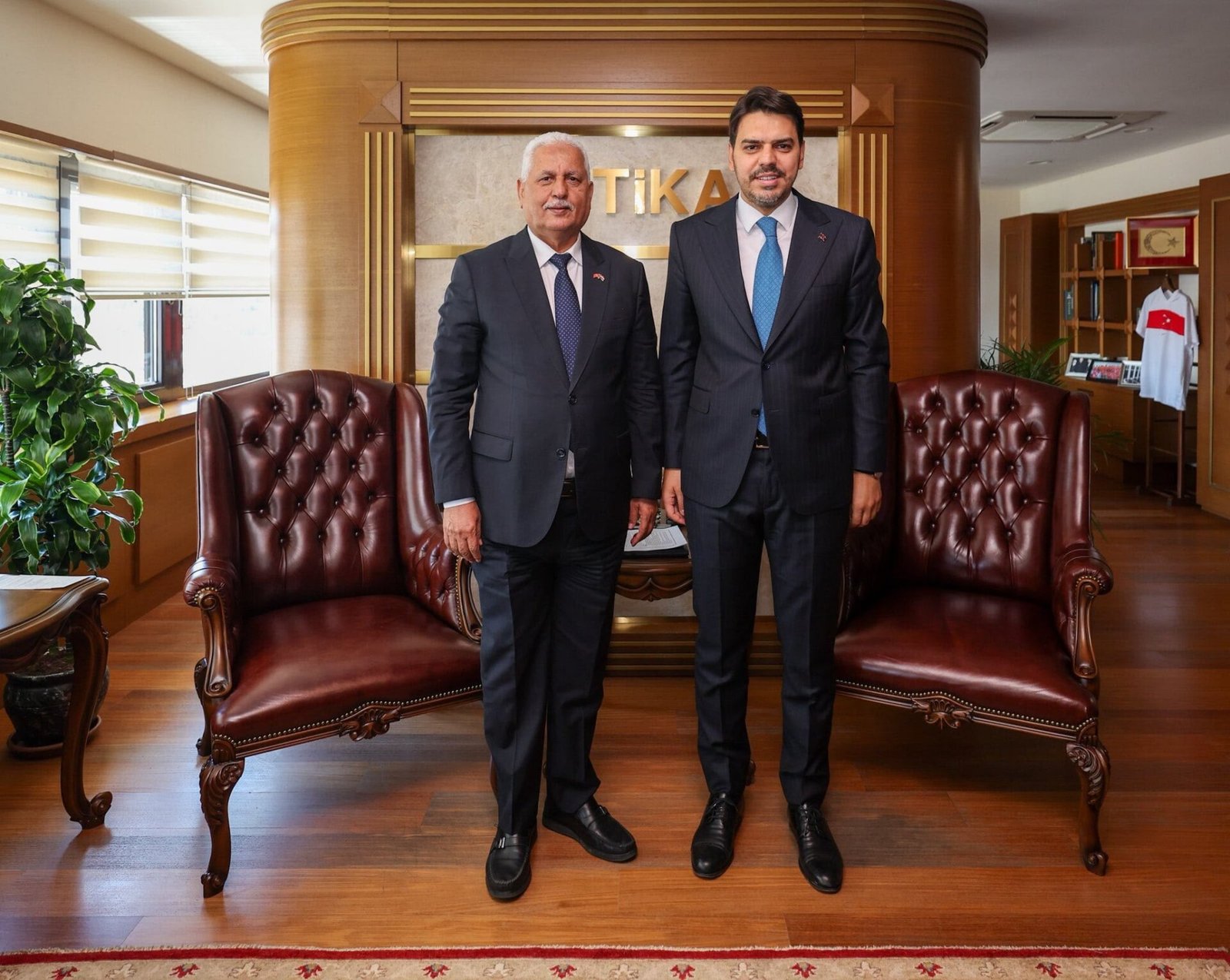
Yemen’s ambassador to Turkey, Mohammed Tareiq, met the head of the Turkish Cooperation and Coordination Agency (TİKA) on Saturday to discuss preparations for a Yemeni-Turkish forum scheduled to be held in Ankara this month, the state news agency Saba reported. The meeting covered the forum’s agenda as well as the development and humanitarian programmes the Turkish agency runs inside Yemen.
According to Saba’s account, the forum is due to take place on 8 August in the Turkish capital under the theme “Paths of History and Prospects for a Shared Future.” The agency said the event is intended to draw attention to the historical relationship between the two countries and to identify openings for cooperation in economic, developmental, cultural and humanitarian fields. Neither government has published a detailed programme, and no participant list has been announced.
TİKA has been led since July 2025 by Abdullah Eren, appointed to the presidency of the agency by presidential decree on 11 July that year. Eren previously headed the Presidency for Turks Abroad and Related Communities, a post he took up in October 2018, and before that served as chief adviser to the president and deputy chief of staff to the prime minister. He holds a sociology degree from Boğaziçi University and a master’s in diplomatic studies from the University of Westminster in London. Saba’s English-language report gave a different rendering of the agency head’s name; TİKA’s own published record names Eren as its president.
The agency is Turkey’s principal channel for development assistance abroad. It operates under the Ministry of Culture and Tourism and runs programmes in more than 150 countries, concentrating on health, education, agriculture, water and small-scale infrastructure rather than large capital projects. That profile has made it one of the more visible instruments of Turkish engagement in countries where conventional diplomatic and commercial activity is constrained.
In Yemen, TİKA opened a programme coordination office in Sanaa in 2012, before the current war began. Turkish state media reported that the agency completed more than 90 projects and humanitarian activities in the country over the following six years, concentrated in health, education, agriculture and infrastructure. Among the better-documented interventions were four dialysis centres established in 2013 in Sanaa, Aden, Taiz and Hodeidah, and field hospitals set up in Aden and Taiz. In 2017 the agency contributed to a shipment that reached the port of Aden carrying medicines and equipment for cholera treatment alongside food and relief supplies, delivered in coordination with the Turkish Red Crescent and Turkey’s disaster management authority, AFAD. Turkish figures put total aid deliveries to Yemen in 2016 at more than 5,400 tonnes, including food, medical supplies and shelter materials, coordinated through TİKA and AFAD.
Saba said Tareiq also met Gözde Şahinen, who heads the agency’s European Union and foreign relations department, to discuss cultural cooperation between the two countries and programmes that might be presented at the forum. That strand of the discussion suggests the Ankara event is meant to cover more than aid delivery, although no specific cultural initiative has been made public.
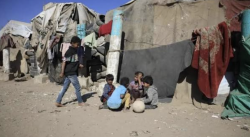
The forum is being arranged against a severe humanitarian backdrop. The most recent Integrated Food Security Phase Classification analysis found roughly five million people in government-controlled areas of Yemen, about 47 percent of that population, facing crisis levels of acute food insecurity or worse, with 1.4 million of them in emergency conditions. United Nations agencies project that the total will rise to about 5.4 million, or 51 percent, during the June-to-September lean season, and that the number in emergency conditions will reach 1.8 million in the final quarter of the year.
Those projections are driven less by fighting than by economic deterioration and shrinking assistance. Aid agencies have pointed to weak purchasing power, a falling currency, high agricultural input costs and a sharp decline in humanitarian funding after the cuts of early 2025. On currently confirmed funding, only about 1.7 million people in government-controlled areas are slated to receive food assistance, a fraction of the number assessed as needing it. These figures cover government-held territory only; areas under Houthi control are assessed separately.
The historical framing the forum has adopted points to a long and uneven connection. Ottoman authority extended over parts of Yemen at intervals from the sixteenth century until the empire withdrew after the First World War, and a Turkish memorial cemetery in Sanaa survives from that period. A Turkish expatriate presence rebuilt from the 2000s around construction, trade and non-governmental work in Sanaa and Aden, though the war has since curtailed much of that activity.
Turkey has maintained relations with Yemen’s internationally recognised government throughout the conflict while keeping wider channels open across the region. Gatherings of this kind allow both sides to register continued engagement without committing to specific undertakings, and the practical test of the Ankara meeting will be whether it yields named projects with funding attached rather than a restatement of goodwill.
For a government that has struggled to sustain basic services and pay salaries amid currency depreciation and reduced revenue, external development partners carry weight beyond the sums involved. Whether the 8 August forum moves past commemorating a shared past to addressing that immediate need will not be clear until its outcomes are published.
About the Author