Yemen’s Foreign Minister and UN Envoy Discuss Houthi Threats to Red Sea Shipping
 Yemen Herald News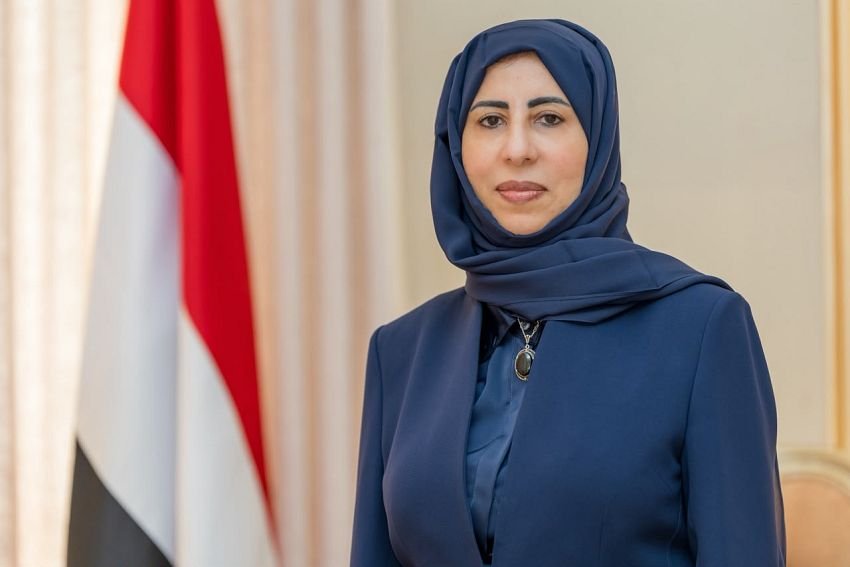
On Wednesday, Yemen’s Minister of Foreign Affairs and Expatriates, Dr Afrah al-Zouba, held a virtual meeting with the United Nations Special Envoy for Yemen, Hans Grundberg, to review the political and humanitarian situation in the country. The talks centred on the Houthi movement’s continued military escalation and on the group’s attacks against commercial shipping in the Red Sea, which Yemen’s internationally recognised government says have turned the waterway into a theatre for a conflict most Yemenis never chose.
Al-Zouba told the envoy that attacks on merchant vessels carry consequences far beyond the immediate danger to crews and cargo. Disrupted shipping raises freight and insurance costs across the region, and Yemen — a country that imports the overwhelming majority of its food, fuel and medicine — absorbs much of that increase. The government argues that the Houthis, who are backed by Iran, are using Yemen’s position on one of the world’s busiest trade routes to serve interests that are not Yemeni, and that ordinary people pay for it in higher prices and thinner aid pipelines.
The minister also raised what she described as the group’s obstruction of measures agreed in earlier rounds of UN-brokered talks, including the resumption of civilian flights through Sana’a International Airport and the completion of prisoner and detainee exchanges. She accused the movement of treating humanitarian files as bargaining chips and of using periods of relative calm to rebuild military capacity rather than to advance negotiations. Those characterisations reflect the government’s position; the Houthis have consistently rejected them and blame the government and its regional backers for the impasse.
Al-Zouba argued that a reduction in fighting should not be mistaken for progress. A quieter front line, she said, is only useful if it opens space for political dialogue that deals with the causes of the war rather than freezing it in place. She called on the international community to apply sustained pressure on the Houthis to meet commitments already made, and to keep humanitarian access separate from political leverage. Officials have argued that lulls in the fighting are too often read as improvement.
Grundberg congratulated al-Zouba on her appointment and briefed her on his recent consultations with Yemeni and regional interlocutors. He stressed the importance of insulating Yemen from wider regional escalation and of building an inclusive political framework — one that reflects the range of Yemeni constituencies rather than only the parties holding the most weapons. The envoy, who has held the post since 2021, has spent much of the past two years trying to revive a roadmap that was close to agreement before Red Sea attacks and retaliatory strikes derailed it.
The meeting was among the first substantive exchanges between the envoy’s office and Yemen’s new foreign minister. Al-Zouba was named to the post by presidential decree on 23 July 2026 by Rashad al-Alimi, chairman of the Presidential Leadership Council, in a limited cabinet reshuffle. She is the first woman to serve as Yemen’s foreign minister, taking over a portfolio that had been held by Shaya Mohsen al-Zindani.
Her appointment drew attention beyond Yemen partly because of that precedent and partly because of her record outside conventional diplomacy. Al-Zouba spent more than two decades in public administration and international development before entering the cabinet as minister of planning and international cooperation earlier in 2026. She previously led the body responsible for coordinating donor pledges and reform programmes, work that put her in regular contact with the World Bank, the International Monetary Fund and the Saudi Development and Reconstruction Programme for Yemen.
She also has a background in the political process that followed Yemen’s 2011 uprising, serving as deputy secretary-general of the National Dialogue Conference and sitting on the committee that drafted a new constitution, a document overtaken by the Houthi takeover of Sana’a. She holds a pharmacy degree from Sana’a University and master’s degrees in business administration and in community health economics.
The file she inherits is unusually crowded. United Nations agencies estimate that more than 18 million people in Yemen need some form of humanitarian assistance and that roughly 4.5 million remain displaced inside the country, with recurring cholera and measles outbreaks compounding the strain on a health system that has operated for years on partial funding. Aid appeals for Yemen have repeatedly closed well short of their targets, forcing agencies to ration what they deliver. The economic picture is no easier: a collapsed currency, unpaid public salaries and disrupted oil exports have left much of the population dependent on remittances and assistance.
Running alongside that is the maritime question. Yemen’s western coastline sits opposite the Bab al-Mandab Strait, the narrow entrance to the Red Sea through which a substantial share of Europe–Asia trade passes. Attacks on shipping there since late 2023 have pushed many operators to route vessels around southern Africa, adding time and cost to voyages and cutting traffic through the Suez Canal. That has made Yemen’s internal conflict a standing item in forums that would otherwise pay it little attention.
Al-Zouba has framed the two files as inseparable, arguing publicly since taking office that maritime security in the Red Sea and a durable political settlement in Yemen cannot be pursued independently of each other. Whether that argument translates into renewed momentum will depend on factors largely outside her ministry’s control, chief among them whether regional tensions ease enough for the parties to return to the table.
About the Author