Al-Arada urges concrete international action on Houthi threat to Red Sea shipping
 Yemen Herald News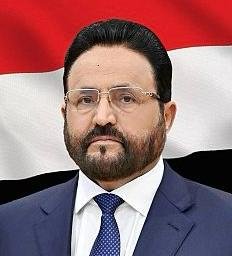
Sultan al-Arada, a member of Yemen’s Presidential Leadership Council and the governor of Marib governorate, has urged the international community to move beyond statements of condemnation and adopt concrete measures against the Houthi movement, warning that inaction has emboldened the group and deepened the country’s humanitarian emergency. He made the appeal during a video conference with Abda Sharif, the British Ambassador to Yemen, in a discussion that centred on the protection of maritime navigation in the Red Sea and the wider security situation inside Yemen.
Al-Arada argued that the measures adopted so far have not matched the scale of the threat. He called for cutting off the financial and military resources that sustain the Houthis and for tighter enforcement of existing sanctions, saying the group’s continued violations require a more decisive international response. In his account, the absence of an effective response has allowed attacks on civilians, on essential infrastructure and on commercial shipping to continue, in what the Yemeni government describes as clear breaches of international law and of United Nations Security Council resolutions.
The governor linked the international posture directly to conditions on the ground. He said the persistence of the conflict has pushed the humanitarian situation further towards collapse, citing the more than 18 million Yemenis the United Nations estimates are in need of some form of assistance and the roughly 4.5 million people displaced inside the country. Those figures have remained broadly stable across recent United Nations assessments, and aid agencies have repeatedly warned that funding shortfalls are forcing them to cut rations and close health facilities even as needs grow.
Al-Arada’s position carries particular weight because of the office he holds. He has governed Marib since 2012, steering a governorate that absorbed hundreds of thousands of people displaced from other parts of the country and that became the focus of sustained Houthi offensives between 2020 and 2022. Since April 2022 he has also sat on the eight-member Presidential Leadership Council, the body that assumed the powers of the presidency after Abdrabbuh Mansour Hadi stepped aside, and which is chaired by Rashad al-Alimi.
Much of the exchange concerned the sea. The Red Sea and the Bab al-Mandab Strait carry a substantial share of the container traffic and energy shipments that move between Asia and Europe, and attacks on merchant vessels in those waters since late 2023 have pushed many operators to reroute around the Cape of Good Hope, lengthening voyages and raising insurance costs. Yemeni officials have consistently framed that disruption not as a distant commercial problem but as one that falls hardest on Yemen itself, where the overwhelming majority of food, fuel and medicine arrives by sea.
Al-Arada praised what he described as Britain’s active role in easing Yemen’s humanitarian crisis and its work on regional security and the protection of maritime interests. Sharif, for her part, reiterated the United Kingdom’s support for the Presidential Leadership Council and the internationally recognised government, and underlined London’s commitment to maritime security and to regional stability. Britain is one of the penholders on Yemen at the United Nations Security Council, a role that gives London a standing hand in drafting the resolutions and mandate renewals through which the Council addresses the conflict.
That commitment has taken practical form. Britain and Saudi Arabia have launched a joint effort to strengthen the coastguard of the Yemeni government in the Red Sea and the Gulf of Aden, an initiative intended to build a local capacity to police those waters rather than rely indefinitely on international naval deployments. Sharif has also publicly condemned Houthi attacks on commercial vessels, warning after one such strike that the risk of a large fuel spill would carry consequences for Yemen’s own coastline and fisheries as well as for shipping.
Sharif took up the post in Yemen after serving as head of the Iraq and Arabian Peninsula Department at the Foreign, Commonwealth and Development Office, and earlier as deputy ambassador in Lebanon between 2012 and 2016. Like other Western missions to Yemen, the British embassy has operated from outside Sanaa since the capital fell under Houthi control, conducting much of its engagement remotely or from Aden and Riyadh, which is why a meeting of this kind takes place by video link.
The Yemeni government’s argument, restated by al-Arada, is that the maritime and internal dimensions of the conflict cannot be separated. Officials contend that the same networks supplying weapons capable of reaching shipping lanes also sustain the front lines inside the country, and that pressure applied at sea without corresponding support for government institutions on land will not hold. The Houthis, for their part, have justified their operations in the Red Sea as a response to the war in Gaza, a characterisation the Yemeni government rejects.
No specific new commitments were announced at the close of the meeting, and the exchange appeared to form part of the routine diplomatic contact the Presidential Leadership Council maintains with the states that provide the bulk of Yemen’s donor and security support. Its significance lies less in any single deliverable than in the continued alignment between Marib’s leadership and London on the two issues that dominate Yemen’s external agenda: the security of the shipping lanes off its western coast, and the funding of a relief operation that remains among the largest and most underfunded in the world.
About the Author