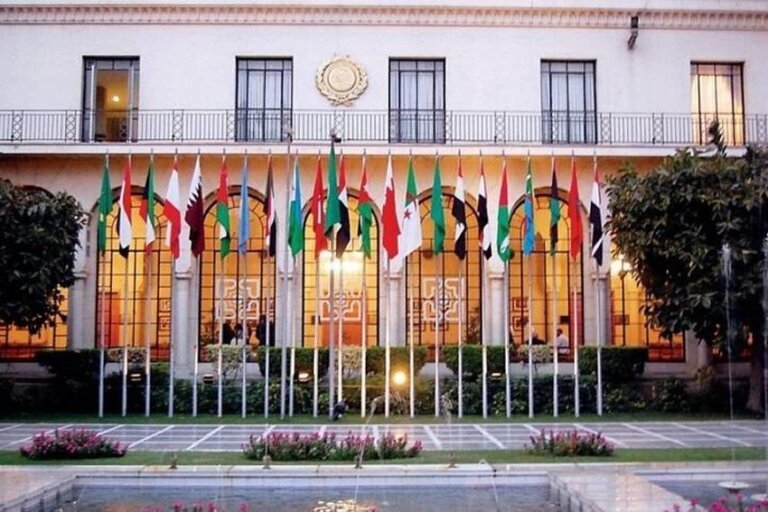
Arab League condemns Houthi attacks on Yemeni army positions and Saudi border region
 Yemen Herald News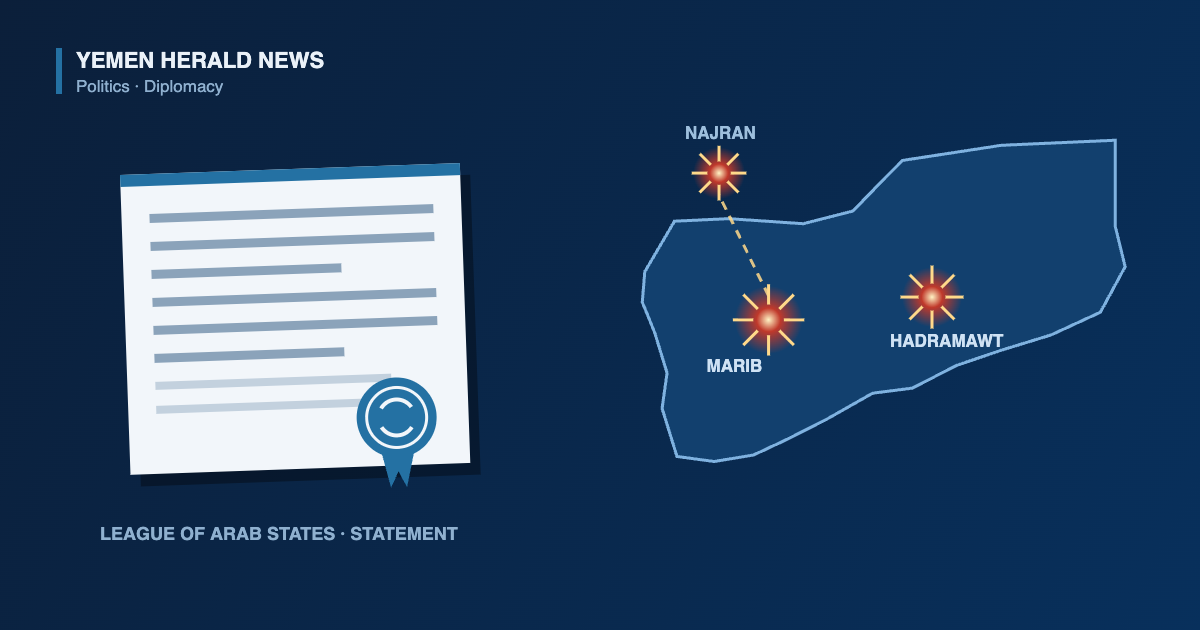
The League of Arab States has condemned a wave of Houthi attacks on Yemeni government military positions in the governorates of Marib and Hadramawt, and on the Najran region of southern Saudi Arabia, calling the escalation a dangerous course that threatens security across the region. The condemnation, issued on Friday, followed two days in which government troops, civilians and Saudi border communities were struck in some of the heaviest fighting Yemen has seen in more than three years.
In its statement, the League said Secretary-General Nabil Fahmy had warned that the continued attacks and military escalation inside Yemen, together with the targeting of Saudi territory and the endangerment of civilian lives, represented a highly dangerous course of action. He said the attacks threatened security and stability across the region and undermined the prospects for de-escalation and a negotiated political settlement. Fahmy, a former Egyptian foreign minister, took over as Secretary-General on 1 July 2026, succeeding Ahmed Aboul Gheit, who had led the organisation since 2016.
The statement followed strikes on Thursday against government military camps in Marib and Hadramawt. Yemeni government sources said at least 30 soldiers were killed, a figure that has not been independently confirmed and that the Houthis have not addressed in detail. Regional media described the assault as the deadliest against government forces since 2022, the year a United Nations-brokered truce brought a sharp reduction in front-line fighting that has largely held since.
A day later, the Houthis struck Marib city itself. Yemen’s Ministry of Public Health and Population said missile and drone attacks on residential neighbourhoods and camps sheltering internally displaced people killed two civilians and wounded 14 others, describing the toll as preliminary. The Houthis said their target had been forces, depots, vehicles and military equipment at the Sahn al-Jinn camp on the edge of the city. News agencies reporting on the attack said they could not independently verify either side’s account of what was hit.
The violence also reached across the border. The Coalition to Restore Legitimacy in Yemen said 11 civilians were wounded on Friday in an attack on Najran, a Saudi province on the southern frontier that has been struck repeatedly over the course of the war. The Arab League’s statement placed particular emphasis on that strike, restating the organisation’s support for Saudi sovereignty and territorial integrity.
The League was not alone in responding. Bahrain and Jordan issued their own condemnations, as did the Muslim World League and the Secretary-General of the Gulf Cooperation Council, each warning that the attacks endangered regional security and stability. Taken together, the statements amounted to one of the broadest coordinated regional responses to Houthi military action in recent months.
The United Nations struck a similar note. UN Special Envoy for Yemen Hans Grundberg warned that the country faced a growing risk of renewed large-scale conflict, citing the attacks in Marib and Hadramawt alongside assaults on commercial shipping in the Red Sea and the Gulf of Aden. He said the escalation risked squandering the gains of the 2022 truce and could pull Yemen into a wider regional confrontation. Grundberg called on all parties to exercise maximum restraint, to halt actions likely to invite military retaliation, and to return to good-faith negotiations under UN auspices.
Marib’s importance helps explain why it keeps drawing fire. The governorate is the internationally recognised government’s most significant remaining stronghold in northern Yemen and sits at the centre of the country’s oil and gas infrastructure. It also hosts the largest concentration of displaced people anywhere in the country. Camp management authorities in the governorate have reported more than 400,000 displaced residents living across more than 200 sites, many of them in makeshift shelters with limited access to water, health care and food.
That concentration of civilians close to military positions has made the city one of the war’s most dangerous places for non-combatants. Strikes on or near the camps have repeatedly killed and wounded displaced families, many of whom fled earlier rounds of fighting elsewhere in Yemen and have nowhere further to go. Aid workers have long warned that the camps sit within range of weapons aimed at nearby military targets.
The wider humanitarian backdrop remains severe. United Nations agencies estimate that more than 18 million Yemenis require some form of humanitarian assistance and that roughly 4.5 million people remain displaced from their homes. Relief operations have been constrained by funding shortfalls and access restrictions, while recurrent outbreaks of cholera and measles have added pressure to a health system that has not functioned fully for years.
What the condemnation will change in practice is unclear. The Arab League has no enforcement mechanism of its own, and its statements function mainly as signals of collective diplomatic positioning rather than as instruments of pressure. Successive rounds of condemnation have not visibly altered the military calculations of the parties on the ground.
The 2022 truce formally lapsed after six months but produced a durable reduction in fighting, and a UN-backed roadmap toward a broader settlement has been under discussion since. That process has stalled, and the past week’s escalation has left it looking more fragile than at any point since the truce took hold. Whether the regional response translates into renewed diplomatic momentum, or simply marks another exchange of statements, will depend on what happens next on the ground in Marib.
About the Author