Japan Condemns Houthi Attacks on Yemeni Civilians and Red Sea Shipping
 Yemen Herald News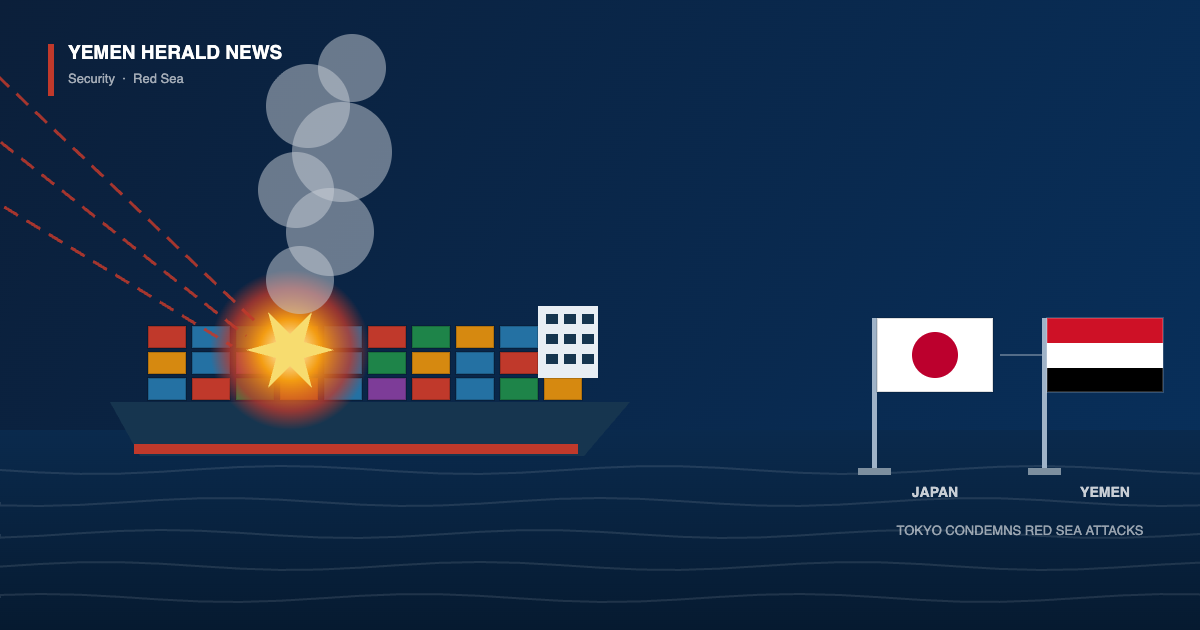
Japan has condemned a wave of attacks by Yemen’s Houthi movement that has killed civilians inside Yemen, struck a Saudi oil refinery and put commercial shipping in the Red Sea at renewed risk. The Ministry of Foreign Affairs in Tokyo set out its position in a statement issued by its Press Secretary, Kitamura Toshihiro, addressing the recent strikes on Saudi Arabia and other targets. Japan, the ministry said, reiterates its condemnation of continued Houthi interference with the rights and freedoms of navigation in the waters around the Arabian Peninsula, and particularly in the Red Sea.
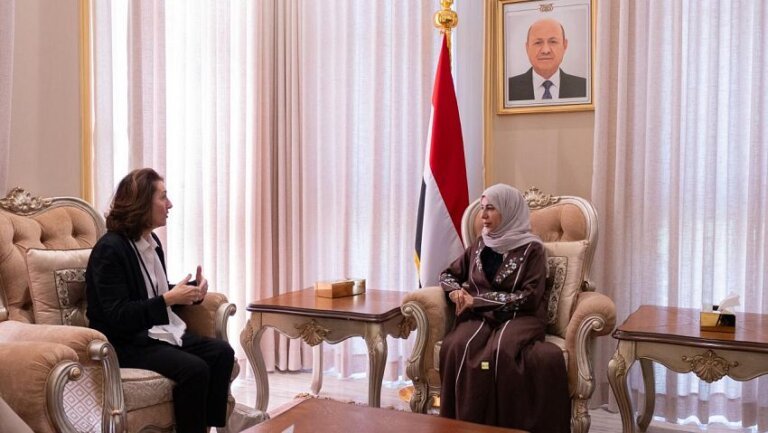
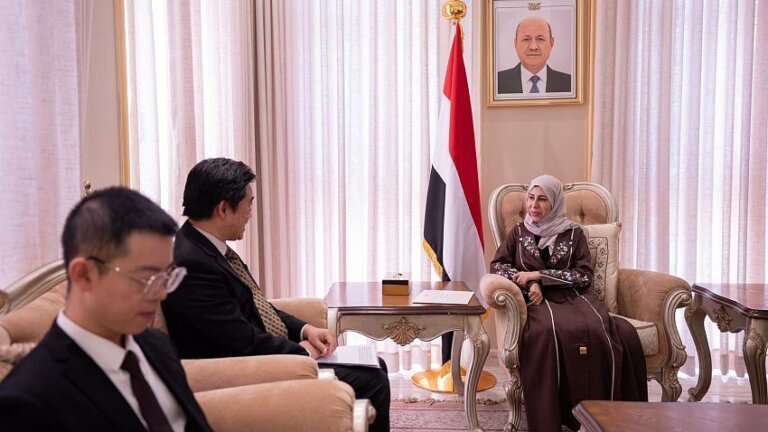
The Japanese mission accredited to Yemen separately reaffirmed Tokyo’s full support for the country’s internationally recognised government and its respect for the sovereignty, unity and territorial integrity of the Republic of Yemen, describing the escalation as a threat to regional security and stability.
On 7 August a ballistic missile struck the Mail al-Saila camp for internally displaced people on the outskirts of Marib. Yemen’s government said two civilians were killed and 14 injured in strikes it says targeted residential neighbourhoods and displacement sites with missiles and drones.
Marib carries a heavier civilian burden than almost anywhere else in the country. The United Nations refugee agency records the governorate as hosting the largest number of displaced families in Yemen, with the city and its surroundings sheltering more than two million of the roughly five million Yemenis forced from their homes. Camps there sit close to active front lines.
The camp strike followed attacks a day earlier on government positions in Hadramout and Marib. Yemeni officials said Houthi missiles and drones killed at least 30 soldiers and wounded 15 others on 6 August. The Houthis claimed a higher toll of 45 dead, a figure the government has not confirmed.
Two days later the fighting moved to the Red Sea coast. The Houthis said they had struck what they called Saudi enemy soldiers and equipment at the port city of al-Makha, and their military spokesman, Yahya Saree, said the operation used a large number of ballistic missiles and drones. A Yemeni military spokesperson said seven people were killed. Yemen’s Ministry of Transport condemned the attack and said it had caused serious damage to the port’s infrastructure.
On the same day a fire broke out at a refinery belonging to the Saudi state oil company Aramco in the Red Sea city of Jizan, close to the Yemeni border. The Saudi Ministry of Energy said the blaze was extinguished, that no casualties were reported, and did not state a cause. Saree later said the group had targeted the Jizan refinery with a drone in what he described as a precise strike, presenting it as a response to Saudi drone flights over Saada and Hajjah. Riyadh did not comment on the claim.
It was not the first such claim. The Houthis said in July that they had hit Aramco sites at Jizan and oil installations at Yanbu, Saudi Arabia’s principal export gateway on the west coast. Aramco’s chief executive, Amin Nasser, said this month that the attacks had caused some interruptions to production but no material operational or financial impact.
The maritime dimension has drawn the sharpest international response. The Houthis declared a blockade on Saudi Arabia in the Red Sea last month and threatened traffic through the Bab al-Mandab Strait, the narrow channel between Yemen and the Horn of Africa that carries a large share of trade between Europe and Asia. An attack on the Egyptian-owned vessel Tihamah in the strait killed four crew members, and two Yemeni rescuers from an anti-Houthi force also died; the Houthis said the ship was carrying Saudi military equipment. The United Nations Secretary-General said he was deeply alarmed by the resumption of Houthi attacks on Red Sea vessels.
Japan’s concern is not abstract. The country draws most of its crude oil from Gulf producers, and Japanese-owned and Japanese-operated vessels are regular users of the Suez and Red Sea corridor. Tokyo has for years framed freedom of navigation as a core national interest.
Inside Yemen, the government has used the escalation to press for a firmer international line. Rashad al-Alimi, chairman of the Presidential Leadership Council, briefed the United States charge d’affaires to Yemen, Neil Hop, on the attacks and argued that the international community, and Washington above all, should move beyond containing the Houthi threat to addressing its sources and instruments.
Regional governments have been rearranging their own security arrangements in parallel. Saudi Arabia signed a defence pact with Turkiye and Pakistan on 7 August, and has been working to assemble a coalition to protect Red Sea shipping. The escalation has unfolded against the backdrop of the war between the United States, Israel and Iran that began in late February.
Taken together, the past two weeks have placed the heaviest strain yet on the truce agreed in 2022, which halted large-scale front-line fighting without producing a political settlement. The Houthis have controlled Sanaa since 2014. Aid agencies warn that a population already dependent on imported food and fuel arriving through Red Sea ports has little margin left, and renewed fighting around Marib disrupts the same supply lines humanitarian operations rely on.
Japan’s statement announced no new measures. Its value lies in the position it stakes out: that attacks on civilians and on merchant shipping are unacceptable, that navigation through the Red Sea must be protected, and that Yemen’s recognised institutions retain international backing.
About the Author