Rival Yemeni health ministries blame each other as 5 million children go without vaccines
 Yemen Herald News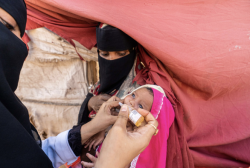
ADEN, Yemen — About 5 million children in Houthi-held areas of Yemen have gone without routine vaccinations after stocks ran out, both sides’ health ministries say.
The two administrations blame each other for the shortage.
Yemen’s internationally recognised government warned on Aug. 2 of a public health crisis in areas under Houthi control and urged international action to get vaccines delivered.
Restrictions on immunization programmes had deprived nearly 5 million children of routine vaccinations, the Ministry of Public Health and Population said. It named the suspension of vaccination campaigns, limits on the movement of health teams, interference in humanitarian operations and the detention of UN and international aid staff.
Vaccines allocated for every Yemeni province, including those held by the Houthis, remain available through international health partners under global supply mechanisms, the ministry said. Restrictions on their receipt, transport and distribution had stopped them reaching children, it said.
The Houthi-run health ministry in Sanaa rejected that account. It said stocks of all nine essential childhood vaccines had been exhausted after the UN Children’s Fund suspended supplies in late 2025.
Its spokesman, Anees al-Asbahi, said the last shipment arrived in September 2025. He blamed UNICEF and Gavi, the Vaccine Alliance. Neither organisation commented immediately on the accusation, Anadolu Agency reported.
On Aug. 19 the Sanaa ministry said the suspension of humanitarian support had left 15,000 health workers unpaid and 5 million children without vaccines, attributing it to what it called a siege.
Residents of Sanaa told Asharq Al-Awsat that vaccines were no longer available at maternal and child health clinics. They said door-to-door immunization campaigns had been suspended for years.
Those residents said the suspension followed Houthi media output and mosque sermons that cast doubt on vaccines and urged parents not to immunize their children, describing the vaccines as part of a “Western conspiracy.” The Houthi authorities have not responded publicly to that characterisation.
Polio cases have been reported in areas under Houthi control, according to the same reporting. Yemen was declared polio-free nearly three decades ago.
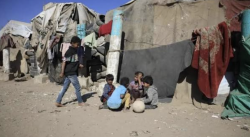
Measles is spreading in government-held territory as well. Authorities in Marib declared a public health emergency after recording 12 measles deaths and 1,624 infections since the start of the year, including 290 laboratory-confirmed cases, most of them in camps for displaced people.
The medical charity Medecins Sans Frontieres said repeated measles outbreaks in Yemen exposed gaps in routine immunization, access to healthcare and disease surveillance. Cuts to humanitarian funding had weakened vaccination work further, it said.
UNICEF says half of Yemen’s population lacks access to health services, and that the health system faces severe funding shortages.
The Aden ministry said it was ready to work with the World Health Organization, UNICEF, Gavi and other partners to supply vaccines to children across Yemen without discrimination.
It asked for guarantees that vaccines could be transported, stored and distributed to international medical standards, with the cold chain preserved and the doses provided free.
It also called for safe and unconditional access for health teams, independent technical oversight of vaccination programmes, full transparency over stocks and distribution, an independent inventory, and the release of detained UN and humanitarian personnel.
The government said it continues to strengthen immunization in areas it controls. It received a shipment of more than 2.8 million vaccine doses for children and mothers in July, including doses against polio, measles and rotavirus.
Both ministries warned that a widening immunity gap risks the return of diseases that had been contained, among them polio, measles, diphtheria, whooping cough and tetanus.
The Aden ministry said the consequences could extend beyond Yemen’s borders if restrictions on vaccine access continue.
The detentions the Aden ministry referred to have been raised repeatedly at the UN. Seventy-three UN staff remain in the custody of the Houthi de facto authorities, Tom Fletcher, the UN under-secretary-general for humanitarian affairs, told the Security Council on Aug. 13. Workers and former workers from non-governmental organisations, civil society groups and diplomatic missions are also being held, he said.
Two of every five health facilities in Yemen are not operating, or are operating only in part, the UN resident and humanitarian coordinator said in a statement on Aug. 19.
That statement said the 2026 Yemen Humanitarian Needs and Response Plan had received about 20 per cent of the money it requested, and that agencies had cut back life-saving programmes as a result. Humanitarian agencies reached 3.4 million people in Yemen in the first half of the year.
The dispute sits inside a humanitarian emergency that the UN Office for the Coordination of Humanitarian Affairs has described as one of the world’s largest. Its March 2026 response plan put more than 22 million people in need of assistance.
That plan recorded 18.3 million people as acutely food insecure and more than 2.2 million children under five as acutely malnourished, 516,157 of them severely. It counted 5.2 million internally displaced people.
OCHA sought USD 2.16 billion to reach 12 million people this year.
The Houthis have controlled Sanaa and other parts of northern Yemen since September 2014. A Saudi-led coalition intervened in support of the internationally recognised government in March 2015.
About the Author