Yemen’s health ministry and UNICEF discuss expanding primary care programmes in Aden
 Yemen Herald News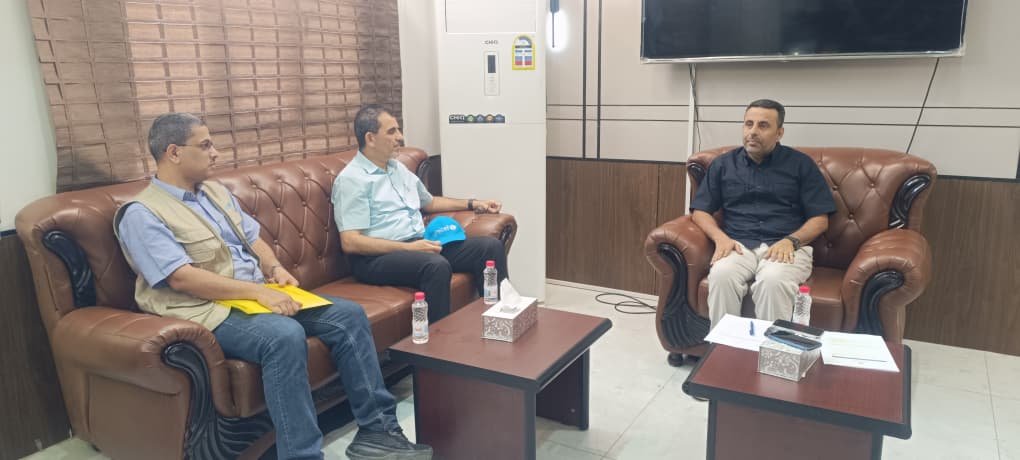
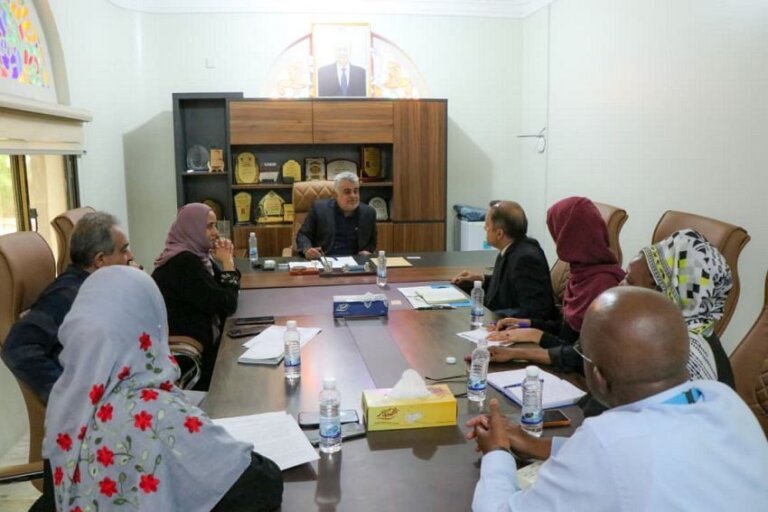
ADEN, Yemen — A senior Yemeni health official and UNICEF’s deputy representative discussed expanding health and nutrition programmes at a meeting in Aden on Monday, the state news agency Saba reported.
Dr. Ali al-Waleedi, undersecretary of the Ministry of Public Health and Population for the primary health care sector, met Dr. Majid al-Tawwal, UNICEF’s deputy representative to Yemen, and an accompanying delegation, the agency said.
The account rests on Saba, which is run by Yemen’s internationally recognised government, and which filed the report from Aden on Aug. 24. UNICEF has not published its own readout of the talks, and no independent outlet has reported the meeting.
The two sides reviewed the agency’s existing programmes and ways to develop them, according to Saba. The stated aim was to strengthen primary health care services and widen access for target groups across Yemen’s governorates.
Al-Waleedi thanked UNICEF for its support to the health sector, the agency said. He cited its work on maternal and child health, immunisation, nutrition and primary care.
He said the ministry was committed to expanding those interventions in line with current priorities, according to Saba. That meant sustaining services, building the capacity of health workers and reinforcing preventive programmes, he said.
Continuous coordination between the two sides was needed to deliver results for citizens, particularly women and children, al-Waleedi said.
He said efforts on both sides should be unified rather than run separately, according to the agency.
Al-Tawwal said UNICEF would continue to support the health sector and strengthen its partnership with the ministry, the agency reported.
He pointed to joint work on health and nutrition programmes and on responding to humanitarian needs in ways that improve health indicators and widen access to essential services for the most vulnerable groups, according to Saba.
After the meeting the two men inspected a construction project for the sector’s main meeting hall, which is to be built with UNICEF funding, the agency said. They were briefed on its components and on the facilities it will provide for technical and coordination meetings.
The two sides have met on the subject before. Saba reported earlier talks between the ministry’s undersecretary and UNICEF on strengthening the health partnership.
The ministry al-Waleedi serves is the Aden-based body of the internationally recognised government. A separate health authority operates in Sanaa under the Houthis, and the two have run parallel administrations since the movement seized the capital in 2014.
Yemen’s war has run since 2014 and has left the health sector heavily dependent on external funding.
UNICEF is seeking US$146.3 million for Yemen this year under its Humanitarian Action for Children appeal. The agency says the money would reach 5.2 million people, among them 3.5 million children, with health, nutrition and emergency response coordination as the priorities.
About 2.4 million children under five and 1.5 million pregnant and breastfeeding women are acutely malnourished, according to UNICEF. It projects that some 500,000 children will suffer severe wasting during 2026.
Its targets for the year include treating 311,000 children for severe wasting and reaching more than 1.4 million women and children with primary health care.
UNICEF puts wasting among Yemeni children at 17 per cent, stunting at 49 per cent and underweight at 41 per cent, rates it describes as among the highest in the Middle East and North Africa.
The agency has separately launched an initiative aimed at accelerating a reduction in undernutrition in Yemen.
Immunisation is one of the programmes al-Waleedi named. UNICEF supports routine vaccination and periodic campaigns in Yemen in partnership with the ministry and the World Health Organization.
The system those programmes run through is depleted. About 60 per cent of health facilities are fully functional, according to monitoring data cited by WHO, and only one in five can provide maternal and child health services.
That figure comes from the Health Resources Availability Monitoring System, the survey WHO uses to track which facilities are still operating.
WHO said this year that the humanitarian health response had entered a more constrained phase, with funding shortfalls and insecurity pushing health partners out of northern governorates.
The ministry adopted a health strategy running from 2022 to 2026 with technical support from WHO, which included integrating mental health services into primary care.
WHO has described improving the quality of care as Yemen’s pathway toward universal health coverage.
The wider relief operation is under similar strain. The United Nations humanitarian plan published in March counts more than 22 million people in need and 18.3 million who are acutely food insecure.
That plan records 5.2 million internally displaced people and seeks US$2.16 billion to reach 12 million of those in need.
UNICEF said this year that acute food insecurity had deepened in government-controlled areas of Yemen amid funding cuts and an economic downturn.
UNICEF’s country programme in Yemen covers health, nutrition, water and sanitation, education and child protection.
Its earlier work with the ministry includes a community health workers network intended to carry basic services to mothers and children in rural districts.
The agency and WHO have also arranged training for 200 general practitioners in Yemen under the World Bank-financed Emergency Human Capital Project, a scheme aimed at raising the standard of primary care.
About the Author