Yemen Backs a Unified Arab Position at the World Trade Organization
 Yemen Herald News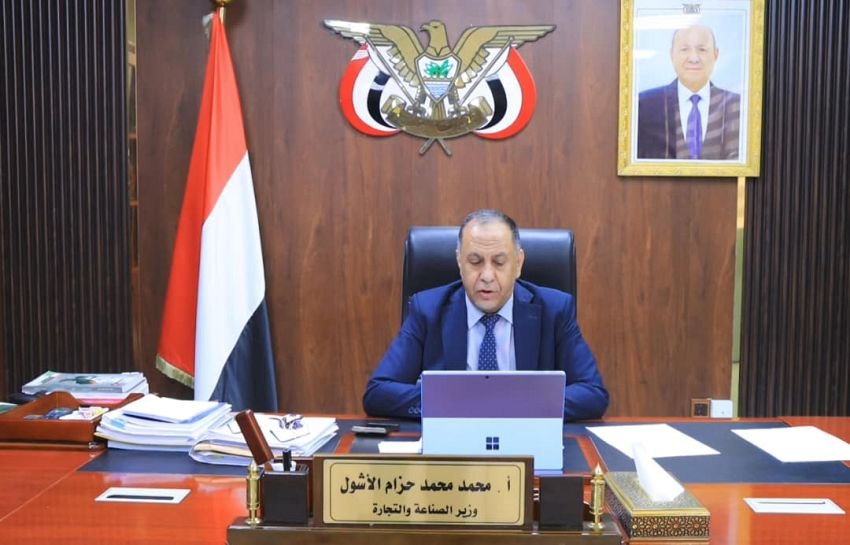
Yemen has urged a coordinated Arab stance at the World Trade Organization to strengthen the Arab presence in the global trading system. The call was made by Yemen’s Minister of Industry and Trade, Mohammed Al-Ashwal, during a preparatory meeting of Arab trade ministers held by videoconference, at which he stressed the importance of advancing the interests of developing and least-developed countries and facilitating their integration into international trade.
The meeting was attended by a number of Arab ministers as well as the Director-General of the World Trade Organization, Ngozi Okonjo-Iweala, underlining the collaborative effort among Arab nations to coordinate their approach to trade issues. The gathering formed part of preparations for engagement within the WTO, the body that governs the rules of global commerce.
Al-Ashwal commended the Kingdom of Saudi Arabia for its role in coordinating the positions of the Arab group within the organisation. He expressed gratitude for the initiative taken by the Saudi Minister of Commerce, Majid Al-Qasabi, in convening the meeting, which he said would help strengthen Arab unity on matters relating to international trade.
The emphasis on a coordinated Arab position reflects a recognition that collective action can enhance the influence of individual states within international institutions. By aligning their positions, Arab countries can pursue shared interests more effectively and amplify their voice in negotiations that shape the rules and dynamics of global trade.
The focus on the interests of developing and least-developed countries points to a central concern for nations such as Yemen. The global trading system is shaped disproportionately by the more powerful economies, and developing countries have long sought arrangements that take account of their circumstances and support their integration into international commerce on more favourable terms.
Yemen’s own position within the global trading system has been profoundly affected by the conflict. The country joined the World Trade Organization in 2014, shortly before the escalation of the war, and its aspirations to integrate more fully into international trade have been severely constrained by the disruption, damage and economic collapse that the conflict has brought.
For a country in Yemen’s situation, engagement in international trade forums nonetheless retains importance. Participation allows the government to advocate for its interests, to cultivate relationships and to position itself for eventual recovery, even as the immediate benefits of trade integration remain limited by the realities of the conflict.
The role of Saudi Arabia in coordinating the Arab group reflects the kingdom’s prominence within the region and its engagement in international economic affairs. Coordination of this kind can help Arab states develop common positions and pursue shared objectives, and Saudi leadership in convening such efforts underscores its role in regional economic diplomacy.
The participation of the WTO’s Director-General in the meeting lent it added significance. Engagement with the leadership of the organisation provides Arab states with an opportunity to convey their concerns and priorities directly, and it reflects the importance the organisation attaches to dialogue with its members and with regional groupings.
The global trading system has faced considerable challenges in recent years, from tensions among major economies to disruptions in supply chains and debates over the future of trade rules. In this context, the coordination of positions among groups of countries has taken on added importance as states seek to protect and advance their interests amid uncertainty.
For developing and least-developed countries, the stakes in these debates are particularly high. The terms on which they participate in global trade can have significant consequences for their economies and development prospects, making advocacy for arrangements that support their integration and interests a priority in international trade diplomacy.
The emphasis on Arab unity in the trade sphere reflects a broader aspiration to enhance the region’s collective standing and influence. Coordinated action on economic matters can complement cooperation in other areas, contributing to a stronger regional presence in international affairs and to the pursuit of shared economic goals.
Yemen’s advocacy for these positions aligns it with the broader interests of the Arab group and of developing countries more generally. By participating actively in such coordination, the government seeks to ensure that Yemen’s voice is heard and that its interests are represented in the shaping of the global trading system, even amid its domestic difficulties.
The practical impact of such coordination will depend on the ability of Arab states to translate common positions into effective advocacy within the organisation. Developing shared objectives is a first step, but achieving results requires sustained engagement and the capacity to pursue those objectives in the complex arena of international trade negotiations.
The preparatory nature of the meeting also pointed to the rhythm of multilateral trade diplomacy, in which positions are painstakingly aligned ahead of the major ministerial gatherings where decisions are taken. For smaller and conflict-affected economies, this behind-the-scenes coordination can be as consequential as the formal sessions themselves, offering a means to pool influence and to ensure that concerns which might otherwise be overlooked are carried into the room. Yemen’s active participation, despite its domestic turmoil, reflected a determination not to be left on the margins of decisions that will shape the trading environment it must eventually rejoin in full.
For now, Al-Ashwal’s participation and remarks underscored Yemen’s commitment to engaging in international trade diplomacy and to supporting a coordinated Arab approach within the World Trade Organization. As the country looks toward eventual recovery, maintaining its engagement in such forums remains part of its effort to advance its interests and to prepare for a more active role in global commerce.
About the Author