Federal Judge Blocks Pentagon Press Policy in Ruling for The New York Times
 Yemen Herald News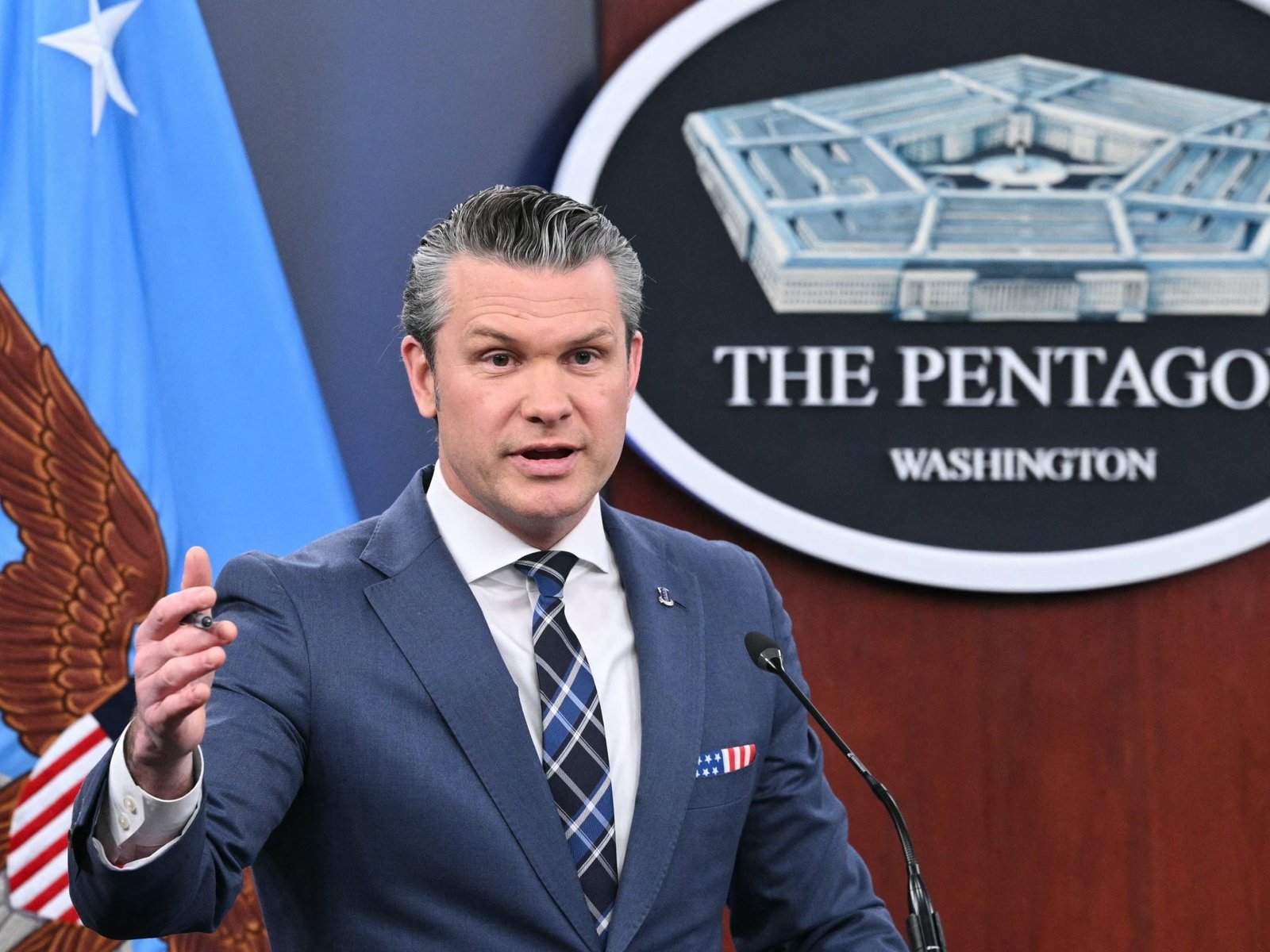
A federal judge in Washington ruled against a Pentagon policy restricting reporters’ access to the Defense Department, siding with The New York Times in a case that turned on how far a government agency may condition press credentials on a journalist’s willingness to accept rules about what they publish. United States District Judge Paul Friedman issued the decision on Friday 20 March 2026, finding that the policy unlawfully restricted credentials for journalists who declined to sign up to it.
The policy at issue was introduced in October 2025 by Defense Secretary Pete Hegseth. It sought to confine reporters covering the Pentagon to information officially approved for release, and required journalists to acknowledge those terms as a condition of retaining building access. Several major news organisations refused to sign, and The New York Times brought suit against the department and Hegseth, arguing that the requirement violated the First Amendment’s protection of free speech and the Fifth Amendment’s guarantee of due process.
Friedman accepted both arguments. He found the policy failed to give adequate notice of which journalistic practices could lead to credentials being denied or revoked, leaving reporters to guess at the line they were not to cross, which is the core of a due process objection. On the free speech question he went further, concluding that the scheme operated to weed out disfavoured journalists and replace them with outlets more amenable to departmental leadership. That, he held, was viewpoint discrimination, and unlawful.
The judge pointed to the composition of the Pentagon press corps as it stood after the policy took effect. Those who had accepted the terms were drawn disproportionately from outlets sympathetic to the administration, while established organisations including The Associated Press continued to report on military affairs from outside the building after rejecting the rules. The practical effect, in Friedman’s reading, was a press corps selected by editorial disposition rather than by any neutral standard, with reporting continuing regardless from those excluded.
Friedman also emphasised the constitutional stakes, writing that a free press serves rather than undermines national security by subjecting official claims to scrutiny. The Pentagon had defended the policy as a necessary safeguard against unauthorised disclosures of sensitive information. The judge noted inconsistencies in how it had been applied, particularly in the differing treatment of individual journalists engaged in comparable activity, which weakened the security rationale as an explanation for the scheme’s design.
Press freedom organisations had opposed the policy from the outset, arguing that requiring reporters to limit themselves to officially sanctioned material inverts the purpose of a defence press corps. The point of stationing journalists at the Pentagon, on that view, is precisely to report matters the department has not chosen to announce, subject to the ordinary legal constraints on publishing classified information, which already exist independently of any credentialing agreement.
The New York Times welcomed the ruling, saying it reinforced the constitutional rights of the press and the public’s entitlement to know what the government does in its name. A spokesperson for the paper said Americans deserve transparency about military operations conducted on their behalf. The department was directed to report on its compliance with the ruling within a week.
The dispute did not end there. Following Friedman’s decision, the Pentagon issued revised arrangements that closed the Correspondents’ Corridor inside the building and required reporters entering the premises to be accompanied by an escort at all times. That prompted a second legal challenge, and on 9 April 2026 Friedman blocked the replacement measures in sharply worded terms, warning that suppression of political speech is a mark of autocracy rather than democracy.
The sequence illustrates a recurring difficulty in press access litigation. Courts can strike down a specific policy, but access to a government building is administered through a large number of discretionary decisions about desks, escorts, corridors and credentials, each of which can be adjusted after an adverse ruling. Judicial supervision therefore tends to arrive in instalments, with each new arrangement tested against the reasoning of the last decision.
The timing gave the case additional weight. The ruling came during active United States military operations in the Middle East, a period in which official accounts of strikes, targets and outcomes were the primary information available to the public and in which independent verification was correspondingly scarce. A credentialing regime that narrowed reporting to approved statements would have taken effect at exactly the moment scrutiny mattered most.
Underlying the litigation is a longer argument about the Pentagon press corps itself. Resident reporters at the Defense Department have historically operated with physical access to officials, a working relationship built on proximity rather than formal entitlement, and one that has produced both accountability journalism and complaints of excessive closeness. Formalising that access into a signed agreement changed its character, converting a customary arrangement into one the department could withdraw at will.
For news organisations the calculation was straightforward but costly. Signing preserved access on terms that constrained publication; refusing preserved editorial independence at the price of working from outside. The Associated Press demonstrated that Pentagon coverage remains possible without a desk in the building, though sourcing becomes harder and slower. The rulings restored the option of doing both, at least for the time being, and left open the question of what a lawful credentialing policy would look like if the department chose to write one.
About the Author