Djibouti’s president tells Yemen’s foreign minister his country backs Yemeni unity
 Yemen Herald News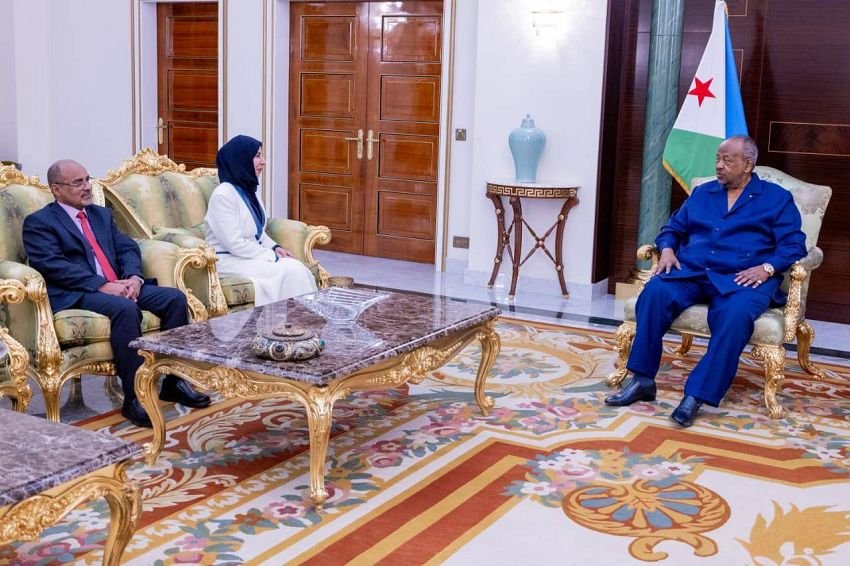
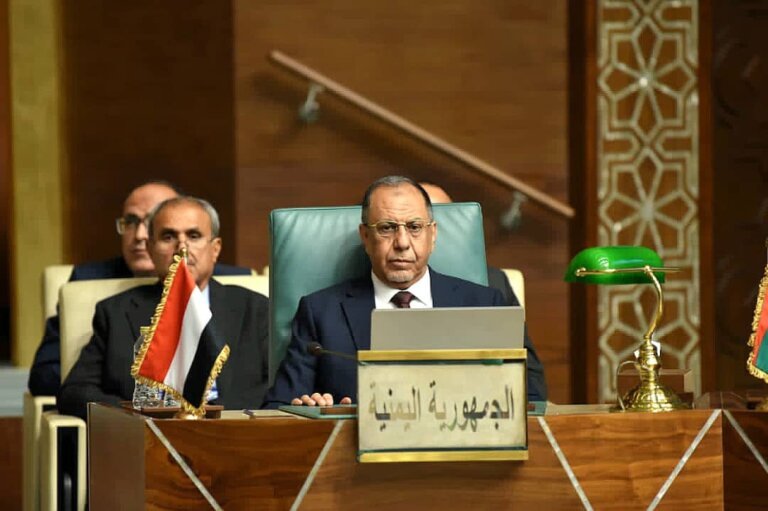
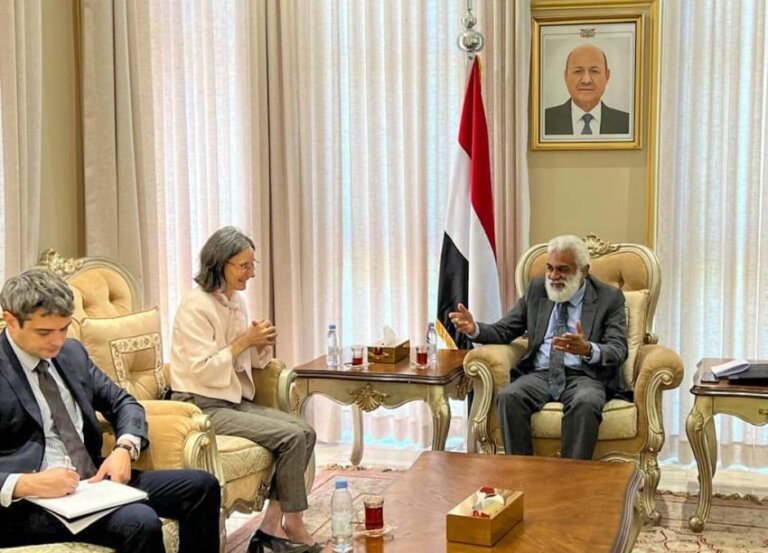
DJIBOUTI CITY, Djibouti — Djibouti’s president told Yemen’s foreign minister his country supports Yemen’s unity, sovereignty and territorial integrity, the state news agency Saba reported on Thursday.
President Ismaïl Omar Guelleh received Foreign Minister Afrah al-Zouba during an official visit to Djibouti.
Guelleh restated Djibouti’s position on Yemen’s unity, sovereignty, independence and territorial integrity, according to the agency.
Al-Zouba briefed him on developments in Yemen, Saba reported.
She described continued escalation by the Houthis and attacks on seaports, shipping lanes and waterways, the agency said.
Saba reported no commitments, no agreements and no joint statement from the meeting.
The account rests on Saba, the news agency of Yemen’s internationally recognised government. Djibouti’s presidency has not published its own account, no independent confirmation has appeared, and Yemen Herald could not verify the agency’s summary.
The Houthis dispute the government’s characterisation of their campaign and describe it as pressure tied to the war in Gaza.
Al-Zouba held other meetings on the same visit.
Saba reported that she met her Djiboutian counterpart to discuss bilateral relations and consultation mechanisms.
The agency said she also met members of the Yemeni community in Djibouti.
Al-Zouba became Yemen’s first female foreign minister when she was appointed by republican decree, a move Al Jazeera reported on in July 2026.
She has said she intends to reactivate Yemeni diplomacy. Yemen Monitor reported that she has made a series of calls to Egypt, Sudan and Djibouti seeking support and pressing on Red Sea security.
Guelleh has been president of Djibouti since 1999.
Djibouti sits on the western shore of the Bab al-Mandab strait, directly across the water from Yemen.
The strait is one of the narrowest points on the route between the Indian Ocean and the Suez Canal.
Djibouti hosts foreign military installations, including bases operated by the United States, France, Japan, Italy and China.
The country has also received Yemenis displaced by the war.
More than 120,000 refugees and migrants fled the region after April 2015, and more than 15,000 crossed the Gulf of Aden to Djibouti, according to UNHCR.
Arrivals were registered at a transit centre near Obock, and authorities identified a site for a camp at Markazi about four kilometres away.
Traffic runs the other way as well. UNHCR recorded roughly 94,000 refugees and migrants departing the Obock coast for Yemen and the Gulf between January and September 2025.
The agency recorded 890 deaths and disappearances on those maritime crossings over the same period.
The Sana’a Center for Strategic Studies has documented the longer history of Yemeni migration to Djibouti.
Traffic through Bab al-Mandab has not returned to earlier levels.
Lloyd’s List Intelligence reported in its Red Sea briefings in July and August 2026 that transits were running far below normal volumes, at one point about 38 per cent down.
Suez Canal traffic in early 2026 stood roughly 60 per cent below the level recorded before carriers began routing around southern Africa, according to shipping analysts.
The European Union’s naval mission in the area, EUNAVFOR Aspides, had its mandate extended by the Council of the European Union until February 2027.
The United Nations Office for the Coordination of Humanitarian Affairs said in its March 2026 humanitarian needs and response plan that more than 22 million people in Yemen need assistance.
The plan recorded 18.3 million people as acutely food insecure and counted more than 2.2 million children under five as acutely malnourished, including 516,157 with severe acute malnutrition.
OCHA put the number of internally displaced people at 5.2 million and appealed for $2.16 billion to reach 12 million of those in need.
Yemen has been divided since 2014, when the Houthis took Sanaa. The internationally recognised government has been seated in Aden since 2015.
The European Union established EUNAVFOR Aspides in February 2024 as a defensive mission after repeated attacks on merchant vessels.
The operation has escorted more than 265 commercial ships and destroyed 17 uncrewed aerial vehicles, two uncrewed surface vessels and four anti-ship ballistic missiles, according to figures published on the mission.
The bloc has not designated the Houthis a terrorist organisation. The United States applied that label with effect from March 4, 2025.
The Houthis targeted more than 100 merchant vessels between November 2023 and early 2025, sank two ships, seized another and killed at least four seafarers, according to compilations of the attacks.
Djibouti is a member of the Arab League and of the Intergovernmental Authority on Development, the East African regional bloc.
Guelleh succeeded Hassan Gouled Aptidon, who had led the country since independence from France in 1977.
Yemen and Djibouti maintain a joint ministerial committee as the formal channel for bilateral cooperation. Saba said reactivating it was among the subjects the two foreign ministers discussed.
Djibouti served as a staging point for evacuations from Yemen after the war escalated in 2015.
Aden lies roughly 250 kilometres east of the strait along Yemen’s southern coast.
Rerouting around southern Africa adds days to voyages between Asia and Europe and raises fuel and insurance costs.
Yemen Herald could not independently confirm the shipping figures or the mission’s tally of intercepts.
Saba did not say how long the minister would stay in Djibouti.
About the Author