UN envoy Hans Grundberg says Houthi attacks risk widening Yemen’s war
 Yemen Herald News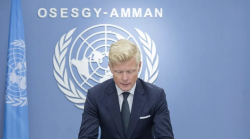
AMMAN, Jordan — The UN special envoy for Yemen said Houthi attacks on several fronts risk widening the country’s war, calling the escalation extremely dangerous.
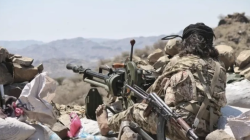
Hans Grundberg issued the warning in a statement as fighting spread across Taiz, al-Bayda and Yemen’s west coast.
He said the rising intensity of clashes was a grave concern. He cited reports of civilian casualties, families forced from their homes and damage to civilian infrastructure.
Yemen has endured more than a decade of conflict, Grundberg said. A return to large-scale, sustained fighting would carry devastating consequences for civilians, he said, and would complicate the path to a political settlement.
He called on all parties to stop hostilities and exercise maximum restraint.
Grundberg urged them to use existing channels to prevent further escalation, naming the UN Military Coordination Committee.
He said all sides must adhere to international humanitarian law and protect civilians and civilian infrastructure.
The envoy said he would continue direct engagement with the parties to contain the escalation and preserve space for dialogue. He called on regional and international actors to use their influence to support a return to political negotiations.
Grundberg said Yemenis’ aspirations for security, effective institutions and a future beyond the conflict require a credible political process. That process must address the political, security and economic issues at the core of the war, he said.
The statement follows weeks of warnings from his office. In Amman on Aug. 7, Grundberg said Yemen faced a greater risk of renewed large-scale conflict than at any point since the UN-brokered truce of April 2022.
He pointed then to attacks by Ansar Allah, the Houthi movement’s formal name, in Marib and Hadramawt, which he said had reportedly caused “significant casualties, including civilians.”
He also cited renewed attacks on commercial shipping in the Red Sea and the Gulf of Aden, and strikes on civilian infrastructure including airports.
Those developments risked jeopardising the gains of the 2022 truce, he said, and drawing Yemen into a broader regional confrontation.
In a briefing to the Security Council, Grundberg said Yemen faced a more serious risk of return to large-scale conflict than at any point since the 2022 UN-mediated truce.
He told the 15-member council there had been an intensification of military activity along the country’s front lines.
Attacks on commercial vessels in the Red Sea and the Gulf of Aden risk deepening Yemen’s entanglement with the wider regional confrontation, he said.
The fighting he described has produced measurable displacement. The UN Office for the Coordination of Humanitarian Affairs said renewed fighting forced nearly 1,800 families from their homes in less than 48 hours.
The Executive Unit for IDP Camps Management recorded 2,183 families displaced in Taiz and Hodeidah governorates as of Sept. 5. It said 1,643 of those families, comprising 8,896 people, were displaced in Taiz.
Hostilities escalated along the Taiz front lines in the early hours of Sept. 3, with shelling and clashes in the Maqbanah and Jabal Habashi districts, according to humanitarian reporting. Several camps for displaced people in those districts were emptied, triggering secondary displacement.
An AFP tally put the toll from the fighting in southwest Yemen above 300.
The conflict has also crossed Yemen’s northern border. Saudi-led coalition officials said Houthi missile and drone attacks on Tuesday wounded 73 people in Abha, Khamis Mushait, Jazan and Najran, four cities in southern Saudi Arabia.
The Houthi military spokesman said the group had launched missiles and drones at oil and economic facilities and an air base in the kingdom’s south. The casualty figure is the coalition’s and has not been independently confirmed.
Saudi Arabia’s energy ministry said fires broke out at several sites and that operations were suspended at some facilities.
In the August statement Grundberg said he had engaged intensively with the Yemeni parties, regional actors and international partners over the preceding weeks to explore options for de-escalation.
He set out three elements he said a negotiated path would have to deliver: military de-escalation, improved economic stability including freedom of movement for people and goods, and steps toward an inclusive political process.
The Security Council has issued its own press statement on Yemen in which members expressed concern at heightened tensions and stressed the importance of avoiding actions that could undermine efforts to secure peace.
Yemen’s internationally recognised government has been conducting air strikes of its own. Its air force said it struck Houthi positions in central Yemen, including sites in al-Bayda province.
The April 2022 truce was brokered by the United Nations and formally lapsed in October that year. Its main provisions were a halt to major offensives, fuel imports through Hodeidah port and commercial flights from Sanaa airport. The relative calm it produced is what Grundberg has said is now at risk.
Grundberg, a Swedish diplomat, has held the post since September 2021.
His office operates from Amman and exercises what the United Nations calls good offices, aimed at resuming a Yemeni-led political transition.
Yemen’s humanitarian appeal for 2026 seeks $2.16 billion to reach 12 million people. The March 2026 humanitarian needs and response plan put the number of people in need at more than 22 million, with 18.3 million acutely food insecure.
More than 2.2 million children under five are acutely malnourished, according to that plan, including 516,157 with severe acute malnutrition. It recorded 5.2 million internally displaced people before the current escalation.
About the Author