Health Minister Qasim Buhaibeh tells Health Cluster partners to raise emergency readiness
 Yemen Herald News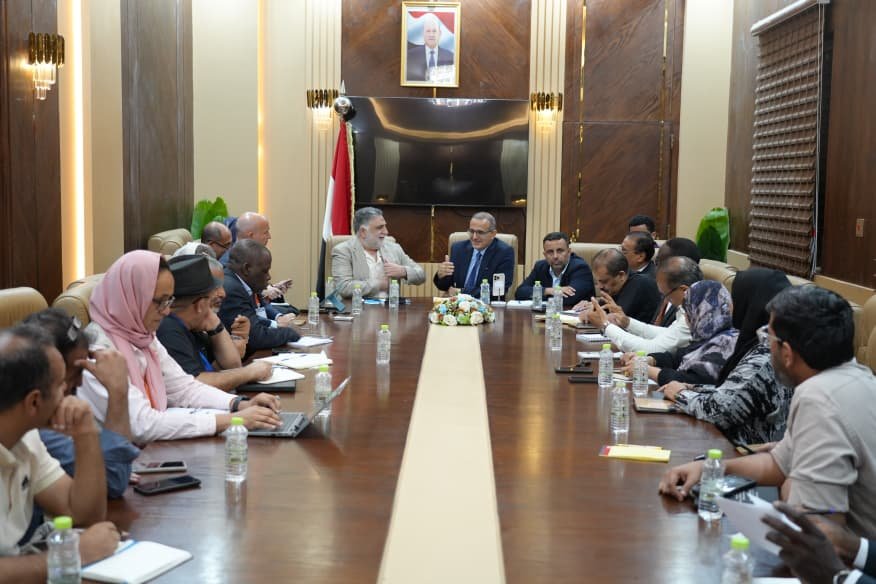
ADEN, Yemen — Yemen’s health minister told international and local aid partners on Monday to raise the readiness of emergency departments, intensive care units and ambulance services.
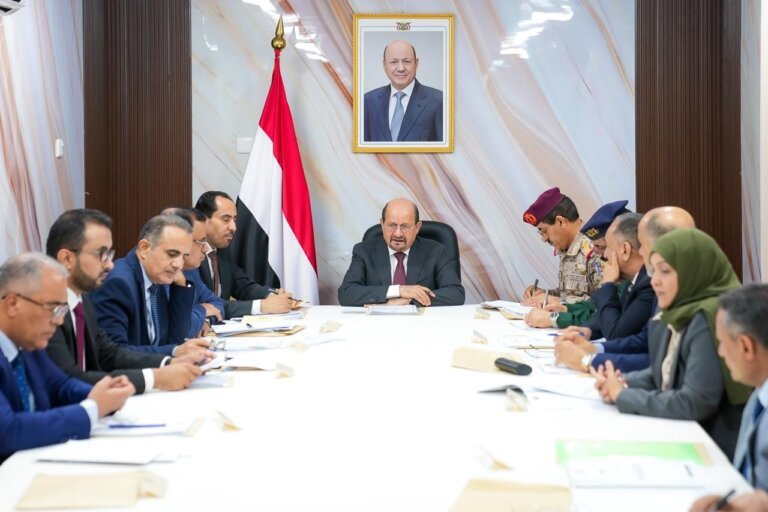
Minister of Public Health and Population Qasim Buhaibeh chaired an expanded meeting of the Health Cluster, the state news agency Saba reported.
The Health Cluster is the standing body that coordinates the ministry, United Nations agencies and aid groups working on health in Yemen.
Buhaibeh said strengthening emergency response capacity was a priority in current circumstances, according to the agency.
He told partners their work had to keep pace with changing needs on the ground. He described the qualities required as flexibility, speed and complementarity, Saba said.
The minister also called for available resources to be directed in line with actual needs, and for closer coordination among health and humanitarian actors.
This account of the meeting rests on Saba, the news agency of Yemen’s internationally recognised government. Yemen Herald found no independent confirmation of it.
The World Health Organization’s representative to Yemen, Sayed Jaafar, attended, the agency said.
So did the ministry’s undersecretaries and representatives of international and local organisations working in the sector.
The meeting reviewed health and humanitarian indicators and what Saba called additional needs arising from developments on the ground.
Those included keeping essential medicines and medical supplies available to people in affected areas.
The agency said the meeting produced proposals and recommendations on coordination among partners and on the preparedness of health facilities.
The recommendations were framed around health and humanitarian priorities, Saba said, without setting out what they required.
Saba attributed the pressure on the health system to what it called Houthi escalation. It said the escalation had increased casualties and displacement and damaged health facilities and assets.
The agency gave no figures for any of that, and the Houthi movement did not publish a response.
Displacement across Yemen has risen through September, on figures published by the International Organization for Migration.
The agency said on Sept. 11 that more than 46,000 people had been displaced by the fighting.
It raised that count to more than 76,000 the following day.
By its most recent tally, drawn from its Displacement Tracking Matrix, 85,818 people had been displaced.
Of those, 82,164 were displaced since the start of September, the agency said.
More than 2,000 people have crossed to Djibouti, landing at scattered points on the coast near Obock, IOM said.
Obock lies on Djibouti’s northern coast, facing the Yemeni shore across the strait.
The agency said it expected more arrivals as fighting continued along Yemen’s western coast and in Taiz province, near the port city of Mocha.
Fighting on the Red Sea coast intensified in the second week of September.
Houthi forces took Mocha on Sept. 10 as government troops pulled back. Houthi fighters reached the island of Mayyun, in the Bab al-Mandab Strait, in the days that followed.
IOM said the Houthis had taken control of the strait, a shipping lane that carries global oil traffic.
Bab al-Mandab separates Yemen from Djibouti and Eritrea at the southern end of the Red Sea.
The United Nations Office for the Coordination of Humanitarian Affairs set out the wider baseline in its plan for Yemen published in March.
It said more than 22 million people in the country needed assistance.
It put the number of acutely food-insecure people at 18.3 million.
More than 2.2 million children under five were acutely malnourished, the plan said, 516,157 of them severely.
It counted 5.2 million internally displaced people.
The plan appealed for 2.16 billion dollars to reach 12 million of those in need.
The World Health Organization leads the Health Cluster in Yemen.
It said in its 2026 emergency appeal for the country that around 60 percent of health facilities remained fully functional.
That leaves millions of people without reliable access to essential care, the agency said.
The agency asked for 38.8 million dollars to deliver emergency health assistance to 10.5 million people in Yemen this year.
It said the Health Cluster received 43.4 percent of its funding requirement for 2025.
WHO listed disease surveillance and rapid response, essential medicines and supplies, mobile and surgical teams and immunisation campaigns among the work the cluster carries out.
Buhaibeh told Monday’s meeting that the ministry and its partners should work as one team on the health and humanitarian consequences of the escalation, Saba said.
He said faster coordination would help sustain essential services for the most vulnerable and for people displaced by the fighting.
He asked partners to raise field coordination so the sector could respond to further emergencies and keep services running across different areas.
Buhaibeh met the head of the International Committee of the Red Cross mission in Aden on the same day, Saba reported separately, and asked the organisation to widen emergency and surgical support.
That meeting was with Amira Krir, who heads the ICRC mission in the city, the agency said.
The two reviewed the organisation’s health programmes, the support it currently provides and the ministry’s priority needs, according to Saba.
Aden is the seat of the internationally recognised government and of the health ministry.
The WHO representative and the participating organisations said they would continue coordination and partnership with the ministry, the agency said.
Saba did not say when the partners would meet again.
About the Author