Yemen’s rights commission briefs 23 ambassadors on its 14th periodic report
 Yemen Herald News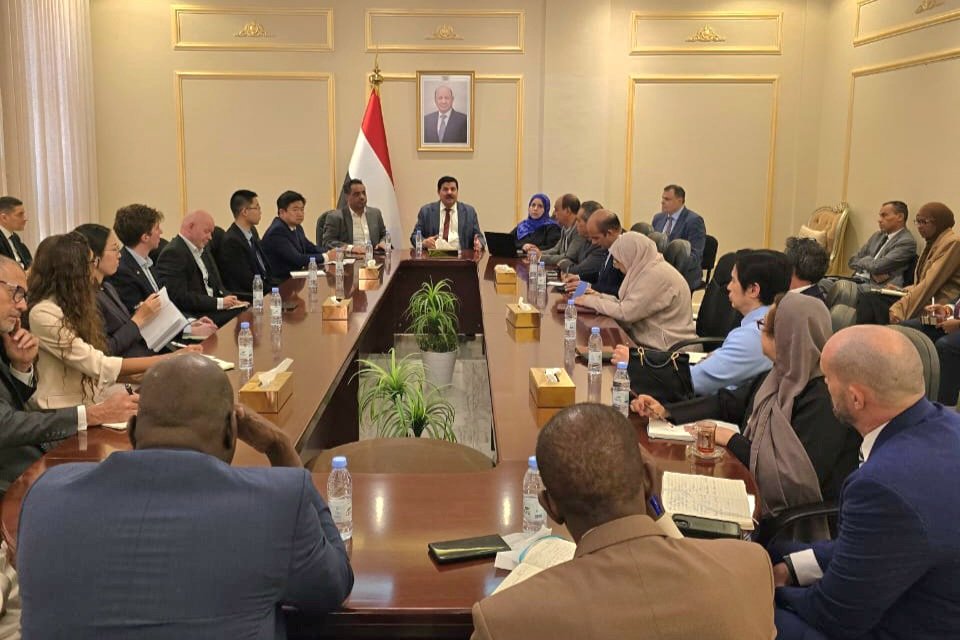
RIYADH, Saudi Arabia — Yemen’s national human rights commission briefed 23 ambassadors and diplomatic representatives on its 14th periodic report on Monday.
The National Commission to Investigate Alleged Human Rights Violations set out recent developments in the human rights situation and the findings of its monitoring work across several governorates, the state news agency Saba said.
Commission Chairman Judge Ahmed al-Muflihi led the briefing. Other members took part.
They presented the results of field investigations into violations documented during the reporting period, and the commission’s efforts to strengthen accountability through national mechanisms.
The meeting addressed missile strikes and armed attacks on cities and villages in Taiz, Hudaidah, Lahj and Marib over the past two months. The commission said those attacks caused civilian casualties, damaged homes and civilian infrastructure, and forced thousands of families from their areas.
Al-Muflihi said the commission continues to investigate emerging incidents and violations by all parties to the conflict.
He asked diplomatic missions and international partners to support national investigation and accountability mechanisms. Doing so would advance justice, provide redress for victims and uphold the rule of law, he said.
The meeting also covered the challenges facing human rights work during the conflict and ways to strengthen the protection of civilians.
The account of the briefing rests on Saba, which is run by the internationally recognised government, and on a report by the Yemeni outlet Yemen Monitor. Yemen Herald could not independently verify what was said, and the commission’s findings have not been independently confirmed.
The 14th periodic report was launched on Thursday. It covers August 2025 to July 2026.
The commission documented 2,062 violation incidents affecting 2,932 victims in that period, according to the report. It put the total since it began work in January 2016 at 35,015 incidents affecting 70,470 victims.
The commission investigated 501 cases of civilian killings and injuries during the reporting year. It attributed 446 of them to the Houthis. It recorded 193 civilians killed, among them 30 children and 15 women, and 388 wounded, among them 73 children and 36 women.
The Houthis have not responded to the report. The group rejects findings by bodies linked to the government in Aden.
The report documented 534 incidents of arrest and enforced disappearance. It attributed 371 to the Houthis, 124 to government forces and 39 to other parties.
Of 45 extrajudicial killings investigated, the commission attributed 33 to the Houthis, two to government forces and 10 to other parties.
It documented 24 incidents of torture and ill-treatment. Twelve were attributed to the Houthis, nine to government security bodies and three to forces loyal to Aidarus al-Zubaidi, who heads the Southern Transitional Council.
The commission recorded 57 cases of recruiting children under 18. It attributed 56 to the Houthis and one to the government and affiliated entities.
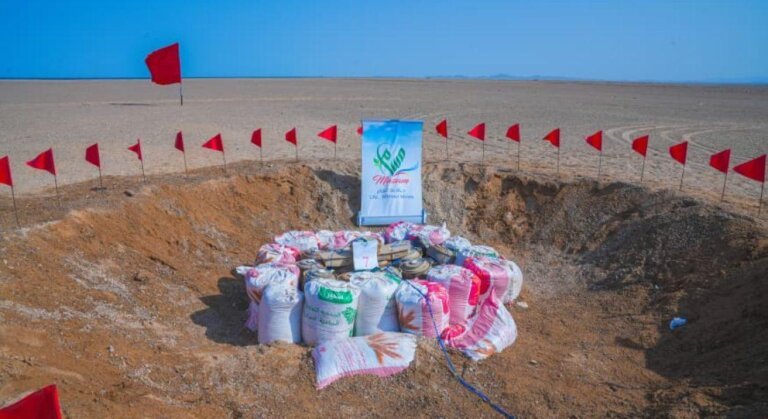
It logged 112 landmine explosions that killed 64 people and wounded 56. A further 78 incidents of planting mines, vehicle-borne explosives and improvised devices produced 83 victims.
The report listed 55 incidents of forced displacement affecting 139 people. Houthi responsibility was established in 53 of them.
It documented six house demolitions, all attributed to the Houthis, and 459 incidents of destruction or damage to private property affecting 707 people.
The commission concluded the Houthis were responsible for nine attacks on religious, cultural and historical sites, and for one attack on medical personnel and facilities.
The commission examined attacks on three commercial ships in the Red Sea, the MV Tutor, the Magic Seas and the Eternity C. It concluded the Houthis were responsible, citing data, images, video footage and admissions by the party that carried them out.
Those attacks killed crew members, led to others being detained and sank vessels, the commission said. Fuel, oil and cargo spills followed.
The report also covered the attack on Ras Isa port in Hudaidah on 17 April 2025. The commission said its documentation put the toll there at about 84 civilians killed and 150 wounded. It said the attack also damaged the oil facility and vehicles at the site.
The commission said security restrictions limited its access to victims, witnesses and the sites of violations, particularly in areas under Houthi control.
It said it sent 15 official memorandums to 11 government, security and military bodies asking about cases under investigation. The Houthis did not reply to its correspondence and did not appoint a liaison officer, it said. Its teams continued to document violations in areas under Houthi control despite the lack of cooperation, it said.
Its teams made field visits to Hadramawt, Socotra, Shabwa, Marib, Aden, Taiz, Lahj and Hudaidah. They entered prisons and detention centres and held listening sessions for victims and their relatives.
The commission called on all parties to observe international humanitarian law, release people held arbitrarily, halt child recruitment and clear landmines and remnants of war.
It asked the Houthis specifically to release journalists, aid workers and human rights defenders, and to lift restrictions on media and civil society work.
The United Nations says more than 22 million people in Yemen need humanitarian assistance and that 5.2 million are internally displaced. Its response plan for 2026 sought 2.16 billion dollars to reach 12 million people.
The commission was set up in January 2016. It describes itself as an independent national mechanism.
About the Author