Agriculture Minister al-Soqatri reviews Pandemic Fund veterinary project with its team in Rome
 Yemen Herald News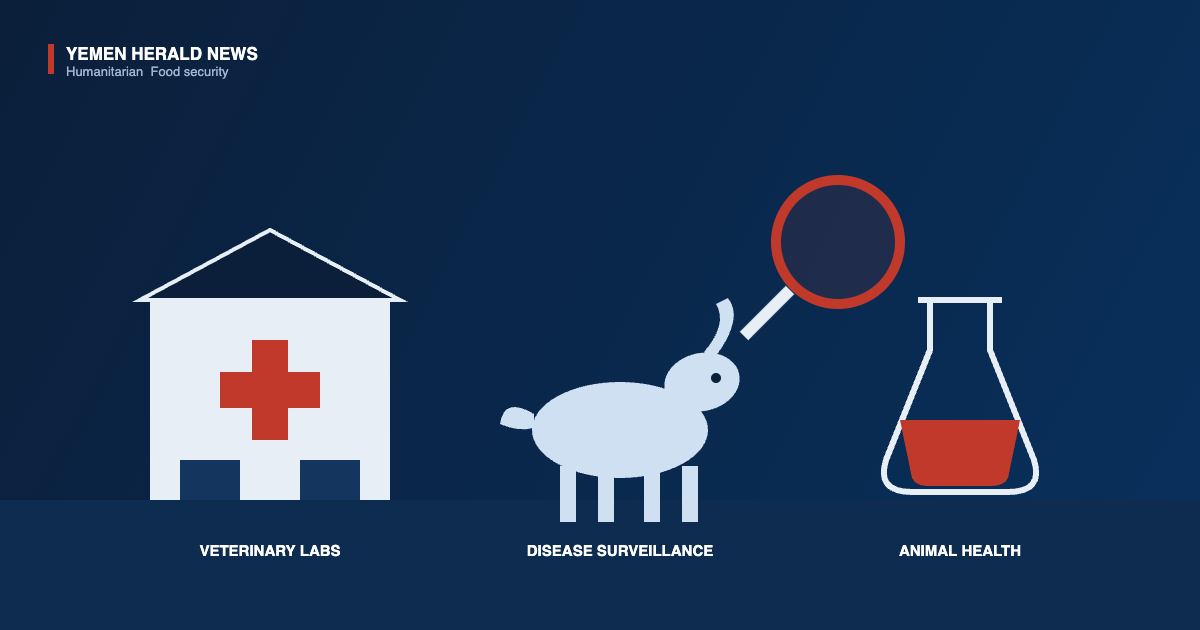
ROME, Italy — Yemen’s agriculture minister reviewed progress on a Pandemic Fund project for veterinary services with the fund’s team in Rome on Tuesday.
Salem al-Soqatri, minister of agriculture, irrigation and fisheries, met the team including Yemen project coordinator Gabrielle Taylor, the state news agency Saba reported.
Al-Soqatri holds the agriculture, irrigation and fisheries portfolio in the Aden-based cabinet.
The account rests on Saba, which carried the ministry’s readout. No independent account of the meeting has been published, and the Pandemic Fund has not issued a summary of its own.
The project runs in the ministry’s animal health sector, according to the agency.
The two sides reviewed progress achieved so far, the main problems met during implementation, and how to keep the work going, Saba said.
They discussed building and upgrading veterinary infrastructure. That covers laboratories, quarantine facilities and surveillance centres at central and governorate level.
Quarantine facilities matter for a country that moves live animals across land and sea borders. Surveillance centres are meant to detect outbreaks early enough to contain them.
The talks also covered training for laboratory and surveillance staff, the agency reported.
A further strand is disease surveillance for transboundary and zoonotic diseases at directorate and governorate level.
Zoonotic diseases are those that pass between animals and people.
Transboundary animal diseases spread across borders and can close export markets for livestock producers.
The Pandemic Fund team said it was willing to work with the ministry on coming regional projects, according to Saba.
That cooperation would cover institutional development and capacity to counter epidemic diseases, pests and plant diseases affecting public health, food systems and food security, the agency said.
Saba did not report a figure for the project’s value or a completion date.
The meeting was held on the sidelines of an FAO conference at the organisation’s headquarters in Rome.
The Food and Agriculture Organization opened its Global Conference for Actions on One Health in Agrifood Systems on 21 September. It runs to 23 September.
The conference theme is that One Health in agrifood systems is everyone’s health, everyone’s responsibility and everyone’s action.
One Health treats human, animal and environmental health as a single field rather than three separate ones.
FAO said the meeting would bring together government representatives, technical experts and partners to turn the approach into practice across food systems.
Sessions cover food safety, antimicrobial resistance, climate change, biodiversity, policy and investment.
The organisation set out objectives including folding One Health into agrifood policies and investment, and strengthening work across agriculture, environment, health, finance and urban sectors.
FAO also planned to launch a One Health knowledge and intelligence hub at the conference.
FAO is the United Nations agency for food and agriculture. Its headquarters have been in Rome since 1951.
The Pandemic Fund was established in 2022 and is hosted by the World Bank.
It finances pandemic prevention, preparedness and response in low- and middle-income countries, with a focus on surveillance, laboratories and health workforce capacity.
Yemen’s veterinary system has operated with limited resources through more than a decade of war.
The country imports much of its food and depends on livestock for part of its rural income.
Fisheries sit in the same ministry. The sector employs coastal communities along the Red Sea and the Gulf of Aden, including areas now affected by the fighting.
Animal disease outbreaks affect both food supply and household earnings.
Yemen has recorded repeated cholera outbreaks since 2014. The World Health Organization described the epidemic that began in 2016 as one of the largest on record.
The country also sits on the desert locust frontline. FAO monitors breeding on the Red Sea coastal plains, where seasonal rains can set off swarms that cross into the Horn of Africa.
The humanitarian caseload is among the largest in the world.
More than 22 million people in Yemen need assistance, according to the UN humanitarian office’s March 2026 response plan.
That plan recorded 18.3 million people as acutely food insecure.
It counted more than 2.2 million children under five as acutely malnourished, including 516,157 with severe acute malnutrition.
It listed 5.2 million internally displaced people.
The plan sought 2.16 billion dollars to reach 12 million people.
The World Health Organization has said nearly 20 million people in Yemen need health assistance.
Those figures predate the fighting that began on Yemen’s western coast this month.
The Houthis opened an offensive against the Presidential Leadership Council on 3 September, and went on to take the Red Sea coastline including the port city of Mokha.
UN agencies reported about 112,000 people displaced in two weeks of fighting. A Yemeni government unit put the figure at close to 147,000 over 18 days.
The internationally recognised government has operated from Aden since it lost Sanaa to the Houthis in September 2014.
The war began after the Houthis seized Sanaa in September 2014. A Saudi-led coalition intervened in March 2015.
Ministries divide staff and records between the two capitals, which complicates national programmes such as disease surveillance.
Saba did not say whether the project covers areas outside government control.
It gave no date for the next round of talks.
About the Author