Trump Gives Iran 48 Hours to Reopen the Strait of Hormuz or Face Strikes on Power Plants
 Yemen Herald News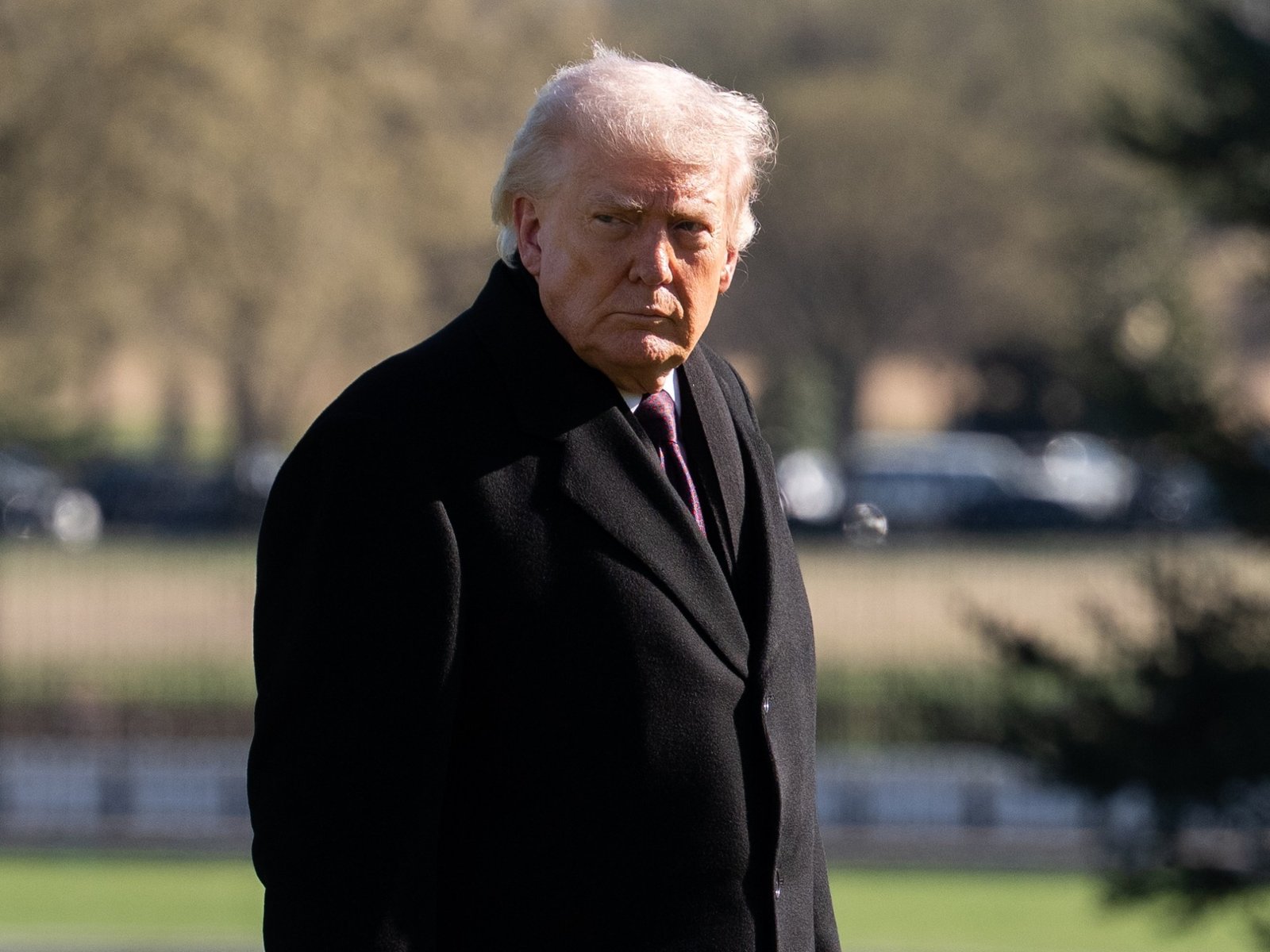
United States President Donald Trump issued a 48-hour ultimatum to Iran on Saturday 21 March 2026, demanding that the Strait of Hormuz be fully reopened to shipping and threatening to strike Iranian power plants if it was not. Writing on his Truth Social platform from his Florida residence, Trump said that if Iran did not open the strait without threat within 48 hours, the United States would hit and obliterate Iranian power plants, beginning with the largest.
The threat landed in the third week of open hostilities between Iran on one side and the United States and Israel on the other. Traffic through the strait had been sharply curtailed since early March, when the fighting began, and Tehran had framed the restriction as selective rather than total. Iranian Foreign Minister Abbas Araghchi maintained that the waterway remained open to all except vessels belonging to states that had attacked Iran, and said several governments had approached Tehran seeking safe passage for their ships, with the final decision resting with Iran’s military.
The strait is the single most consequential chokepoint in the global energy trade. In normal conditions roughly a fifth of the world’s oil and a comparable share of its liquefied natural gas pass through a channel little more than thirty kilometres across at its narrowest, with Iranian territory along the northern shore. Most Gulf producers have no meaningful alternative route, and the pipelines that bypass it carry only a fraction of the volume.
Iran’s response to the ultimatum was immediate. The Iranian military warned that it would strike all United States energy infrastructure in the region if Iranian fuel and energy facilities were attacked, a formulation that put refineries, terminals and power generation across the Gulf states within the declared target set. The exchange raised the prospect of a war fought against the energy systems on which the region’s economies and civilian populations both depend, and the threat to power plants in particular drew warnings from humanitarian organisations about the effect on hospitals, water treatment and sanitation.
Targeting electricity generation raises questions under the laws of armed conflict. Power stations are frequently classed as dual-use, serving military and civilian functions at once, and attacks on them are judged against the harm caused to the civilian population. Iran’s grid supplies a country of some 90 million people, and legal specialists noted that a campaign against generating capacity as a whole would be difficult to reconcile with the requirement that attacks distinguish between military objectives and civilian infrastructure.
Markets reacted accordingly. Crude prices climbed as traders priced in the possibility of a wider strike on energy assets, equities fell across several Gulf exchanges, and war-risk premiums for tankers in the region rose again. Analysts noted that the ultimatum’s structure, a fixed deadline attached to a specific target class, gave markets an unusually precise date around which to position, amplifying the movement.
The demand also sat awkwardly against Trump’s own recent statements. Days earlier he had spoken about winding down the military campaign, suggesting its objectives were close to complete. United States Central Command reported that airstrikes had degraded Iran’s capacity to attack shipping in the strait. If both assessments held, the case for a further escalation aimed at the same problem was harder to make, and the gap between the military reporting and the political rhetoric drew scrutiny in Washington and among allied governments.
There was a practical difficulty as well. Even had Tehran wished to comply, reopening the strait was not something that could be accomplished by announcement. Commercial traffic had stopped because insurers had withdrawn cover and owners judged the risk unacceptable, and those decisions would not reverse within 48 hours on the strength of an Iranian statement. Restoring normal transit required sustained evidence of safety, not a declaration, which meant the deadline was in effect unmeetable in the terms set.
The ultimatum did not expire as stated. Trump extended the window repeatedly over the following fortnight as diplomatic contacts continued, eventually settling on Monday 6 April as the final cutoff. The pattern of successive extensions was read by some observers as an attempt to preserve leverage without committing to strikes, and by others as evidence that the initial deadline had been set without a workable plan for its expiry.
Shipping data showed how thin the traffic had become. Transits ran far below the normal daily average, and several vessels that did sail were struck by projectiles.
Meanwhile the partial arrangements continued to develop. Iran indicated it would permit Japanese-linked vessels to transit after consultations with Tokyo, and reports described the Islamic Revolutionary Guard Corps building a registration and vetting system for ships seeking clearance, with a limited number of vessels connected to China, India and Pakistan already moving along a corridor close to the Iranian coast. Japan, France, Germany and the United Kingdom each signalled willingness to help restore safe navigation, without specifying what that assistance would involve.
For governments outside the immediate conflict, the episode illustrated how narrow the room for mediation had become. Public ultimatums delivered on social media compress the time available for quiet diplomacy and make de-escalation harder to present as anything other than a concession. Regional states hosting American forces faced the additional prospect of becoming targets in an energy-infrastructure exchange they had no part in starting, and several urged restraint publicly while pressing both capitals in private.
About the Author