Saudi-led coalition says Houthi drone hit Medina power station serving Prophet’s Mosque
 Yemen Herald News
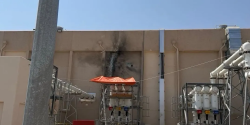
MEDINA, Saudi Arabia — A drone struck an electricity distribution station serving the Prophet’s Mosque in Medina on Tuesday, the Saudi-led coalition said.
Maj. Gen. Turki al-Maliki, spokesman for the Coalition to Restore Legitimacy in Yemen, said an investigation had concluded that the Houthis planned and carried out the attack.
He said the drone hit the Taibah distribution station at 5:11 a.m. on Sept. 29.
The finding rested on an operational review and on remnants of the drone recovered at the site, al-Maliki said. He said examination of the wreckage confirmed the involvement of the Houthi group in planning and executing the strike.
One transformer was forced out of service, according to the coalition statement. The wider electrical network was not affected and supply to customers was not interrupted.
No casualties were reported.
The Houthis denied responsibility. A military source quoted by the group’s news agency called the coalition’s account a lie, Al Jazeera reported.
The station supplies power to the Prophet’s Mosque, the second holiest site in Islam.
Al-Maliki described the strike as an act of terrorism against a civilian facility. He said it formed part of what he called Houthi attempts to threaten the Two Holy Mosques.
The coalition would “continue to take and implement measures to deter the Houthi terrorist militia,” he said.
The account of responsibility rests on the coalition’s own investigation. Yemen Herald found no independent examination of the wreckage published by any other body, and no outlet has reported the strike from its own reporting.
A Houthi military source rejected the coalition’s account. The source, quoted by the Saba agency run from Sanaa, called the accusation a lie.
The source said the charge was meant to cover up an earlier Saudi claim about an attempt on Mecca that had not been proved.
A senior Houthi official separately rejected accusations that the movement had targeted Islamic holy sites, according to Houthi media cited by Agence France-Presse.
Al Jazeera reported the coalition statement and the Houthi denial on Oct. 1. It carried no independent verification of either account.
Attribution for attacks of this kind is routinely disputed between the two sides.
Several governments and the Gulf Cooperation Council condemned the attack.
Jasem Albudaiwi, the council’s secretary-general, said it “crossed all red lines, representing a blatant provocation to the sentiments of Muslims across the world.”
The United Arab Emirates foreign ministry called the attack a “flagrant violation” of Saudi sovereignty and a threat to the kingdom’s security.
Bahrain’s foreign ministry described it as a violation of international law and a “dangerous escalation” involving Islamic holy sites.
Kuwait’s foreign ministry said repeated targeting of civilian infrastructure violated Saudi sovereignty and international law.
Jordan denounced the attack as a “flagrant violation” of Saudi sovereignty and reaffirmed what it called absolute solidarity with the kingdom.
Türkiye condemned it “in the strongest terms.” Those statements were reported by Arab News on Oct. 1.
The Medina claim follows two earlier episodes this month.
On Sept. 16 Saudi Arabia described an alleged Houthi drone attack on Mecca as a red line. The Houthi leader denied targeting the city and said the movement would protect it. CNN, NPR, Time and Al Jazeera reported the exchange.
The Houthis said at the time that they had shot down a Saudi fighter jet.
On Sept. 19 Saudi Arabia said the Houthis had attempted an attack on Riyadh. NPR reported the claim.
The Houthis have launched drones and missiles at Saudi Arabia since the kingdom intervened in Yemen’s war in 2015, Agence France-Presse reported. It said attacks linked to Islam’s holy cities are rare.
The coalition was formed that year to support Yemen’s internationally recognised government. The Houthis hold Sanaa and much of the north.
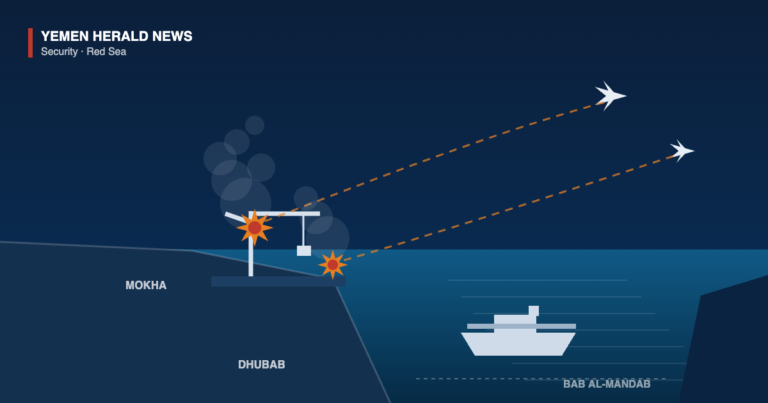
The current round of fighting began in late July, when the Houthis declared a blockade against Saudi shipping and pushed toward government-held areas near Mokha and the Bab al-Mandab strait, Al Jazeera reported.
The broadcaster said the fighting resumed after an Iranian aircraft tried to land in Sanaa without Saudi authorisation, and Saudi forces then struck Sanaa airport.
Yemen’s government warplanes struck Houthi positions in Hodeidah, Marib and al-Jawf on Sept. 6, Al Jazeera reported.
Saudi Arabia attacked Houthi-held areas in al-Jawf, al-Bayda, Marib and Taiz on Sept. 7 using aircraft and cruise missiles, according to the same account.
The Houthis attacked Abha, Khamis Mushait, Jizan and Najran the following day with drones and ballistic missiles, targeting energy installations. Saudi Arabia reported 73 people wounded and fires at oil facilities in its southern provinces.
Yahya Saree, the Houthi military spokesman, called that assault a broad operation.
The World Health Organization reported on Sept. 7 that 728 people had been killed or wounded since Aug. 23.
The Houthis accused Saudi Arabia on Sept. 18 of carrying out 26 attacks in 24 hours. Al Jazeera reported the claim and noted it could not be independently checked.
The UN humanitarian plan for Yemen, published in March, said more than 22 million people in the country need assistance. It put the number of acutely food insecure at 18.3 million and recorded 5.2 million people displaced inside the country. It said more than 2.2 million children under five are acutely malnourished, 516,157 of them severely.
The plan sought 2.16 billion dollars to reach 12 million people.
The coalition did not say how long the damaged transformer would remain out of service.
About the Author