Houthi-run health ministry puts civilian toll at 536 since September 3
 Yemen Herald News

SANAA, Yemen — The Houthi-run health ministry said 536 civilians have been killed or injured in Saudi-led coalition air strikes since fighting escalated on September 3.
The ministry issued the figure in a statement on Sunday. It said the number combines deaths and injuries.
It said the strikes hit areas under Houthi control across several provinces, and that women and children were among those affected.
The ministry gave no breakdown by province, by date or by incident.
Yemen Herald could not independently verify the figure. No second origin for it has been published.
The Saudi-led coalition did not immediately comment on the statement.
No independent monitoring group has published a matching count for the same period.
The World Health Organization’s eastern Mediterranean office has reported more than 900 people killed since early August. That count covers the conflict as a whole and does not separate out coalition air strikes.
The same WHO reporting put displacement at at least 250,000 people since early August.
The coalition has carried out air attacks on Houthi positions during the escalation, Al Jazeera reported.
Yemen’s government launched its own air strikes on Houthi positions on October 13, Al Jazeera reported.
The current round of fighting opened on September 3, when the Houthis began an offensive in Taiz governorate. At least 129 people were reported killed in the early clashes.
The Houthis went on to take the districts of Hays and Al Khawkhah and the port town of Mokha, and to seize control of Yemen’s Red Sea coastline.
The escalation followed a strike on Sanaa International Airport on July 13. The Houthis then ended the 2022 UN-brokered truce and declared a blockade on Saudi Arabia.
Houthi forces attacked three Saudi airports between October 6 and October 12, according to reporting by The Associated Press and the BBC.
Saudi authorities said at least 12 people were killed and about 300 wounded in a strike on Riyadh’s King Khalid International Airport on October 10. One man died of his injuries the next day.
Saudi Arabia’s General Authority of Civil Aviation said the dead included four Saudis, two Bangladeshis and one national each of the United States, Jordan, Palestine, Syria, Sudan and Egypt.
Saudi officials said earlier Houthi strikes on Khamis Mushait, Abha, Jizan and Najran wounded 73 people on September 8.
Mohammed al-Bukhaiti claimed the airport attacks for the Houthis, citing Saudi strikes on Yemeni civilian infrastructure.
Yahya Saree, the group’s military spokesman, warned airlines on October 12 against using Saudi airports other than those in Makkah and Madinah.
A Saudia Airbus A320 was destroyed at Riyadh on October 8. The civil aviation authority said three Saudis died, including the aircraft’s pilot.
Turki al-Maliki, a spokesman for the Saudi-led coalition, called the October 10 strike a full-fledged war crime and said the coalition would respond.
Antonio Guterres, the UN secretary-general, said he was deeply shocked by the October 10 attack and that such strikes must cease immediately.
Hans Grundberg, the UN special envoy for Yemen, called the attacks a grave escalation. Grundberg has led UN mediation on Yemen since 2021.
A missile and drone attack struck the Maashiq presidential palace in Aden on October 15, killing at least five people, CNN and Al Jazeera reported. The government blamed the Houthis.
An attack on a military camp in Shabwa governorate killed at least 53 people on October 19, Al Jazeera reported.
Britain said on October 20 that RAF Typhoon fighters would fly defensive missions over Saudi cities. Its defence ministry said the jets would not attack the Houthis.
In Marib, shelling of a camp for displaced people killed two children and injured 15, according to reports from the area. A separate strike in Mafraq Harib killed three children and injured six, Saba reported.
Casualty accounts from the fighting come largely from the warring parties, and the figures they publish do not match.
The Yemeni National Resistance said more than 1,000 fighters were killed along the west coast between August 9 and September 10. A separate claim from the same force on September 13 put the toll at more than 500 killed and 1,500 wounded.
Government accounts around September 20 reported 118 Houthis and 36 soldiers killed in Taiz, Al-Jawf, Marib, Saada and Lahj.
Yemen’s cabinet approved a draft law on October 11 designating the Houthi group a terrorist organisation and criminalising its activities and financing, Anadolu reported.
The cabinet said Yemen was at a decisive stage in restoring sovereignty and ending what it called a Houthi coup financed and directed by Iran.
Iran denies arming the Houthis.
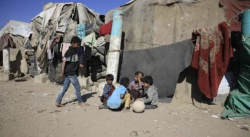
Displacement has continued across the south and west. UNHCR said fighting on the western coast had displaced more than 100,000 people by mid-September.
Djibouti’s refugee office registered 3,807 Yemeni arrivals by sea, a count current to October 8.
The UN Office for the Coordination of Humanitarian Affairs said in its plan for 2026 that more than 22 million people in Yemen need humanitarian assistance.
The same plan recorded 18.3 million people as acutely food insecure and more than 2.2 million children under five as acutely malnourished, 516,157 of them severely.
The Houthis have run the health ministry in Sanaa since taking the capital in 2014.
About the Author