Arab League condemns Houthi attacks on Dammam airport and Shaybah oil field
 Yemen Herald News
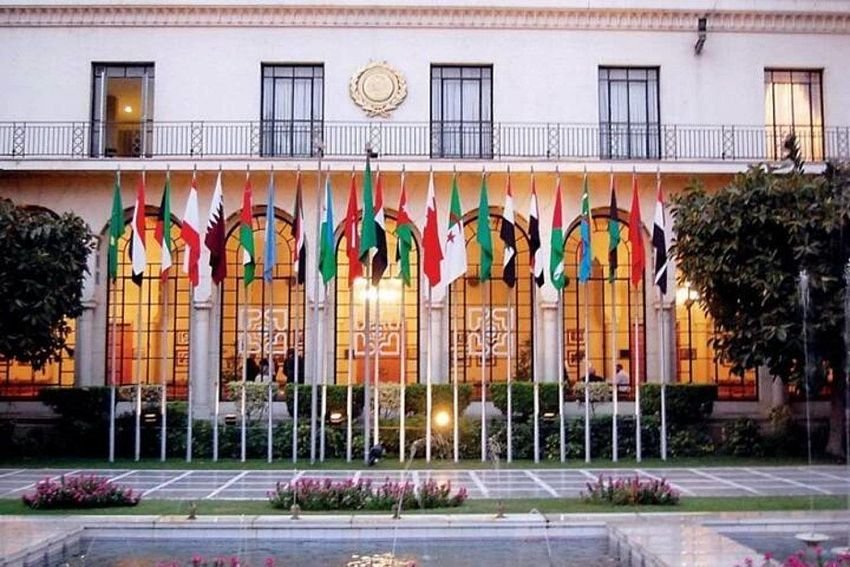
CAIRO, Egypt — The Arab League condemned Houthi attacks on King Fahd International Airport in Dammam and on the Shaybah oil field, in a statement issued on Friday.
The League said it rejected the attacks launched by the Houthi militia against the airport and against the oil field in Saudi Arabia’s Eastern Region.
It said the strikes breached Saudi sovereignty. It called them a direct threat to the Kingdom’s security and stability and to the safety of its citizens and residents.
The statement said the attacks caused casualties, injuries and material damage to the targeted facilities.
The League warned that repeated strikes on airports, oil installations and civilian infrastructure threaten civil aviation safety and energy security.
It called on the international community to assume its responsibilities to halt the attacks and prevent their recurrence.
The League expressed solidarity with Saudi Arabia. It said it supported the measures the Kingdom takes to safeguard its security, sovereignty and territorial integrity.
It described Saudi security as part of collective Arab security.
The statement offered condolences to the families of those killed and wished the injured a recovery.
The text distributed by the Saudi Press Agency did not name an individual official or give a title for the statement.
The account of the statement rests on that agency text. Yemen Herald found no independent confirmation of its wording.
Saudi Arabia’s General Authority of Civil Aviation said two people were killed and eight wounded in the attack on the Dammam airport on Wednesday evening.
The authority identified the dead as a Saudi citizen and an Indian national.
It said the wounded included a Saudi citizen and seven foreign nationals from India, Yemen, Bangladesh and Nepal. Their injuries ranged from minor to serious.
The airport sustained material damage, the authority said. It said operations had resumed and air traffic had returned to normal.
Yahya Saree, the Houthi military spokesman, said on Thursday that the group had carried out four operations in Saudi Arabia.
Saree has warned airlines against using Saudi airports, with the exception of those at Makkah and Madinah.
The Saudi energy ministry said a drone targeted a processing plant at Shaybah on Wednesday.
It said air defences intercepted the drone, and that debris fell near the plant, struck a contractor’s vehicle outside and started a fire.
Two people were killed and two were injured, according to the ministry.
The ministry said operations at the field were not affected. Shaybah produces about one million barrels of crude a day.
Brent crude rose 1.7 percent, or $1.81, to $110.63 a barrel on Thursday morning. West Texas Intermediate rose 1.4 percent, or $1.37, to $98.52.
The two attacks followed a series of strikes on Saudi airports earlier in October.
A ballistic missile struck the terminal complex at King Khalid International Airport in Riyadh on October 10. Reuters, The Associated Press and The Guardian reported 13 people killed and 308 injured.
Two days earlier, an attack at the same airport destroyed a Saudia Airbus A320. Three Saudi citizens were killed, among them the aircraft’s pilot, according to The Associated Press.
Attacks on Riyadh and on Abha International Airport on October 6 and 7 killed a Sudanese national in Riyadh and two women, an Algerian and a Moroccan, in Abha, the BBC reported. It put the number injured at eight in Riyadh and 28 in Abha.
An earlier attack on the Dammam airport on October 11 caused no casualties, according to TRT World.
The civil aviation authority kept King Khalid International Airport closed until October 17.
Several governments, among them Canada, Japan, South Korea, New Zealand, the United Kingdom and the United States, issued advisories cautioning against travel to Saudi Arabia.
UN Secretary-General Antonio Guterres condemned the October 10 attack. Hans Grundberg, the UN special envoy for Yemen, called it a grave escalation.
Turki al-Maliki, the spokesman for the Saudi-led coalition, described that attack as a war crime. Energy Minister Prince Abdulaziz bin Salman said the Kingdom would give a serious response.
The United States ordered some embassy staff and family members to leave Saudi Arabia this week over the threat of further attacks.
Iranian Foreign Minister Abbas Araghchi offered to mediate. Esmail Baghaei, a spokesman for the Iranian foreign ministry, said Tehran was concerned about the escalation.
Mohammed al-Bukhaiti, a member of the Houthi political bureau, has framed the campaign as retaliation for Saudi strikes on Yemeni civilian infrastructure.
The Houthis declared the 2022 truce over in July and announced a naval blockade on Saudi Arabia on July 20.
Fighting on the ground has continued since the Houthis began an offensive against the internationally recognised government on September 3.
A building at the Aramco complex in Dhahran was struck this month and caught fire. An official at the Saudi energy ministry said the fire was limited and that there were no casualties.
Houthi strikes in September reached Khamis Mushait, Abha, Jizan, Najran, Taif and Riyadh.
A drone that killed a Yemeni resident in Taif was reported as the first civilian death in Saudi Arabia since the truce ended.
Akasa Air suspended its flights to Saudi airports, with the exception of Dammam.
The Arab League condemned an earlier round of Houthi attacks on Saudi Arabia on October 9.
About the Author