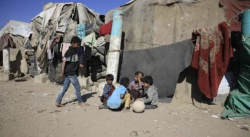
Monitoring office says 64 civilians killed in Taiz since August
 Yemen Herald News

TAIZ, Yemen — A government-aligned monitoring office said Houthi attacks killed 64 civilians and wounded 173 in Taiz governorate between 1 August and 22 October.
The office documents what it describes as the effects of the Houthi blockade of the governorate. It reported the figures through Saba, the state news agency of the internationally recognised government.
It attributed the casualties to the shelling of residential areas with ballistic missiles, heavy weapons and drones.
The office did not publish a breakdown by district, by date or by incident. It did not say how it verified the cases.
Yemen Herald could not independently confirm the count. The office is aligned with the government side, and the Houthi movement did not respond to the report.
Yemen Monitor, a Yemeni news site, carried the same total of 237 killed and wounded, citing the same office. No independent monitor has published a matching figure for that period.
The UN human rights office published a lower count for the same governorate over nearly the same period.
It verified 32 civilians killed and 115 injured in Taiz between 1 August and 19 October, Volker Türk, the UN High Commissioner for Human Rights, said in a statement on 20 October. Fourteen of the dead were children and nine were women.
The office said it verified those cases itself. It did not address the monitoring office’s figures. The two counts use different methods, and the UN tally ends three days earlier.
Fighting around Taiz has intensified since September. The Houthis launched an offensive aimed at government-held districts of the governorate, according to the monitoring office.
Al Arabiya reported on 13 October that Houthi forces had committed 43 violations in the governorate and that 172,000 people had been displaced.
Al Jazeera reported the same day that Houthi attacks in Taiz had killed civilians while government forces advanced in Marib.
The Houthis encircled Taiz city in early October and cut the road linking it to Aden, the seat of the internationally recognised government.
The UN Office for the Coordination of Humanitarian Affairs said on 23 October that more than 800,000 people in the city had been cut off from aid.
Jens Laerke, a spokesperson for the office, told a news conference in Geneva that it was 20 days and counting since the city was cut off.
At least 200,000 of those affected are women and children, he said. About three-quarters of the city’s residents depend on humanitarian assistance, according to the World Food Programme.
Most residents rely on water delivered by truck, and its price has tripled. Cooking gas is largely unavailable, which threatens the community kitchens that feed families.
Christian Lindmeier, a spokesman for the World Health Organization, said 42 health facilities in Taiz face acute shortages of fuel, oxygen and medicine.
UN screenings have found more than 52,000 children in the city with acute malnutrition, about 11,500 of them severely.
The coordination office said almost 260,000 people have been displaced across Yemen since August, with about half sheltering in Taiz.
Humanitarian agencies have reached more than 174,000 of them, close to six in 10 displaced households, the office said. The assistance includes food, hygiene kits and emergency cash.
The monitoring office described the Houthis as Iran-backed militias and said the blockade was intended to subjugate the population. That wording is the office’s own.
The Houthi movement has not published a response to the figures. It has not commented publicly on the office’s reports.
Taiz, in Yemen’s southwestern highlands, is the country’s third-largest city.
Fighting since 2015 left the Houthis in control of the governorate’s northern areas and encircling the city, while its centre stayed under government-aligned control, the International Crisis Group said in a 2022 report.
The group said the Houthis had besieged the city since 2016, and that the fighting had cut the main overland routes linking Taiz with both Houthi- and government-held areas.
The road to Hawban, a five to 15 minute drive from the city centre before the closures, took five to six hours on a poorly maintained one-lane road, according to that report.
The journey to Aden, which took two to three hours before 2015, took six to eight. Trucking food and fuel over the same route could take from 14 hours to several days.
A detour linking Taiz and Aden, the Hajjat al-Abd road, is prone to fatal accidents.
A sub-agreement to the 2018 Stockholm accord called for a joint committee to work toward reopening humanitarian corridors into the city. The delegations never met jointly.
Reopening the Taiz roads was one of three confidence-building measures in the UN-brokered truce that took effect in April 2022. Crisis Group reported little progress on it that year.
The European Union called on the Houthis to lift the siege in a statement posted on 14 October, saying civilians and civilian infrastructure must be protected.
Members of the European Parliament adopted a resolution on 22 October calling on the Council of the European Union to place the Houthi movement on the bloc’s terrorist list.
The resolution asks the Council to act but does not itself impose sanctions. Asset freezes and travel bans require the Council’s approval.
Yemeni communities in Belgium and the Netherlands held protests on 23 October in Brussels and The Hague calling for the roads into Taiz to be reopened.
Saba published the monitoring office’s figures on Saturday.
About the Author