The Venezuelan Crisis: A Flashpoint for Regional Instability and Economic Collapse
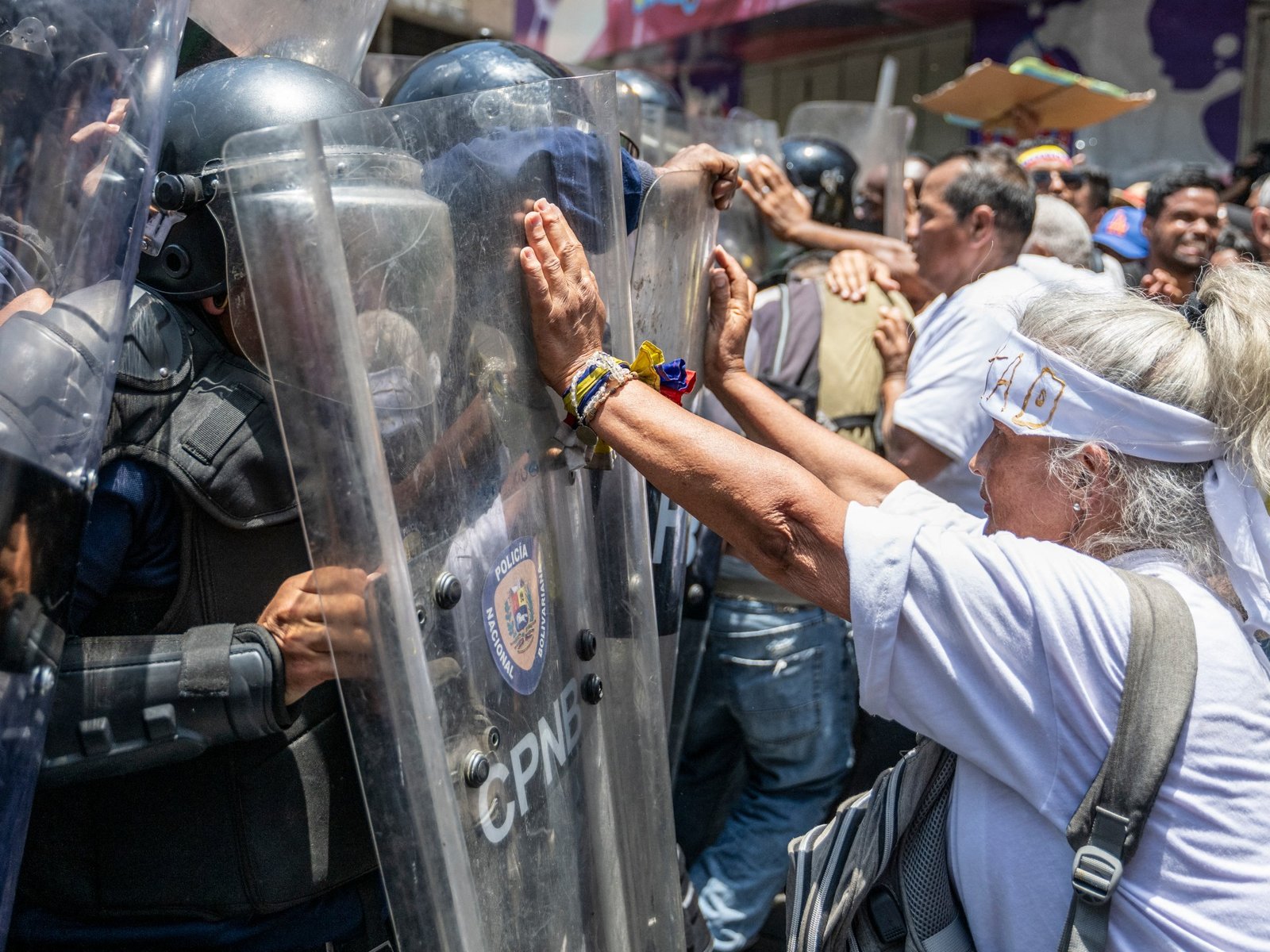
The recent protests in Venezuela, marked by police blockades against demonstrators demanding higher wages and pensions, underscore a critical juncture in the nation’s ongoing crisis. This situation not only highlights the dire economic conditions faced by Venezuelans but also poses significant geopolitical ramifications for the region, particularly as the country grapples with the fallout from international sanctions and internal governance failures.
Venezuela has been in a state of turmoil for years, exacerbated by a combination of economic mismanagement, political strife, and external pressures. The country, once one of the wealthiest in Latin America due to its vast oil reserves, has seen its economy collapse under the weight of hyperinflation and a plummeting currency. The abduction of former President Nicolas Maduro by U.S. forces in January 2026 has further destabilized the political landscape, leaving a power vacuum that the interim government, led by Delcy Rodriguez, struggles to fill. The economic crisis has led to widespread poverty, with many citizens unable to afford basic necessities, making the recent protests a manifestation of deep-seated frustration and desperation among the populace.
The protests in Caracas, which saw union leaders, retirees, and public sector workers marching towards the presidential palace, were met with a heavy police presence. The demonstrators were demanding not just higher wages but a fundamental change in governance, calling for elections and an end to the current regime’s policies. The interim government’s response has been tepid at best; while Rodriguez has promised a wage increase on May 1, the specifics remain vague, and skepticism abounds regarding the government’s ability to deliver meaningful economic relief. The current minimum wage of 130 bolivars, equivalent to a mere $0.27 per month, starkly illustrates the gap between government promises and the reality faced by Venezuelans.
The implications of these protests extend beyond Venezuela’s borders. The economic instability in Venezuela has already led to a significant influx of refugees into neighboring countries, straining resources and creating potential flashpoints for conflict in the region. As public discontent grows, the risk of violent clashes between protesters and security forces increases, which could further destabilize the already fragile political environment. Economically, the government’s inability to address the basic needs of its citizens could lead to a complete breakdown of social order, prompting a humanitarian crisis that would require international intervention. The potential for increased U.S. sanctions or military involvement looms large, which could exacerbate tensions not only within Venezuela but also with regional allies and adversaries.
The situation in Venezuela is a complex interplay of internal strife and external pressures. The interim government’s reliance on promises of future wage increases without concrete action reflects a broader strategy of maintaining power through appeasement rather than genuine reform. This approach is fraught with risks; as the economic situation deteriorates, the likelihood of a popular uprising grows. Moreover, the geopolitical landscape is shifting, with countries like Russia and China watching closely, ready to exploit any opportunity to expand their influence in the region. The U.S. must navigate this delicate situation carefully, balancing the need for humanitarian support with the imperative of not appearing to endorse a regime that has lost legitimacy in the eyes of its people.
Looking ahead, several scenarios could unfold. If the interim government fails to deliver on its promises of wage increases and economic reform, we could see a surge in protests, potentially leading to violent confrontations. This could prompt the military to intervene, either to protect the government or to side with the protesters, further complicating the power dynamics. Alternatively, if the government manages to stabilize the economy, even temporarily, it may quell dissent but at the cost of long-term reform. The international community’s response will also play a crucial role; increased sanctions could push the regime into a corner, while diplomatic engagement might provide a pathway for negotiation and eventual transition to a more stable governance structure.
The protests in Venezuela are not merely a reflection of local grievances but a signal of deeper geopolitical currents that could reshape the region. As the situation evolves, the stakes are high not only for Venezuelans but for neighboring countries and global powers invested in the outcome. The international community must remain vigilant, recognizing that the resolution of Venezuela’s crisis will have far-reaching implications for regional stability and security.
About the Author