Yemen’s Social Affairs Minister and UNFPA Discuss Women and Youth
 Yemen Herald News
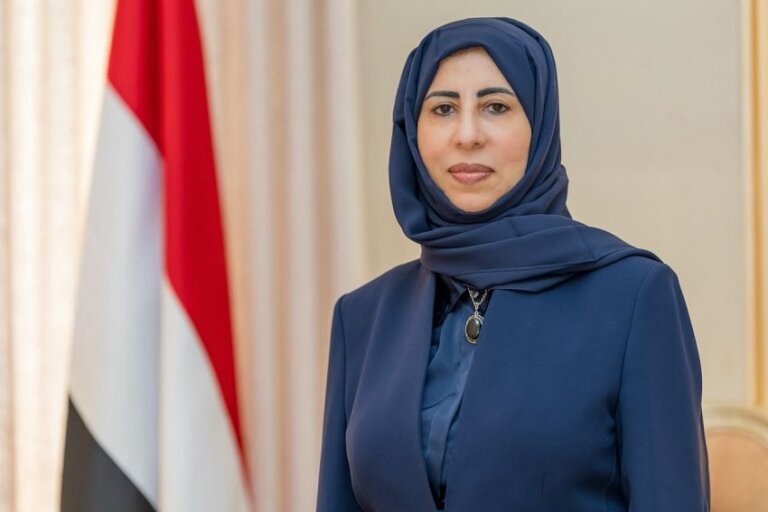
Yemen’s Social Affairs Minister and UNFPA have discussed empowering women and youth, in talks framed as part of the country’s broader efforts toward stability and development. Mukhtar al-Yafei, the Minister of Social Affairs and Labour, met representatives of the United Nations Population Fund to explore cooperation aimed at supporting women and young people in a country ravaged by conflict.
Yemen has been embroiled in conflict since 2014, in a war that has produced one of the world’s worst humanitarian crises. The conflict has devastated the economy and exacerbated social challenges, particularly concerning gender equality and the situation of young people, deepening the difficulties facing large segments of the population.
Women and girls have borne much of the burden of the turmoil, facing heightened risks of violence, poverty and exclusion from decision-making. Their situation reflects the disproportionate impact that conflict often has on women, and addressing their needs and advancing their participation have become important concerns in the response to the crisis.
In this context, the role of international organisations such as UNFPA is significant. The agency’s focus on gender-based violence and women’s empowerment addresses needs that are acute in the Yemeni context, and its engagement with the government reflects the collaborative effort required to support women and young people amid the challenges of the conflict.
Gender-based violence has been among the concerns intensified by the conflict. The breakdown of protections, the pressures of displacement and hardship, and the disruption of social structures can expose women and girls to heightened risks, and addressing gender-based violence is an important element of efforts to protect and support them.
The empowerment of women, a focus of the discussions, encompasses efforts to enhance their participation, opportunities and protection. Enabling women to take part more fully in economic, social and political life is regarded as important both for their own wellbeing and for the broader recovery and development of the country.
The situation of young people, also addressed in the meeting, reflects another dimension of the social impact of the conflict. Yemen has a large youth population, and the war has disrupted the education, opportunities and prospects of young people, making their empowerment and inclusion important to the country’s future.
Youth empowerment involves efforts to provide young people with education, skills, opportunities and a voice in society. Enabling young people to develop their capacities and to participate in economic and social life is essential to their prospects and to the country’s future, given the significant share of the population they represent.
The Ministry of Social Affairs and Labour plays a central role in addressing social issues and supporting vulnerable groups, including women and youth. Its engagement with UNFPA reflects the collaborative effort required to address these challenges, drawing on the resources and expertise of international partners alongside the ministry’s own efforts.
The connection between the empowerment of women and youth and the broader goals of stability and development reflects an understanding of their importance to the country’s future. Inclusive development, drawing on the participation of all segments of society, is widely regarded as essential to effective and durable recovery, lending significance to efforts to support women and young people.
UNFPA’s engagement in Yemen encompasses reproductive and maternal health and the protection of women and girls, alongside its work on population and data. Its focus on gender-based violence and empowerment reflects the breadth of its mandate and its role in addressing the needs of women and young people in the country.
The exclusion of women from decision-making, cited as a consequence of the conflict, reflects a barrier to their participation and to inclusive governance. Efforts to enhance women’s involvement in decision-making are regarded as important both as a matter of fairness and for the effectiveness of the decisions that shape their lives and communities.
The challenges facing women and youth in Yemen are considerable, shaped by the conflict and by underlying social and economic conditions. Addressing them requires sustained effort and support, and cooperation between the government and international organisations such as UNFPA can help extend the reach and impact of efforts to support these groups.
The partnership between the ministry and UNFPA forms part of the broader web of cooperation on which the response to Yemen’s social challenges depends. Sustaining and strengthening these relationships is important to the effectiveness of efforts to support women and young people, and to the mobilisation of the resources required.
Realising the goals discussed will depend on resources, sustained commitment and the evolving situation in the country. Supporting the empowerment of women and youth is a long-term undertaking, and progress will require continued effort, though the engagement of the ministry and UNFPA reflects a shared commitment to advancing it.
The pairing of women and youth in a single conversation was itself telling, reflecting a view increasingly common among aid agencies that the two agendas are intertwined. A generation of young Yemenis, women and men alike, has grown up knowing little but war, with schooling interrupted and opportunities scarce, and the risk is that their frustrations, left unaddressed, could feed instability rather than recovery. Programmes that combine protection from violence with education, skills and a genuine stake in public life are therefore framed not merely as social welfare but as an investment in the country’s long-term stability, an argument that officials and their international partners have increasingly placed at the centre of their appeals.
For now, the meeting between al-Yafei and UNFPA reaffirmed the shared interest of the Yemeni government and the agency in empowering women and young people. As the country works to address the social consequences of its conflict and to advance recovery, support for women and youth remains an important element of efforts to build a more inclusive and stable future.
About the Author