Yemen’s Health Minister and US Ambassador Discuss Health Cooperation
 Yemen Herald News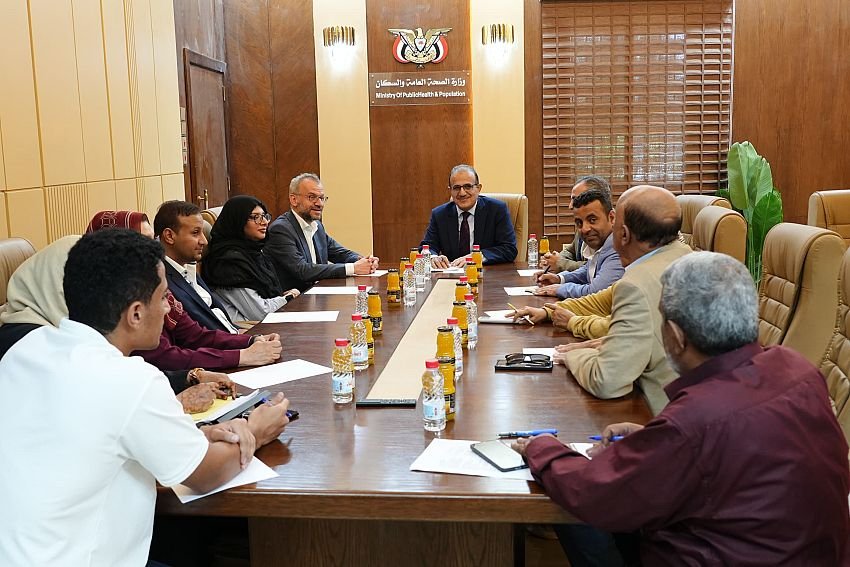
Yemen’s Health Minister and the US ambassador have discussed cooperation on health, in talks that highlighted the challenges facing the country’s devastated health sector and the importance of international support in addressing them. The discussions between the Minister of Public Health and Population and the United States Ambassador focused on the health crisis and on the role of partnership in confronting it.
Yemen faces one of the world’s most severe humanitarian crises, exacerbated by years of conflict and economic collapse. The health sector in particular has been devastated, with hospitals and clinics struggling to provide even basic services, and the population contending with disease outbreaks, malnutrition and the consequences of a fractured system.
The United States has historically played a significant role in Yemen’s health sector, including through initiatives associated with its development assistance. That engagement has contributed to efforts to sustain services and to address health needs, forming part of the broader international support on which the sector has depended.
As international support has come under pressure and resources have grown scarcer, the importance of sustaining partnerships in the health sector has been underscored. With needs immense and funding constrained, maintaining the engagement of partners is regarded as critical to the continued functioning of health services and to addressing the crisis.
The health sector’s devastation reflects the broader impact of the conflict on Yemen. Facilities have been damaged, supplies disrupted and personnel strained, while the collapse of the economy has further undermined the sector’s capacity. The result has been a system struggling to meet the health needs of a population facing acute and widespread challenges.
Disease outbreaks have been a recurring feature of Yemen’s crisis, with cholera and other preventable diseases spreading amid the breakdown of services and the deterioration of water and sanitation. Addressing such outbreaks and strengthening the capacity to prevent and respond to them are central concerns for the health sector and its partners.
Malnutrition, another grave dimension of the crisis, has affected large numbers of Yemenis, particularly children. The intersection of food insecurity, disease and the weakness of the health system has produced a situation in which malnutrition poses a serious threat, underscoring the interconnected nature of the challenges facing the country.
The role of health cooperation in the relationship between Yemen and the United States reflects the intersection of humanitarian and strategic considerations. Support for the health sector addresses urgent humanitarian needs, while the broader partnership between the two countries encompasses a range of interests bearing on stability and cooperation.
The importance of a robust partnership, emphasised in the discussions, reflects the reliance of the health sector on international support. With the government’s own resources severely constrained, the engagement of partners such as the United States is important to sustaining services and to addressing the extensive health needs of the population.
The strain on international support, referenced in the context of the talks, reflects the broader challenges facing humanitarian funding. As resources come under pressure and competition for them intensifies, sustaining assistance to Yemen’s health sector requires continued commitment, making the maintenance of partnerships a priority.
The Ministry of Public Health and Population plays a central role in efforts to sustain and strengthen the health sector, working to maintain services and to address health needs amid the crisis. Its engagement with partners such as the United States reflects the collaborative effort required to confront the challenges facing the sector.
The consequences of a weakened health sector extend across the population, affecting the ability of Yemenis to access care and to protect their health. The functioning of hospitals, clinics and health programmes is essential to the wellbeing and survival of the population, making support for the sector a matter of urgent humanitarian importance.
Sustaining and strengthening the health sector will require continued support, resources and effort. Rebuilding the capacity of the sector is a long-term undertaking, particularly amid the constraints of the conflict, and the engagement of partners such as the United States is important to sustaining the services on which the population depends.
The engagement between Yemen and the United States on health forms part of the broader relationship between the two countries, which encompasses humanitarian, economic and security dimensions. Cooperation on health reflects the humanitarian dimension of this relationship and the shared interest in addressing the needs of the population.
The backdrop to the talks was a period of particular anxiety for humanitarian actors in Yemen, as shifts in the funding landscape have forced difficult choices across the aid sector. Health programmes are among those most exposed to such pressures, since they rely on continuous supplies of medicines, fuel for generators and the salaries of medical staff, any interruption of which can quickly translate into closed wards and untreated patients. Sustaining even existing levels of care, officials have warned, is becoming harder rather than easier.
Against that reality, the emphasis on partnership carried an implicit appeal for continuity. For a health system that has been kept functioning in large part through external support, the withdrawal or reduction of any major contributor risks unravelling gains painstakingly held in place over years of crisis. Framing the relationship as a strategic one, rather than a purely charitable arrangement, reflected an effort to anchor health cooperation within the broader set of shared interests that bind the two countries, in the hope of insulating it from the volatility that has come to characterise humanitarian funding.
For now, the discussions between the health minister and the US ambassador reaffirmed the importance of cooperation in addressing Yemen’s health crisis. As the country contends with the devastation of its health sector, sustaining partnerships and support remains essential to maintaining services and to confronting the immense health challenges facing its people.
About the Author