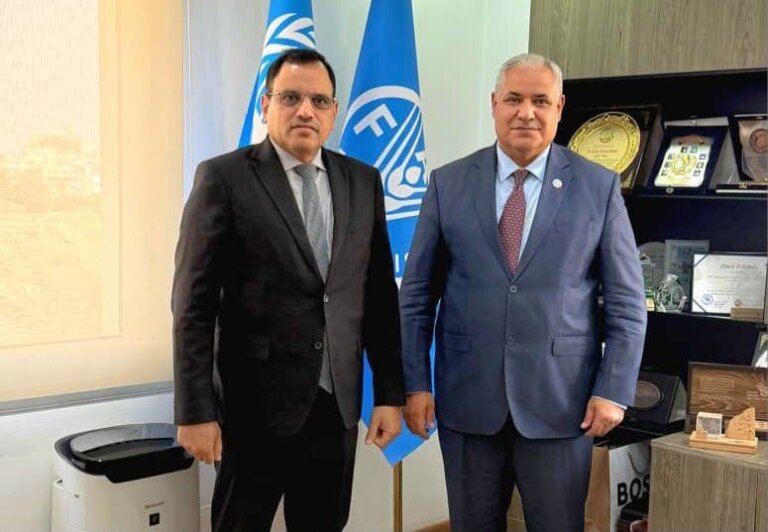
Al-Muharrami highlights partnership with Japan in development efforts.
 Yemen Herald News
Recent discussions between Abdulrahman al-Muharrami, a member of Yemen’s Presidential Leadership Council, and Japan’s Ambassador to Yemen, Yoichi Nakashima, outlined a framework for enhanced cooperation. This meeting, held in Riyadh, focused on strengthening bilateral relations and addressing opportunities for collaboration in sectors critical to Yemen’s recovery, such as development, economic revival, and reconstruction.
Al-Muharrami acknowledged Japan’s long-standing commitment to humanitarian efforts and development projects that focus on improving essential services and bolstering government institutions in Yemen. Such initiatives are crucial in helping to mitigate the challenges faced by everyday Yemenis amid a backdrop of economic despair and institutional collapse. He emphasized the necessity for partnerships that facilitate investment from Japanese businesses and the transfer of technical expertise to vital areas, including infrastructure, energy, and public services.
The backdrop of these discussions includes ongoing efforts by the Yemeni government to initiate economic and administrative reforms, which aim to stabilize the country’s economy and improve public service delivery. Al-Muharrami stated that these reforms are critical as Yemen navigates the complex path toward not only recovery but also sustainable growth and development.
Moreover, reports indicate noticeable improvements in security and stability in Aden, attributed to the concerted efforts of military and security forces. This progress is significant as it may create a more conducive environment for the implementation of development projects. With reduced conflicts, the government can focus on rebuilding institutions and essential services that were severely weakened during the years of war.
The key players in this evolving narrative include the Yemeni government, represented by the Presidential Leadership Council, the Japanese government through its diplomatic mission in Yemen, and various international organizations working on the ground. The involvement of these stakeholders reflects a multifaceted approach to address Yemen’s complex needs and challenges.
The Presidential Leadership Council is navigating a complex political landscape, often having to balance interests among different factions and local authorities. By engaging foreign governments, particularly those with longstanding ties like Japan, the PLC seeks to solidify its legitimacy and garner support that is essential for Yemen’s recovery.
Japan has shown a resilient commitment to Yemen, prioritizing humanitarian and development sectors. Ambassador Nakashima’s visit and discussions reinforce Japan’s intention to maintain a long-term presence and continue supporting Yemen through various initiatives. Japan’s approach typically focuses on soft power, aiming to foster stability through development assistance rather than direct military involvement.
International organizations also play a critical role, providing humanitarian relief and working toward long-term development strategies. These organizations often collaborate with governments and local entities to assess needs and implement programs tailored to address the challenges facing Yemen, from infrastructure repairs to health services.
The ongoing conflict and humanitarian crisis in Yemen have significant repercussions beyond its borders, particularly in the Middle East and the Red Sea region. The strategic importance of Yemen, particularly due to its proximity to key shipping lanes at the Bab al-Mandab strait, makes the situation crucial in terms of maritime security and global trade.
The international community’s engagement, including Japan’s increasing involvement, highlights the importance of stability in Yemen to broader geopolitical interests. Countries reliant on trade routes through Yemen may find the consequences of ongoing instability costly, both financially and politically. Stability in the region can contribute to reducing tensions among major powers engaged in the area, including Iran and Saudi Arabia, who back opposing sides in the conflict.
Enhanced cooperation between Yemen and various international partners may lead to improved conditions that not only benefit the Yemeni population but also promote regional harmony. For nations observing the situation in Yemen, effective recovery efforts could mitigate the risks of further destabilization that have the potential to spill over into neighboring countries, exacerbating humanitarian crises and security issues.
The commitment from Japan and other nations could catalyze renewed international interest in stabilization efforts. However, the complex dynamics on the ground require careful navigation to avoid political miscalculations that could lead to renewed conflict or disenfranchisement of local governance structures.
The meeting between Abdulrahman al-Muharrami and Yoichi Nakashima represents a significant step toward revitalizing Yemen’s international relationships, particularly with nations that have a track record of providing humanitarian support. As both parties explore opportunities for collaboration, the focus will likely remain on areas that can create immediate benefits for the Yemeni people while laying the groundwork for longer-term stability and development.
Japan’s historical approach to international development, rooted in sustainable practices and community engagement, aligns well with Yemen’s pressing needs. By facilitating investment and transferring expertise, Japan could play a crucial role in supporting infrastructural projects that are essential for any hope of economic recovery. These projects have the potential to create jobs and enhance public services, both of which are imperative for a population long deprived of necessities.
The ongoing reforms promoted by Yemen’s government appear to be on the right path, although their implementation is fraught with challenges. Political fragmentation and a lack of resources can hinder the ambition for transformative change. Moreover, ensuring inclusivity in these reforms will be critical for their success. Without the involvement of local stakeholders, even well-intentioned initiatives can falter.
As security conditions improve in urban areas like Aden, the government can gradually shift focus from immediate crisis management to sustainable development initiatives that promise greater resilience in the long term. However, regional players must remain cognizant of the delicate balance of power, especially as negotiations continue to unfold in ongoing peace processes involving opposing factions within Yemen.
Looking ahead, the prospects for Yemen depend heavily on continued international engagement and the ability of the Yemeni government to implement necessary reforms effectively. The expectations set during the meeting between al-Muharrami and Nakashima must be translated into concrete actions and mutual commitments that yield tangible benefits for the Yemeni populace.
Key priorities for the coming months could include attracting Japanese investments into infrastructure and public services. The involvement of Japanese companies may not only provide the much-needed technical expertise but also stimulate local economies, thus fostering an environment of recovery. As the conditions for investment improve amidst stabilizing security, Yemen should create favorable policies to encourage foreign partnerships that align with its national interests.
Moreover, the Yemeni government must remain vigilant about internal dynamics and the necessity of inclusive governance that considers the diverse voices of its citizenry. Establishing trust among different factions and communities will be essential, especially as recovery efforts take shape. If the government can foster unity and collaboration, it may have a better chance of ensuring lasting peace and stability.
Lastly, international diplomatic efforts must continue to support a sustainable, multifaceted peace process that addresses both humanitarian needs and political grievances. Countries and organizations committed to Yemen’s recovery could benefit from close coordination, ensuring that aid reaches those most in need while paving the way for a more stable future for the region. As Yemen navigates this challenging landscape, the implications of each partnership and initiative could resonate far beyond its borders.
About the Author