Central Bank of Yemen Approves Reform Package to Reinforce Monetary Stability in Aden
 Yemen Herald News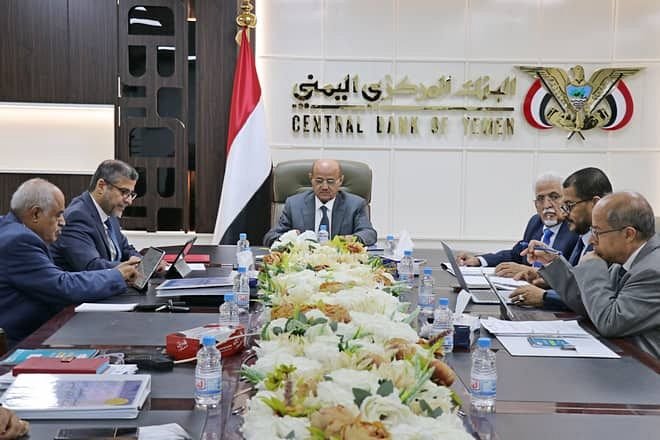
At the centre of the session was a review of economic and financial developments during the first half of 2026, alongside an examination of the bank’s annual report for 2025 and the findings of its audit committees. Board members discussed the implementation of ongoing reform programmes and stressed the need to strengthen governance, internal oversight, and risk-management systems. Officials framed these steps as essential to rebuilding institutional credibility and ensuring that monetary policy can function in an environment shaped by instability and scarce resources.
The Central Bank of Yemen has approved a fresh package of measures intended to reinforce financial and monetary stability, following the sixth session of its Board of Directors for 2026. The meeting, held in the interim capital of Aden and chaired by Governor Ahmed Ghaleb, brought together senior officials to assess the country’s fiscal position and to set the bank’s priorities for the remainder of the year. The decisions reflect a continuing effort to restore confidence in financial institutions that have been strained by nearly a decade of conflict.
A significant portion of the meeting addressed the expansion of Islamic financing tools through the bank’s Sukuk Unit. The board highlighted the growth of Sharia-compliant instruments designed to meet development financing needs and signalled plans to broaden their use in coordination with the Ministry of Finance and other government bodies. Officials suggested that a more developed sukuk market could open new channels of funding for public projects and, over time, for small and medium-sized enterprises seeking capital in a difficult economic climate.
The board also examined the performance of import financing, an area of particular importance for a country that relies heavily on imported food, fuel, and medicine. According to the bank, improved procedures have allowed the approval of financing requests valued at more than three billion dollars for essential goods. Members underscored the importance of transparency and compliance with regulatory frameworks in administering these funds, and called for continued adherence to the decisions of the Presidential Leadership Council and the rules governing import financing.
Beyond individual transactions, the board reviewed the performance of the national body responsible for regulating and financing imports, part of an effort to bring greater order to the way hard currency is allocated for commercial purchases. Coordinating import financing through clear procedures is intended to reduce opportunities for abuse and to ensure that limited foreign-exchange reserves are directed toward the goods Yemenis most need, rather than being absorbed by speculation or mismanagement.
The Central Bank occupies a pivotal position in Yemen’s fragile economy. Operating from Aden since the recognised government relocated its monetary authority there, it is responsible for managing the exchange rate, regulating the banking sector, and supporting the payment of public-sector salaries. Each of these functions carries direct consequences for ordinary citizens, whose livelihoods depend on the value of the rial and the steady flow of essential commodities into local markets.
The bank’s work unfolds against the backdrop of a conflict that has gripped Yemen since 2015, when fighting escalated between the Houthis and the internationally recognised government supported by a Saudi-led coalition. The war has produced one of the world’s most severe humanitarian crises, with millions of people displaced and a large share of the population dependent on assistance. Economic stability has become inseparable from humanitarian relief, as a functioning financial system is needed to keep markets supplied and prices within reach of households.
Maintaining the value of the national currency remains one of the bank’s most pressing concerns. Years of conflict have weighed heavily on the Yemeni rial, and sharp swings in its value feed directly into the cost of imported staples that dominate household spending. By tightening governance and reinforcing the tools at its disposal, the bank is seeking to dampen volatility and provide traders and families with a more predictable environment in which to plan.
External support has played an important role in sustaining these efforts. The board acknowledged assistance from regional partners, including budget support that has helped the government meet its obligations and maintain essential services. Such backing has been particularly valuable in shoring up the financial sector and easing pressure on the currency, though officials are aware that a durable recovery will ultimately depend on domestic reforms and a broader political settlement.
Yemen’s economic health also carries implications well beyond its borders. The country sits beside the Bab al-Mandab Strait, one of the world’s busiest maritime corridors, and prolonged instability there can ripple outward through global shipping and regional security. For neighbouring states, a more stable Yemeni economy is widely seen as a buffer against the kinds of disruption that tend to thrive in conditions of hardship and uncertainty.
In closing the session, Governor Ahmed Ghaleb reaffirmed the bank’s commitment to maintaining monetary stability, managing the exchange rate, and advancing reforms across the banking sector. He emphasised that close cooperation with the Ministry of Finance and other authorities would be central to translating the board’s decisions into measurable results.
While the measures announced are unlikely to resolve Yemen’s deep economic problems on their own, they represent a deliberate attempt to strengthen the institutions on which any future recovery will rest. By tightening oversight, broadening financing options, and safeguarding the channels that bring essential goods into the country, the Central Bank is signalling to citizens and international partners alike that Yemen’s monetary authority intends to keep functioning and reforming, despite the pressures surrounding it.
About the Author