Yemen’s Armed Forces Inspector General Meets EU and Dutch Envoys in Marib
 Yemen Herald News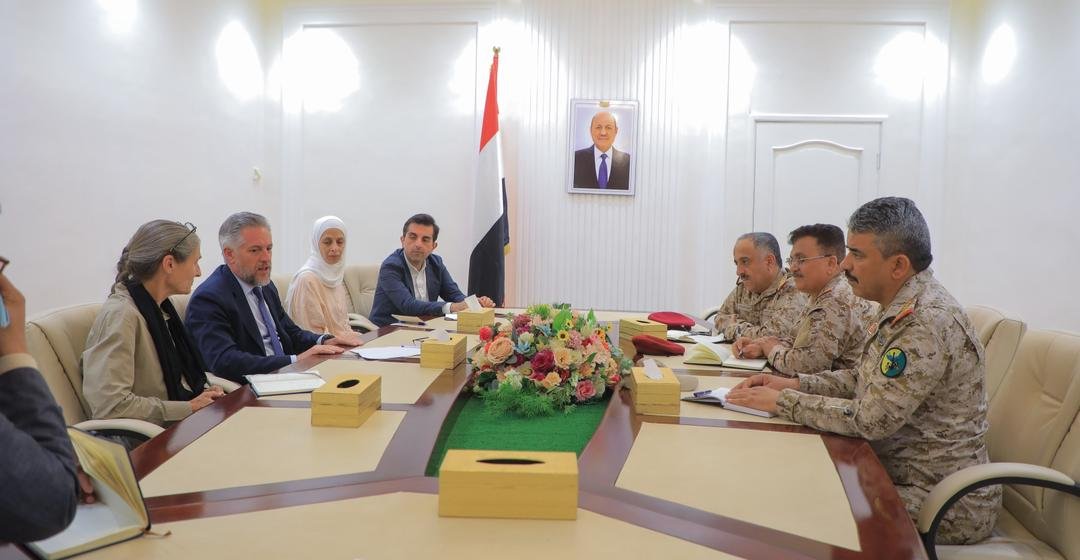
The war in Yemen, which entered its current phase in 2015, continues to dominate discussions about military and security developments across the region. In a recent sign of sustained international engagement, Major General Adel al-Qumairi, the Inspector General of the Armed Forces, held a meeting in Marib with senior diplomatic representatives from the European Union and the Netherlands. The talks underscored the importance of coordination and external support as Yemen contends with the combined pressures of a protracted civil war and one of the world’s most severe humanitarian emergencies.
During the meeting, al-Qumairi and the visiting envoys, including the European Union’s ambassador to Yemen, Patrick Simonnet, reviewed recent military operations carried out by government forces and other developments on the ground. The Inspector General voiced appreciation for the help that the European Union and the Netherlands have provided across a range of sectors, support that he said is intended to strengthen the effectiveness of the armed forces and, by extension, to improve the broader security environment in areas under government control.
Simonnet, a veteran European diplomat who took up his post as the bloc’s ambassador to Yemen in September 2025 after earlier assignments as EU ambassador to Saudi Arabia and as special envoy for the Mediterranean, has made repeated visits to government-held areas since arriving. His engagement in Marib reflects a wider European interest in supporting Yemen’s internationally recognised institutions, which sit under the Presidential Leadership Council formed in 2022 to unite anti-Houthi factions behind a single political and military structure.
The discussions took place against a security backdrop shaped heavily by the role of the Houthi movement, which controls much of northern Yemen, including the capital, Sana’a. The group’s growing military capabilities and the competing strategic interests of regional and international actors have made the conflict notoriously difficult to resolve. Yemen’s geography only raises the stakes: its long coastline along the Red Sea and its position beside the Bab al-Mandab Strait place it astride one of the world’s busiest shipping corridors, where attacks on commercial vessels have repeatedly disrupted global trade in recent years.
The humanitarian dimension of the crisis lends additional urgency to these diplomatic contacts. According to United Nations estimates for 2025, roughly 19.5 million people in Yemen require some form of humanitarian assistance, while around 4.8 million remain displaced from their homes, many of them forced to move more than once. Widespread food insecurity affects more than 17 million people, and aid agencies have warned that acute hunger has worsened over the course of the year even as the international response struggles under deep funding shortfalls.
Years of conflict have also left Yemen exposed to recurring public-health emergencies, including outbreaks of cholera and measles that have strained an already fragile health system. In that context, the ability of state institutions to maintain order and to keep humanitarian access open has become a central concern, blurring the line between military stability and the delivery of life-saving aid. The armed forces’ conduct is increasingly assessed not only in terms of battlefield performance but also by how far it enables relief operations to reach civilians in need.
For European governments, the convergence of security and humanitarian interests offers a rationale for a more structured and durable approach to Yemen, a country where outside support has often been undercut by the sheer length of the war and by competing agendas among the various international stakeholders involved. By engaging directly with military leaders as well as political figures, EU and Dutch diplomats appear to be seeking channels that can connect short-term stabilisation with longer-term development and recovery. European support in Marib has extended beyond security matters into practical development work, including cooperation on projects aimed at strengthening water security through renewable energy, an indication of the breadth of assistance now being directed at government-held areas.
The outlook for these engagements remains cautiously hopeful. Closer cooperation could, in principle, support not only improvements in the security situation but also wider humanitarian assistance and development work in government-held areas. Yet officials and analysts caution that progress will depend on careful attention to the behaviour of the many armed actors operating in Yemen, including the Houthis and the external powers backing different sides, any of whom could complicate or derail fragile peace efforts.
As the Presidential Leadership Council continues to work with international partners, the practical value of meetings such as the one in Marib will be measured by whether they translate into tangible gains for civilians enduring the conflict. Stability in Yemen matters not only for Yemenis themselves but for the wider region, particularly given the geopolitical sensitivities surrounding the Red Sea and the strategic calculations of the many nations invested in the area.
Ultimately, the encounter between Yemeni military leadership and European diplomats illustrates an attempt to build a more collaborative footing, one that acknowledges the tight link between military capability and humanitarian need. The obstacles remain formidable, but sustained dialogue of this kind may yet help chart a path toward a measure of stability in a country worn down by years of war, offering at least a cautious basis for hope.
About the Author