Saudi-Funded Masam Project Clears 1,207 War Remnants in Yemen in a Single Week
 Yemen Herald News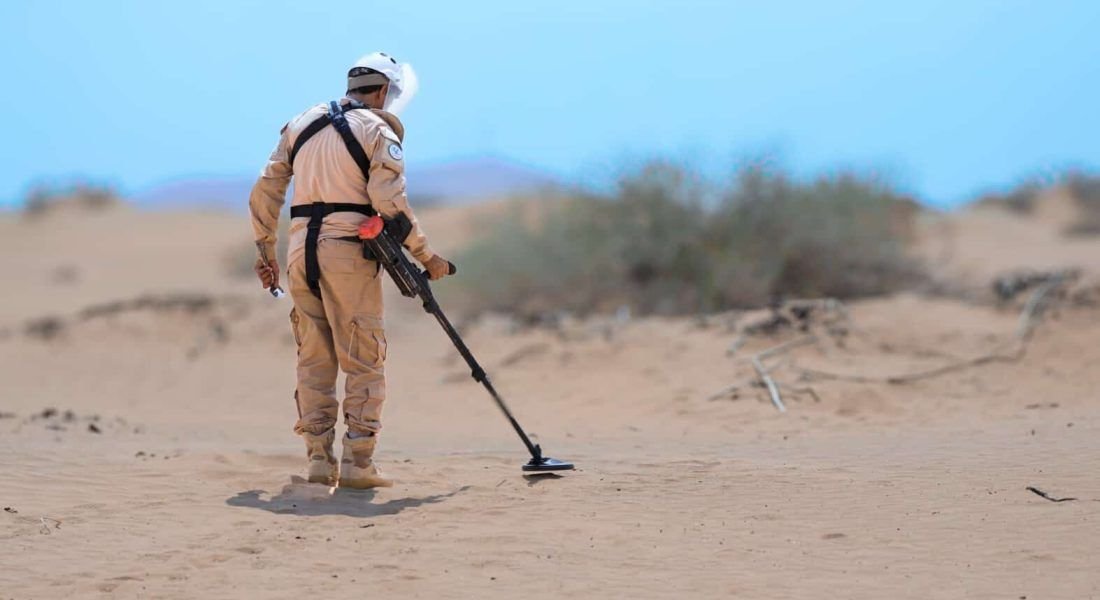
The Masam Project, the Saudi-funded demining programme working across Yemen, removed 1,207 hazardous devices over the course of a single week, part of a sustained humanitarian effort to make contaminated land safe for civilians recovering from years of war. The tally included 1,065 items of unexploded ordnance, 102 anti-tank mines, 34 anti-personnel mines and six improvised explosive devices, a spread that reflects the varied and unpredictable dangers left behind by the conflict.
Field teams cleared 312,264 square metres of ground during the period, painstaking work that turns fields, roads and residential areas back over to communities that have lived alongside hidden explosives for years. Each mine or shell removed reduces the risk to farmers returning to their land, children walking to school and families trying to rebuild homes, and demining is widely regarded as an essential first step before wider reconstruction and the return of displaced people can begin.
Some of the most intensive activity has been concentrated in the Midi district of Hajjah governorate in Yemen’s north-west, an area heavily contaminated during the fighting. There, Masam’s teams have removed a cumulative total of 10,622 dangerous items and cleared more than 3.6 million square metres of land since operations in the district began. The scale of that single-district effort illustrates how densely certain front-line and coastal areas were mined, and how long the task of clearing them takes.
Launched in mid-2018 and funded through the King Salman Humanitarian Aid and Relief Centre, the Masam Project has now removed well over half a million explosive threats nationwide, a figure that continues to climb week by week. In June 2026 alone the programme reported clearing roughly 6,786 mines and war remnants across multiple governorates, underlining both the persistence of the danger and the steady pace of the clearance work. The cumulative total offers a stark measure of just how widely explosive hazards were sown during the war, and of the effort still required to reverse it.
That contamination is a direct legacy of a conflict that escalated sharply in 2015, when a Saudi-led coalition intervened in support of the internationally recognised government against the Houthi movement, which controls much of northern Yemen including the capital, Sanaa. Landmines, many of them improvised and laid without maps or records, have been used extensively, and they remain lethal long after front lines shift. Unlike conventional weapons, they do not distinguish between combatants and civilians, and they can lie dormant for years before claiming a life or a limb.
The human cost of the wider war has been severe. United Nations agencies estimate that well over 18 million people in Yemen need humanitarian assistance, with millions displaced from their homes and large parts of the population facing acute food insecurity. A health system weakened by years of fighting has struggled with recurring outbreaks of preventable diseases, including cholera, compounding the hardship for communities already living on the edge. Against that backdrop, the removal of explosive hazards is not an abstract achievement but a practical precondition for survival and recovery.
Clearance work also carries a broader significance for stability in a country whose location gives it outsized strategic importance. Yemen sits alongside the Red Sea and the Bab al-Mandab Strait, one of the world’s busiest shipping corridors, and its long war has drawn in regional and international actors. Making land safe again supports the slow, uneven process of rebuilding local economies and allowing agriculture and trade to resume in areas that were effectively frozen by the presence of mines.
Demining is inherently slow and dangerous. Teams must survey suspected areas, identify devices that are often deliberately concealed or booby-trapped, and neutralise them one by one, frequently in difficult terrain and under the pressure of limited resources. The work has cost the lives of deminers in Yemen, a reminder that every cleared field represents real risk taken on behalf of others. International organisations and donors have repeatedly stressed the need for sustained funding and coordination if the country is ever to be cleared at scale.
For the communities that benefit, the impact is immediate and tangible. Once a district is declared safe, displaced families can begin to return, farmers can plant again, and aid convoys can move more freely to reach those in need. Local authorities have acknowledged that the threat from mines and unexploded ordnance is one of the central obstacles to recovery, and that tackling it requires cooperation between government bodies, humanitarian agencies and specialised clearance teams such as Masam.
The task ahead remains vast. Even at the current pace, fully clearing Yemen of mines and war remnants is expected to take many years, and the totals reported each week are only a fraction of what is thought to remain in the ground. Yet each figure, including the 1,207 devices removed in this latest period, marks another set of areas returned to civilian use and another reduction in the daily danger facing ordinary Yemenis. The programme’s steady progress offers a measure of hope that, with continued support, the country can gradually reclaim its land and begin to build a safer future for the generations who will inherit it.
About the Author