UAE Says It Intercepted 11 Iranian Ballistic Missiles and 27 Drones
 Yemen Herald News
The United Arab Emirates said its air defences had intercepted 11 ballistic missiles and 27 drones launched from Iran, the latest reported barrage in a sustained confrontation that has drawn the Gulf state into the wider conflict between Iran and the United States and its regional partners. In a statement, the UAE’s Ministry of Defence described the launches as part of a campaign of what it called direct Iranian aggression, and said its forces had once again engaged the incoming projectiles before they could reach their targets.
According to the ministry, the interceptions form part of a much larger tally accumulated since the attacks began earlier in the year. The UAE says its air defences have engaged hundreds of ballistic missiles, more than a dozen cruise missiles and close to two thousand drones over the course of the campaign, figures it has released in periodic updates as the exchanges have continued. These totals, which cannot be independently verified, have been presented by Abu Dhabi as evidence of both the scale of the threat it faces and the effectiveness of its layered defensive systems.
The human cost, as reported by the UAE, has fallen heavily on the country’s large expatriate workforce. The ministry said two members of its armed forces had been killed on duty, along with a Moroccan civilian contractor working alongside the military. It also reported civilian fatalities among Pakistani, Nepalese, Bangladeshi, Palestinian, Indian and Egyptian nationals, a toll that reflects the diversity of the migrant labour force on which the Emirates depends and underscores how the consequences of the fighting have extended well beyond the country’s own citizens.
The UAE has stated its readiness to respond to any future threats to its national security, emphasising what it describes as a commitment to protecting its sovereignty and the stability of the region. Iran, for its part, has cast its strikes across the Gulf and the wider Middle East as retaliation for military action by the United States and its allies, framing them as a response rather than an act of unprovoked aggression. The competing narratives illustrate how deeply contested the confrontation has become, with each side presenting its actions as defensive.
The reported attack on the Emirates did not occur in isolation. In the same period, Iran launched missiles and drones at several other Arab states, with Bahrain, Kuwait, Jordan and Qatar all reporting interceptions or attempts to engage incoming projectiles following American strikes on Iranian territory. The escalation placed further strain on a fragile ceasefire and prompted condemnation from Saudi Arabia and other governments in the region, deepening fears of a broader confrontation across the Gulf.
For the UAE, the exchanges are bound up with its long involvement in the conflict in neighbouring Yemen. Abu Dhabi has been part of the Saudi-led coalition that intervened in Yemen from 2015, a war that has hardened rivalries across the region and contributed to the network of hostilities now playing out between Iran and its adversaries. The Emirati government links the current threats to Tehran’s support for allied armed groups, including the Houthi movement in Yemen, an assessment Iran disputes.
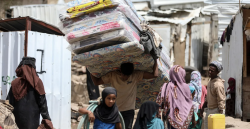
The war in Yemen has meanwhile produced one of the world’s gravest humanitarian emergencies. Aid agencies estimate that more than 18 million people there require some form of assistance and that several million have been displaced from their homes, with recurring outbreaks of cholera and other diseases compounding the suffering. The continuing violence across the region strains the delivery of aid and diverts attention and resources at a time when needs are rising, leaving relief organisations warning of the risk of further deterioration.
The geography of the confrontation adds to its significance. The Red Sea and the Bab al-Mandab Strait, which lie along vital routes for global shipping and energy supplies, have become focal points of concern, and any sustained instability there carries implications for international trade far beyond the immediate combatants. Disruption to these corridors can ripple through supply chains and energy markets, which is one reason the exchanges between Iran and the Gulf states have attracted close attention from governments and investors around the world.
Analysts watching the crisis say it raises broader questions about the shape of alliances in the region. As the UAE and its neighbours coordinate their defences against Iranian attacks, the pressure to deepen cooperation on missile defence and intelligence sharing is likely to grow, potentially reshaping relationships among the Gulf states and their international partners. The confrontation has also highlighted the difficulty of countering a mix of ballistic missiles, cruise missiles and cheap drones, a combination that can stretch even well-resourced air defence networks.
Looking ahead, the emphasis is expected to remain on the uneasy balance between military preparedness and efforts at de-escalation. The UAE has signalled that it will continue to defend its airspace, while regional and international actors press for a return to calm. Whether diplomacy can gain traction against the momentum of repeated attacks remains uncertain, but the hope among many governments is that dialogue can eventually address the underlying disputes driving the violence, rather than allowing the cycle of strikes and interceptions to draw in still more of the region.
About the Author