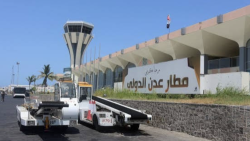
Prime Minister Shaya al-Zindani creates a government communication center in Aden
 Yemen Herald News
ADEN, Yemen — Yemen’s prime minister has created a government communication center inside his own office and named its first two officials, the state news agency said.
Shaya al-Zindani issued Decision No. 61 of 2026 establishing the Government Communication Center at the Office of the Prime Minister. Saba reported the decision from Aden on Tuesday.
He signed two further decisions the same day. Decision No. 63 appoints Ramah Hadi al-Jabri as director of the center. Decision No. 64 appoints Hassan Ghaleb al-Harazi as his deputy.
The center will coordinate government media messages, Saba said.
It is also to support ministries in communicating their policies and activities, and to work on transparency with citizens and the media.
The decision lists its aims as improving coordination among government entities, streamlining information sharing and unifying official messaging.
The account of the three decisions rests on the announcement by the Office of the Prime Minister, as reported by Saba, the news agency of Yemen’s internationally recognised government. No independent confirmation has been published, and the texts of the decisions have not been released.
Saba did not say when the center would begin work, how it would be staffed, or what it would cost.
Al-Zindani has led the government since January, when he replaced Salem Saleh bin Braik, who resigned. He kept the foreign affairs portfolio and holds both offices.
Bin Braik submitted his resignation and the Presidential Leadership Council approved it before naming al-Zindani, then the foreign minister, to form the next cabinet, Saba reported in January. No reason for the resignation was given.
His cabinet took the constitutional oath in Riyadh in February. He told Asharq Al-Awsat at the time that swearing in outside the country was a constitutional and security necessity, and that the government would move to Aden.
In that interview he said weak institutions had been a central cause of past failures. He called for rebuilding state structures and strengthening oversight.
He said he had kept the foreign ministry to finish work already begun there, including a restructuring of the ministry and of Yemen’s missions abroad.
He said ministers had been chosen on professional criteria rather than partisan ones.
The Presidential Leadership Council announced the cabinet on Feb. 6 with 35 ministers, 10 more than the one before it, Al Jazeera reported. It was formed after consultations in Riyadh.
Three women were given portfolios. Afrah al-Zuba took planning and international cooperation, Ishraq al-Maqatri took legal affairs, and Ahed Jaasous was made minister of state for women’s affairs.
Al-Zindani said then that his priorities were improving living conditions and services, fighting corruption and ending Houthi control of large parts of the country.
The formation drew mixed responses. The Hadramout Tribal Confederation and the Inclusive Hadramout Conference rejected the cabinet, saying it brought no fundamental change, and separatists protested in Seyoun.
Yaseen al-Tamimi, a political researcher, described the size of the cabinet as a policy of appeasement. Ahmed Maher, a journalist in Aden, said it was too early to judge the government.
Mohammed al-Samei, a journalist, called the ministers competent but said their success would depend on their unity. The activist Najiba al-Naggar welcomed the inclusion of women.
The Houthis do not recognise the council’s authority.
The Council of Ministers approved the government’s programme on March 5 at a meeting in Aden that al-Zindani chaired, according to the foreign ministry.
The programme sets out six priorities. The fourth covers institutional governance, digital transformation and the rule of law.
The others include political and security stability and extending state sovereignty; economic, financial and monetary stability; and basic services, among them electricity, water, health and education.
It was built on the 2025-2026 economic recovery plan and on Decision No. 11 of 2025 of the Presidential Leadership Council, which set economic reform priorities.
The programme seeks economic and social stability, regular salary payments, rationalised spending and protection of the national currency.
Al-Zindani described the programme at the time as a national commitment before the people, addressed to the council and to regional and international partners.
He said economic recovery would require restructuring public finance, improving transparency and activating oversight. He gave no timetable.
He said the period ahead was one for gradual, practical work, with institutional stability coming before any widening of the government’s goals.
He credited Saudi support with improvements in electricity supply. He said reorganising the armed forces would require a unified command and the redeployment of units outside cities.
On the Houthis, he said the government had shown flexibility in peace efforts but had met repeated noncompliance, and that any future talks would need clear terms of reference.
Aden has served as the seat of the internationally recognised government since it was displaced from Sanaa. The Houthis administer the capital and run a separate authority there, where Muhammad Ahmed Miftah has been acting prime minister since August 2025.
Al-Zindani is Yemen’s fourth prime minister in a little over two years. Ahmad Awad bin Mubarak held the office from February 2024 until he resigned in May 2025. Bin Braik served from then until January.
Saba reported no comment from either of the two appointees.
About the Author