Yemeni Forces Foil Bid to Smuggle 450 Pregabalin Tablets Toward Saudi Arabia
 Yemen Herald News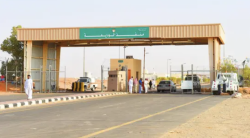
Yemeni army units say they have blocked an attempt to smuggle 450 tablets of the prescription drug Pregabalin toward Saudi Arabia, intercepting the consignment during a routine inspection at a frontier crossing. The seizure took place at the post known locally as the Weapon Checkpoint, where soldiers screen vehicles and travellers for contraband. According to the unit involved, the pills had been concealed with some care and packed to slip past a cursory search, a detail officers cited as evidence of how methodical small-scale trafficking along the border has become.
The interception was announced by the Command of the Security and Protection Battalion, which oversees operations at the crossing. The battalion said a large share of the drug consignments stopped at the post are traced back to areas under the control of the Houthi movement. Yemeni security officials have made that argument repeatedly, contending that the group leans on narcotics revenue to help sustain its war effort. The Houthis, for their part, reject accusations that they profit from the drug trade, and independent verification of individual shipments remains difficult in a country split between rival authorities.
Pregabalin, sold under brand names such as Lyrica, is a medication normally prescribed for nerve pain, epilepsy and generalised anxiety disorder. It is legitimate and widely used, yet it also carries a genuine potential for misuse: taken in high doses it can produce sedative and sometimes euphoric effects, and it has emerged as a drug of abuse across parts of the Middle East. That dual character, medicine in one setting and street drug in another, is exactly what makes it attractive to smugglers, who can move it in ordinary-looking packaging and blend it in with legal goods. Researchers examining seized samples in the region have documented how readily the drug is diverted from pharmacies into illicit markets.
The interception, modest in scale on its own, sits within a much larger pattern. Yemen has been mired in conflict since 2014, when the Houthis seized the capital, Sanaa, prompting a Saudi-led coalition to intervene the following year. The war has shattered institutions, weakened policing and left long stretches of territory contested or only loosely governed, the kind of conditions in which smuggling networks of every sort tend to flourish and in which enforcement is patchy at best.
The humanitarian toll of that war forms the backdrop to the drug problem. United Nations agencies have estimated that more than 18 million Yemenis need some form of humanitarian assistance, and millions have been displaced inside their own country. Poverty, mass unemployment and the collapse of ordinary public services have pushed some people toward the drug economy, whether as couriers, dealers or users. Public-health workers warn that substance abuse tends to climb in populations living under prolonged stress, trauma and displacement, layering a social crisis onto an already dire economic one.
For Saudi Arabia, the traffic is a persistent security irritant. Saudi border guards and customs officers regularly report intercepting narcotics, including Pregabalin and the amphetamine-based stimulant Captagon, and Riyadh has linked much of the cross-border smuggling to networks operating out of Houthi-held territory. That account mirrors the Yemeni battalion’s claims, even though the two governments approach the wider conflict from opposing positions. Seizures of hundreds of thousands of Captagon pills at Saudi crossings in recent months underline the scale of the trade that smaller interceptions like this one only partly reveal.
Geography compounds the challenge. The Yemeni-Saudi border runs through remote, mountainous terrain that is extremely hard to seal, and Yemen sits astride some of the world’s most sensitive shipping routes. The Bab al-Mandab Strait, at the mouth of the Red Sea, channels a significant share of global maritime trade toward the Suez Canal, and instability radiating from Yemen’s war has already disrupted that corridor in other ways. Drug smuggling does not threaten shipping directly, but it is one more symptom of the weak state authority that makes the region as a whole harder to secure.
Specialists who track the trade caution that seizures, however welcome, treat the symptom rather than the cause. Interdiction at a single checkpoint stops one consignment; it does not dismantle the supply chains, financing and cross-border coordination that keep the flow moving, and meaningful disruption is inherently difficult when the parties involved are also adversaries on the battlefield. Border checkpoints like the one that made this seizure have become the frontline of that effort.
Manned inspections remain the main tool available to under-resourced units, who rely on physical searches, tip-offs and hard-won experience to spot concealed cargo rather than the scanning technology used at busier crossings. Commanders say interceptions at the post have grown more frequent as traffickers test new routes and hiding methods, and they frame each recovered consignment as a deterrent to networks weighing whether the crossing is worth the risk.
For now, the Security and Protection Battalion presented the Pregabalin seizure as a small but concrete success, evidence, in its telling, that checkpoints along the frontier continue to catch shipments that would otherwise reach Saudi streets. Whether such efforts can be scaled up enough to blunt the trade will depend far less on any single inspection than on the broader course of Yemen’s war and the eventual restoration of functioning state control.
About the Author