Yemen’s Ambassador to Algeria Raises Iranian Violations of Sovereignty in Algiers Talks
 Yemen Herald News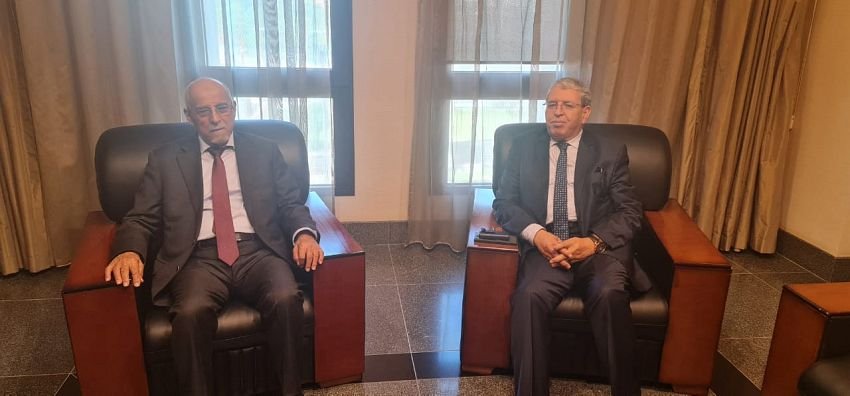
Yemen’s Ambassador to Algeria, Ali al-Yazidi, has held talks in Algiers with Ambassador Noureddine Khendoudi, Director-General for Arab Countries at Algeria’s Ministry of Foreign Affairs, in the latest of a series of diplomatic engagements aimed at strengthening ties between two countries with a long history of fraternal relations.
According to Yemen’s state news agency Saba, the discussions centred on bilateral cooperation and on the latest developments in Yemen. Al-Yazidi briefed his Algerian counterpart on the situation in his country, drawing particular attention to what the Yemeni government describes as escalating Iranian violations of its sovereignty.
Chief among those concerns is the recent arrival of an Iranian-operated flight at Sanaa International Airport, which lies in territory controlled by the Houthi movement. The Yemeni government regards the flight, conducted without the authorisation of the country’s legitimate authorities, as a clear infringement of Yemen’s territorial integrity and a violation of the international rules governing national airspace.
Al-Yazidi told his Algerian counterpart that the international community must uphold its commitments to Yemen by respecting the country’s sovereignty and supporting its security and stability. His message echoes recent statements from Aden, where the Presidential Leadership Council and the Transport Ministry have both rejected unauthorised Iranian flights into Sanaa and warned that an air corridor outside government control could be used to accelerate the delivery of weapons and personnel to the Houthis.
For its part, Algeria reiterated its commitment to maintaining and strengthening relations with Yemen, according to the Yemeni account of the meeting. The Algerian official affirmed his country’s support for Yemen’s stability and stressed the importance of continued coordination on issues of mutual interest, a position consistent with Algeria’s long-standing policy of backing Arab solidarity and collective approaches to regional crises.
Algeria’s voice carries particular weight in Arab diplomacy at present. The country has positioned itself as a defender of state sovereignty and non-interference across the region, and it has used its platforms in the Arab League and the United Nations to press for negotiated solutions to regional conflicts. For Yemen’s government, cultivating Algiers is part of a wider strategy of consolidating Arab support for its position against what it characterises as Iranian encroachment.
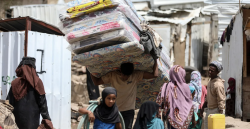
The meeting took place against the backdrop of a conflict that has devastated Yemen for more than a decade. The war between the Iran-backed Houthi movement and the internationally recognised government, which escalated in 2015 with the intervention of a Saudi-led coalition, has fractured the country and produced one of the world’s gravest humanitarian emergencies. United Nations agencies estimate that more than 18 million people need assistance and that some 4.5 million remain internally displaced, while recurrent outbreaks of cholera and measles continue to strain a shattered health system.
The dispute over Sanaa airport illustrates how contested even civilian infrastructure has become. The government argues that flights arranged with the Houthi authorities, rather than with the state, normalise the group’s control of the capital and open a channel that cannot be inspected or regulated. The concern in Aden is not a single aircraft but a precedent: an air bridge between Tehran and Sanaa operating entirely outside Yemeni and international oversight.
Regional geography magnifies the stakes. Yemen commands the eastern shore of the Bab al-Mandab Strait, the chokepoint linking the Red Sea to the Indian Ocean through which a substantial share of global trade and energy shipments passes. Instability in Yemen has already disrupted international shipping in recent years, and governments far beyond the Middle East have a direct interest in preventing a further deterioration.
Yemeni diplomacy has been notably active across several capitals in recent weeks, with ambassadors and ministers pressing the government’s case in Europe, Asia and the Arab world. The pattern reflects a deliberate effort to keep Yemen’s sovereignty on the international agenda at a moment when the wider confrontation between Iran and Gulf states risks eclipsing the country’s own crisis.
For al-Yazidi, the task in Algiers is both practical and symbolic: practical, in maintaining coordination with an influential Arab government; symbolic, in demonstrating that Yemen’s internationally recognised institutions continue to function and to speak for the country abroad. Algeria’s reaffirmed support offers the government a diplomatic asset it can carry into multilateral forums, where votes and statements from respected Arab states help frame the terms of debate.
The two countries’ ties reach back to the era of Arab liberation movements, when South Yemen was among the early supporters of Algeria’s post-independence diplomacy, and successive governments in both capitals have invoked that shared history. Beyond politics, the relationship has produced concrete if modest cooperation over the years, including agreements on technical education and periodic consultations between foreign ministries, threads that Yemeni diplomats are now working to reweave despite the disruption of war.
The path to peace in Yemen ultimately runs through negotiations that remain stalled, and no single bilateral meeting will change that. But the government’s diplomats argue that the groundwork matters: each reaffirmation of support for Yemen’s sovereignty, they contend, raises the cost of ignoring it, and keeps alive the principle that the country’s future must be decided by Yemenis rather than imposed from outside. In that effort, long-standing friendships such as the one between Sanaa and Algiers, forged in an earlier era of Arab politics, remain among Yemen’s most durable assets.
About the Author