Yemen’s Cabinet Enters Permanent Session After Iranian Flight to Sana’a
 Yemen Herald News
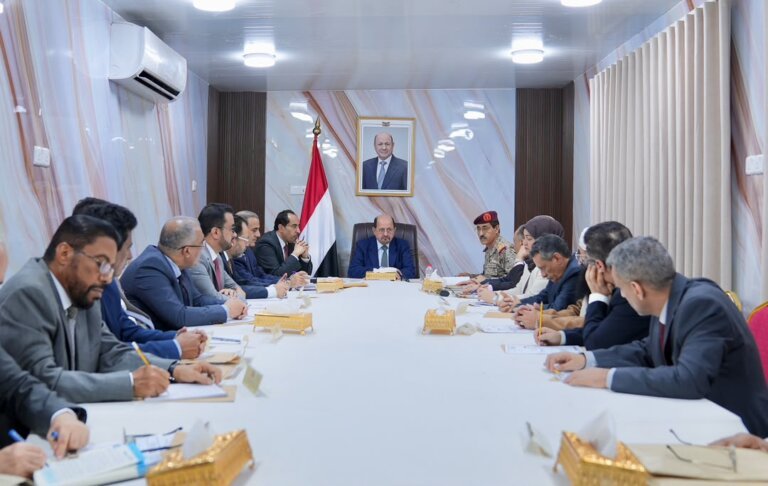
Yemen’s internationally recognised government placed its Cabinet in permanent session on Monday to confront what it described as a dangerous escalation by the Houthi movement, after an Iranian aircraft headed for Sana’a International Airport, which remains under the group’s control. Ministers took the decision at an extraordinary meeting in the interim capital, Aden, chaired by Prime Minister and Foreign Minister Shaea Mohsen al-Zandani, in one of the sharpest downturns in relations between the government and the Houthis in years.
In a statement issued after the meeting, the government said operating the flight amounted to a challenge to national sovereignty, a violation of international law and Security Council resolutions, and a threat to Yemen’s security and to regional stability. Officials said the Cabinet had resolved to remain in continuous session only after exhausting the initiatives it had offered to prevent further escalation, and they accused the Houthis of rejecting legal solutions while continuing to invite foreign intervention.
At the centre of the dispute was a Mahan Air Airbus A340 that sought to fly from Tehran to Sana’a. The government said it had refused an Iranian request to operate the service and that its forces struck the runway at Sana’a International Airport on 13 July to prevent the aircraft from landing. The plane instead diverted to Hodeidah airport on the Red Sea coast, according to officials on both sides. The Houthis blamed the Saudi-led coalition for the strike, and the competing accounts highlighted how hard it has become to establish an agreed version of events.
According to news reports, the aircraft was meant to carry Houthi figures returning from Iran, where they had travelled in connection with the death of the supreme leader, Ayatollah Ali Khamenei, who was killed in late February during a wave of US-Israeli strikes and whose funeral processions took place in July. The Houthis described the service as humanitarian, saying the inbound flight carried patients and other civilians, while Yemeni authorities said it had not been cleared through officially approved channels. The civil aviation authority ordered a temporary closure of airports across the country as tensions rose.
To manage the confrontation, the Cabinet approved the formation of a government crisis-management team to coordinate military, political, diplomatic, legal and media efforts. The team was asked to monitor developments on the ground and submit regular reports so that decisions could be taken quickly. By centralising the response, the government said, it aimed to react more effectively to what it characterised as repeated Houthi provocations and to avoid being caught off guard by further incidents.
The Cabinet also instructed the ministries of defence and interior, together with other agencies, to raise their readiness and to enable the armed forces and security services to protect the country’s airspace, territory and border crossings. Officials framed the directive as part of the state’s constitutional responsibility to defend national sovereignty against attempts to weaken its authority or bypass legal frameworks, and they linked it to a broader effort to reassert control over Yemen’s skies.
On the diplomatic front, the government tasked the Foreign Ministry with intensifying contacts with regional and international partners, urging them not to allow their airspace, territory or facilities to be used for flights into Yemen outside officially approved channels. The Cabinet held the Houthis fully responsible for the consequences of the escalation, arguing that it undermined peace efforts, and it also held Iran responsible, warning that continued support for the group would prolong the crisis and complicate any political settlement.
The episode quickly reverberated beyond Sana’a. The Houthis’ military spokesman, Yahya Saree, said the airport strike had ended a period of de-escalation and would not go unanswered, and the group launched missiles toward Saudi Arabia in the hours that followed. Saudi Arabia, which leads the coalition backing the Yemeni government, has been the target of repeated Houthi threats against its airports and shipping lanes, and the renewed exchanges raised fears of a return to more intense fighting.
Sana’a’s airport has long been a humanitarian as well as a strategic flashpoint, having been closed for long stretches of the war before limited flights resumed under earlier truce arrangements. Any renewed disruption there carries consequences for civilians who rely on the route for medical travel and the delivery of aid.
Western governments weighed in as the standoff sharpened. The United States, France and Britain affirmed their support for Yemen’s sovereignty and called on Iran to halt its backing of the Houthis, while the United Nations envoy urged both sides to de-escalate and return to negotiations. For the government in Aden, preventing unauthorised flights has become a test of its ability to assert authority over the country’s airspace and to demonstrate that it can enforce the rules it invokes.
The confrontation unfolds against the backdrop of a war that has gripped Yemen since 2015, when the Houthis seized Sana’a and a Saudi-led coalition intervened to restore the recognised government. Years of fighting have produced one of the world’s worst humanitarian crises, leaving millions displaced and dependent on aid. The narrow Bab al-Mandab strait, through which much of the world’s seaborne trade passes, has made Yemen’s coastline strategically significant, and an Iranian aircraft reaching Houthi-held territory has been widely read as a signal of Tehran’s reach in the Red Sea. Whether the standoff hardens into a broader exchange or gives way to renewed diplomacy is likely to depend on choices made in the coming days.
About the Author