Sana’a Governorate Security Committee Backs Leadership Decisions and Raises Military Readiness
 Yemen Herald News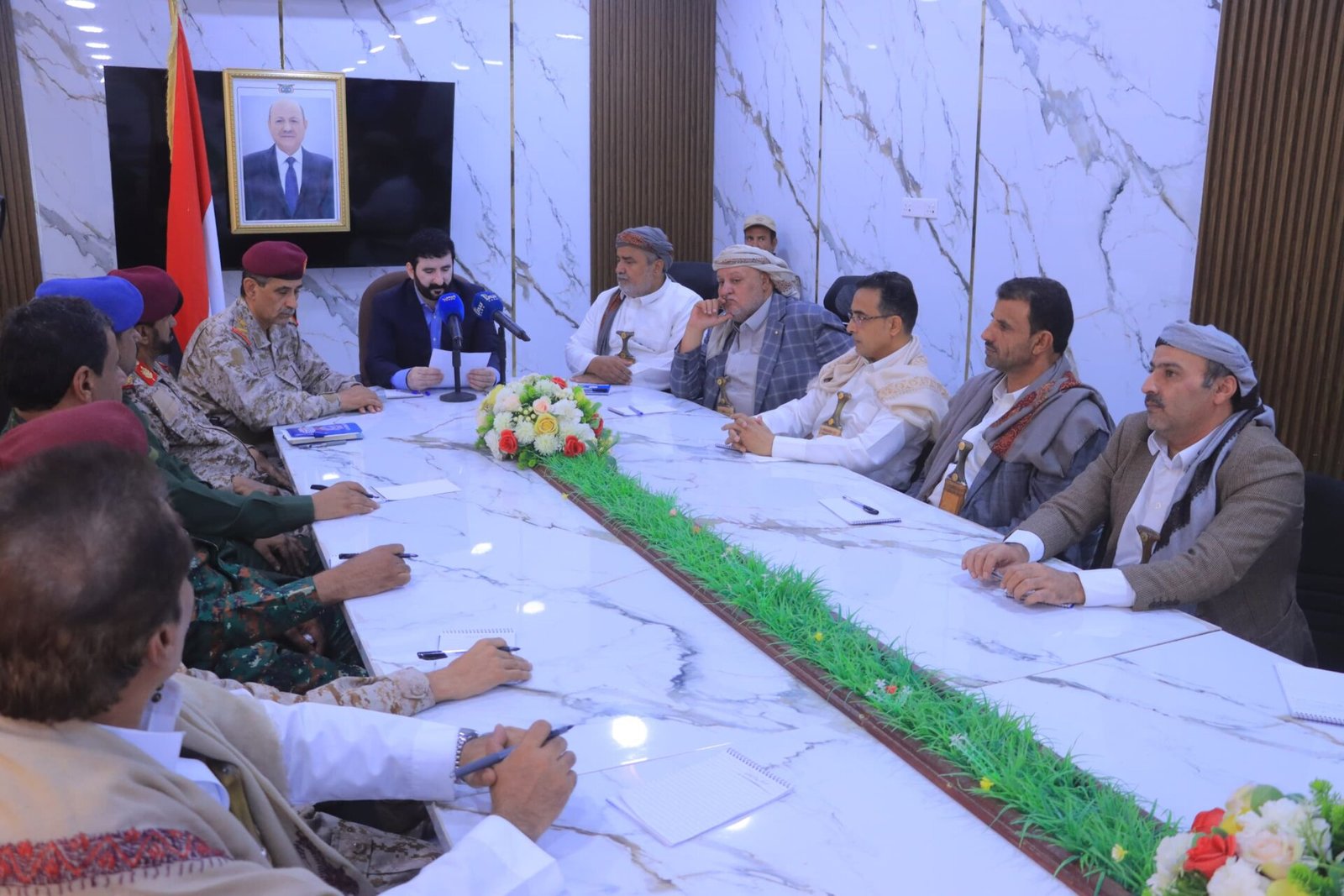
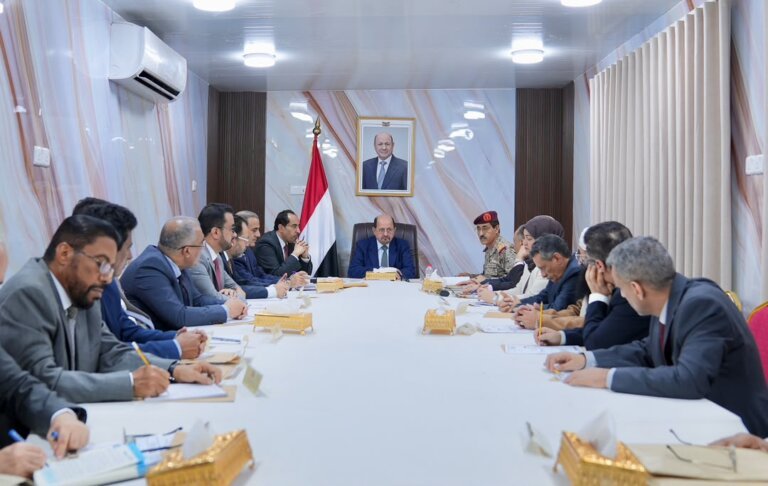
The Security Committee in Sana’a governorate has reaffirmed its alignment with Yemen’s political and military leadership, endorsing a recent address by Rashad al-Alimi, chairman of the Presidential Leadership Council, together with resolutions issued by that council and by the National Defence Council. Meeting on Tuesday under the chairmanship of Governor Maj. Gen. Abdulqawi Sharif, the committee adopted a set of measures intended to raise military and security preparedness across the governorate.
Members assessed the security and military situation, reviewed contingency and deployment plans, and discussed ways to improve coordination between military formations and security agencies so that national directives can be carried out quickly and effectively. The committee renewed its commitment to restoring state institutions, safeguarding Yemen’s sovereignty and, in its own language, defeating the Houthi coup, the term the internationally recognised government uses for the movement’s seizure of the capital.
Sharif told the meeting that present circumstances require security and military forces to maintain the highest level of operational readiness, to strengthen coordination and discipline, and to remain prepared to carry out every assigned duty in support of restoring security and stability. He offered no operational detail in public, and the committee’s statement did not specify which units or districts the new measures cover, nor what resources have been allocated to them.
Addressing tribal leaders, community elders and residents of the governorate, the governor urged families not to allow their children to be drawn into Houthi mobilisation and recruitment campaigns. He said the government had pursued every available path to peace while the movement chose continued escalation in what he characterised as service of an Iranian agenda. United Nations reporting on children and armed conflict has documented the recruitment and use of children by parties to Yemen’s war over many years, a pattern that has drawn repeated calls for accountability.
The committee also denounced Houthi attacks on Saudi Arabia and on commercial shipping in the Red Sea, describing them as damaging to Yemen’s national interests, threatening to regional security, in violation of international law and hazardous to international maritime trade. That framing reflects the position of the internationally recognised government; the Houthis reject it, presenting their operations as pressure exerted in a broader regional confrontation.
The meeting came amid a marked regional escalation. The Houthis have threatened to impose a naval blockade on Saudi Arabia that would affect traffic through the Bab al-Mandab Strait, and on 27 July they announced what they called a fourth phase of escalation. An attack on shipping in the Red Sea on 23 July helped drive oil above $100 a barrel for the first time since May. The European Union’s foreign policy chief has described the blockade threat as a dangerous escalation, noting that Bab al-Mandab links the Red Sea to the Gulf of Aden and carries a large share of Europe’s seaborne trade with Asia.
Committee members expressed appreciation for the continued support of Saudi Arabia and the Coalition to Restore Legitimacy, saying that political, military, economic and humanitarian assistance from those quarters remains instrumental in sustaining Yemen’s legitimate institutions. The Saudi-led coalition intervened in March 2015 after Houthi forces advanced south from Sana’a, and Riyadh has since underwritten a substantial part of the government’s budget.
Sana’a’s position makes the committee’s work unusual. The Houthis have held the capital since September 2014 and control much of the surrounding governorate, so the government-appointed governor and his security committee operate from outside most of the territory they nominally administer. Their decisions therefore function partly as declarations of political intent and partly as instructions to units deployed along the front lines that ring the central highlands.
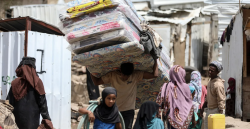
The humanitarian backdrop is severe. The United Nations Office for the Coordination of Humanitarian Affairs estimates that 22.3 million people in Yemen, more than two thirds of the population, need humanitarian assistance and protection in 2026, including 5.2 million internally displaced people. Some 18.3 million are acutely food insecure, with the latest analysis pointing to further deterioration as districts shift from crisis to emergency levels. More than 2.2 million children under five are acutely malnourished, roughly 516,000 of them severely, and about 14.4 million people are expected to need water and sanitation support.
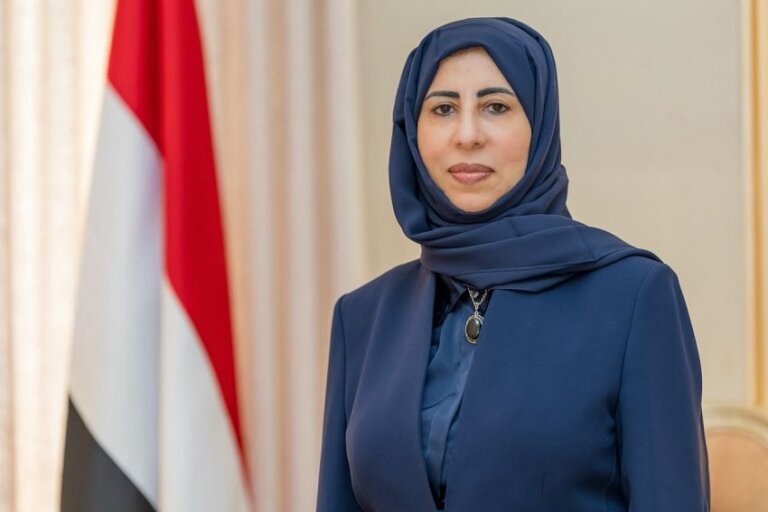
Funding lags far behind. Aid agencies are seeking $2.16 billion to reach 12 million people this year and had secured only around 12.7 per cent of that by May. The government whose authority the committee affirmed is meanwhile managing disruption of its own: the Presidential Leadership Council, formed in April 2022, has operated from Riyadh since December, when a Southern Transitional Council offensive pushed it out of Aden. Prime Minister Salem Saleh bin Braik resigned in January and was succeeded by Shaya Mohsen al-Zindani, and Afrah al-Zouba was sworn in on 23 July as the first woman to serve as foreign minister.
Closing the session, the committee approved a series of initiatives aimed at strengthening the capabilities and readiness of military and security units, affirming that state security institutions will remain prepared to fulfil their national responsibilities until the state is restored and the Houthi coup ends. No timetable accompanied that pledge, and United Nations mediation continues in parallel, where any eventual settlement would have to address the same questions of recruitment, revenue and military command that the committee spent its meeting discussing.
About the Author