Yemen Urges UN Security Council to Act After Drone Attacks on Saudi Arabia From Iraq
 Yemen Herald News
Yemen has asked the United Nations Security Council to take a firmer line against Iran after a series of drone attacks on Saudi Arabia that Riyadh says were launched from Iraqi territory, calling the strikes a serious escalation and a violation of national sovereignty.
The appeal came in a statement from Yemen’s Ministry of Foreign Affairs and Expatriates, which condemned the attacks and said the Yemeni government stands alongside Saudi Arabia in confronting threats to its security and stability. The ministry said it supported the measures the Kingdom is taking to protect its territory and its vital facilities, and it accused Iran of standing behind the launches through armed groups loyal to it.
Beyond condemnation, the ministry set out a specific demand. It urged the international community and the Security Council to adopt a tougher position on what it described as Iran’s destabilising activities, to hold accountable those who fund and arm what it called terrorist militias, and to establish stronger arrangements preventing the territory of any state from being used as a launch pad for attacks on another.
Saudi Arabia’s Ministry of Defence said its air defences intercepted and destroyed several drones that had tried to reach petroleum facilities in the Eastern Province and the Riyadh region over a period of several hours. Militias in Iraq then fired at oil installations in the Eastern Province again the following day, a second consecutive day of launches, and Riyadh said it reserved the right to respond.
That response came quickly. Early on Wednesday the Saudi defence ministry announced that it had struck sites belonging to Iran-backed groups inside Iraq in an operation conducted jointly with United States forces, saying the Kingdom was not seeking escalation but would answer aggression. The raids reportedly hit logistics and weapons depots across eastern Iraq following more than 30 drone attacks in the previous 72 hours. Iraq’s Popular Mobilisation Forces said at least 20 of its members were killed and 32 wounded, and Iraqi armed factions described the strikes as a dangerous escalation.
Yemen’s foreign ministry used the statement to link the attacks to its own predicament. It said Yemen has been among the countries most affected by Iranian support for the Houthi movement, arguing that such backing has prolonged the war, worsened the humanitarian crisis, enabled continued attacks on civilian infrastructure and threatened shipping in the Red Sea and the Gulf of Aden. Those are the government’s assertions; Iran has generally denied directing operations carried out by groups aligned with it.
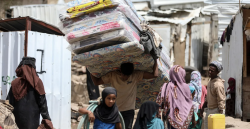
The humanitarian picture the ministry invoked is severe by any measure. United Nations planning figures for 2026 put the number of Yemenis needing humanitarian assistance and protection at 22.3 million, more than two-thirds of the population, including 5.2 million people displaced inside the country. Some 18.3 million people are acutely food insecure, and a number of districts have moved from crisis into emergency levels of hunger. Relief agencies have appealed for 2.16 billion dollars this year to reach 12 million people.
The maritime dimension of the crisis has grown sharper in recent weeks. Yemen’s Houthi movement declared a maritime blockade of Saudi Arabia on 20 July and has claimed drone and missile attacks on Saudi oil facilities on the Red Sea coast, including installations at Yanbu and Jizan, as well as strikes on two Saudi oil tankers. Several vessels have altered course to avoid the Bab al-Mandab Strait, the narrow channel linking the Red Sea to the Gulf of Aden, and Reuters has reported that the group is considering imposing fees on commercial ships that use it.
The result is an unusual alignment. The government recognised internationally and based in Aden is condemning attacks on Saudi Arabia while the Houthi authorities in Sanaa are claiming a parallel campaign against the same targets, a split that underlines how far Yemen’s internal division has become entangled with the wider regional confrontation.
The statements also arrive at a moment of transition inside Yemen’s foreign ministry. A presidential decree issued on 23 July by Rashad al-Alimi, chairman of the Presidential Leadership Council, named Afrah al-Zouba as minister of foreign affairs and expatriates, making her the first woman to hold the office in Yemen’s history. She took the oath before the council chairman this week, and the positions taken on Saudi Arabia and Iraq are among the earliest of her tenure.
Al-Zouba brings a background shaped largely outside conventional diplomacy. She trained initially as a pharmacist at Sanaa University before completing a master’s degree in community health and health economics in Malaysia, and she spent more than 25 years working in development and peacebuilding before moving into government.
The condemnation of the attacks from Iraq was not an isolated statement. Yemen’s government has also condemned an Iranian missile attack targeting Jordan, messaging that positions Aden firmly within the Arab consensus against Tehran and its regional partners.
What happens next depends less on Yemen than on whether the exchange of strikes between Iraq-based militias and the Saudi-American coalition subsides. Yemeni officials have framed accountability at the Security Council as the route out, though the Council has repeatedly struggled to reach agreement on the region’s overlapping conflicts. For Yemenis themselves, the immediate stake is more practical: any sustained disruption of Red Sea shipping threatens the ports through which most of the country’s food, fuel and medicine arrive.
About the Author