Turki Bin Qumsha Takes Oath as Saada Governor Before President al-Alimi in Riyadh
 Yemen Herald News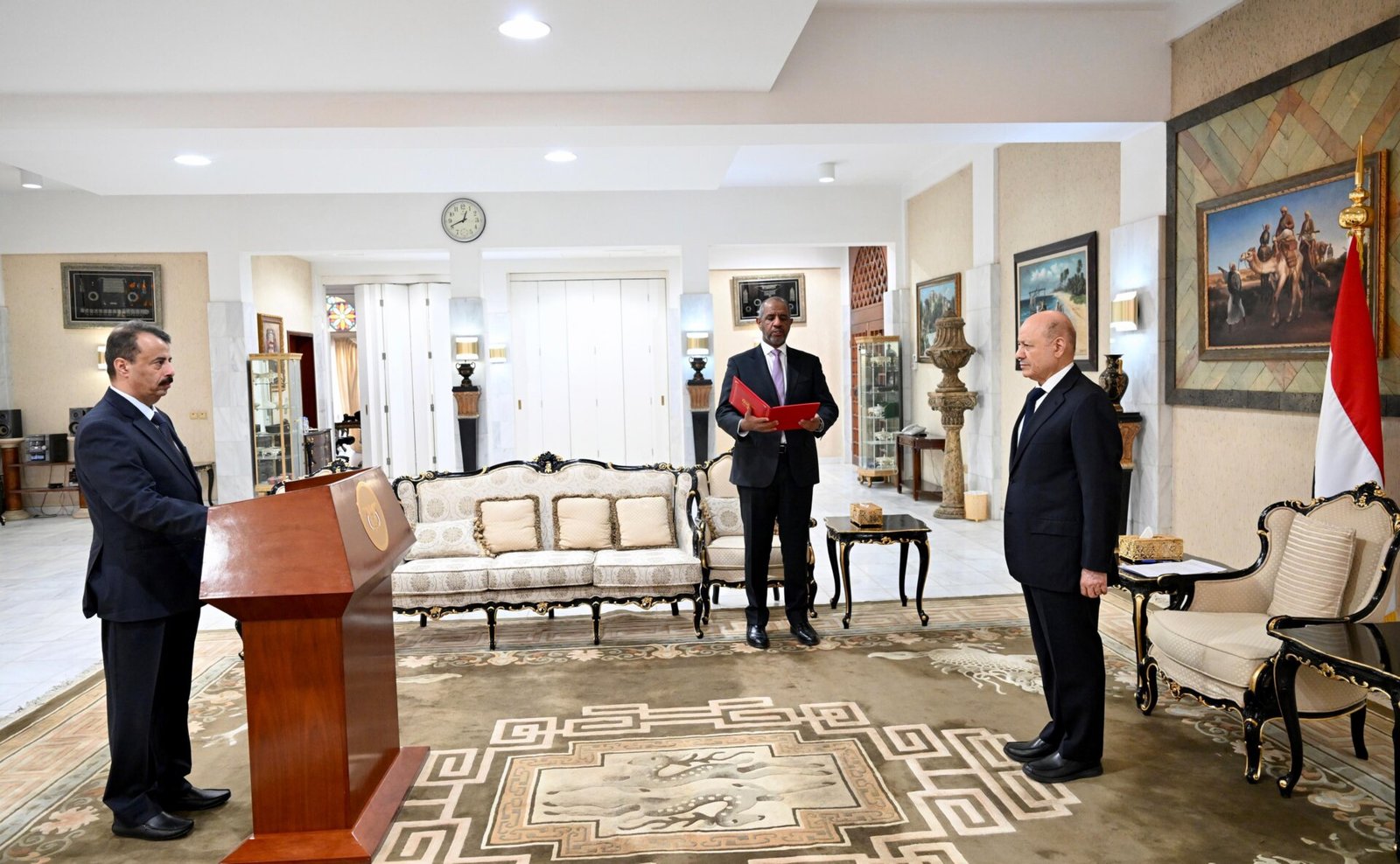
Turki Ahmed Mazhar Bin Qumsha has taken the constitutional oath as Governor of Saada governorate, swearing before Dr Rashad al-Alimi, chairman of Yemen’s Presidential Leadership Council, at a ceremony in the Saudi capital Riyadh. The Yemeni state news agency Saba reported the swearing-in, which formally installs Bin Qumsha in one of the most politically sensitive posts in the internationally recognised government’s roster of provincial appointments.
The Presidential Leadership Council was created in April 2022, when former president Abdrabbuh Mansour Hadi transferred his powers to an eight-member body chaired by al-Alimi. The council and much of the government it oversees have since operated from Riyadh and the southern port city of Aden, because Sanaa and a swathe of Yemen’s northern highlands remain outside their control. Saada is among those areas, which means the new governor assumes office over a territory his administration does not currently govern on the ground.
After the oath, al-Alimi held a discussion with Bin Qumsha about the responsibilities awaiting him in Saada, a governorate the president described as strategically important and home to a resilient population. Al-Alimi praised residents of the province for what he called their courage in resisting external pressure, and pointed in particular to Iranian influence in the region, a characterisation advanced by the government, which accuses Tehran of arming and directing the Houthi movement. He linked the appointment to a wider effort to rebuild state institutions.
The president set out a clear early mandate. He urged Bin Qumsha to build relationships across every social component of the governorate, opening channels with tribal sheikhs, prominent national figures, young people and women. Al-Alimi framed that outreach as the practical foundation for any later attempt to restore state functions and revive local development, rather than as a symbolic gesture. Building a constituency inside Saada, in this reading, has to precede administration.
Al-Alimi also used the ceremony to praise the people of Saada for what he called their historical role in defending the Yemeni republic, citing their sacrifices during earlier periods of upheaval. He described the province’s tribes not as a source of division or violence but as a pillar of stability that protects the country, a framing that pushes back against readings of Yemeni politics in which tribal structures are treated mainly as an obstacle to national cohesion.
The government’s message, the president said, remains one of inclusion: the state is prepared to extend its hand to every section of society willing to help end the conflict and the hardship it has produced. That appeal carries particular weight in Saada, where any eventual settlement would require accommodation between the recognised government and communities that have lived under rival authority for more than a decade.
Officials have tied the appointment to a reconstruction agenda that includes reopening key roads, restoring public services and rebuilding institutions that have collapsed or been badly damaged since the war began. Road closures have been a recurring issue across Yemen, raising transport costs and lengthening journeys between areas held by rival authorities. Those goals are shared across the government’s provincial appointments, though their delivery in Saada depends on conditions the governor cannot control alone.
Saada carries unusual weight in Yemen’s conflict. The governorate, in the country’s mountainous north-west on the Saudi border, is the birthplace of the Houthi movement, which emerged in the 1990s as a Zaydi Shia revivalist current before turning to armed confrontation with the state. Houthi fighters consolidated control of the province during the unrest of 2011 and used it as a base for the advance that took them into Sanaa in September 2014, prompting the Saudi-led military intervention that began in March 2015.
The humanitarian backdrop is severe. The United Nations Office for the Coordination of Humanitarian Affairs estimates that more than 22 million people in Yemen will need humanitarian assistance and protection in 2026, among them 5.2 million internally displaced people. Some 18.3 million are acutely food insecure, and more than 2.2 million children under five are acutely malnourished, including over 516,000 with severe acute malnutrition. Aid agencies have appealed for about 2.16 billion dollars this year and plan to reach 12 million people, prioritising 9.4 million in the worst-affected areas.
Water and sanitation needs are similarly acute, with some 14.4 million people requiring assistance in that sector, a shortfall that has repeatedly fed cholera outbreaks. Health authorities and aid agencies have also warned about measles among under-vaccinated children. Provincial governors have limited tools against problems of that scale, but they remain the local interface between communities and whatever assistance reaches them.
The appointment also lands during a period of change at the top of the recognised government. In January 2026 the Presidential Leadership Council dismissed two of its members, and a new cabinet of 34 ministers, including three women, was later sworn in in Riyadh under Prime Minister Shaya al-Zandani, who also holds the foreign affairs portfolio. Provincial appointments such as Bin Qumsha’s form part of that broader reshuffle.
What Bin Qumsha can achieve will depend less on his own office than on the trajectory of the wider conflict. For now, his appointment functions as a statement of claim, an assertion that the recognised government intends to keep a formal administrative presence for Saada, and a channel through which it can address the province’s residents.
About the Author