Yemen’s rights ministry says Houthi restrictions are deepening Taiz water crisis
 Yemen Herald News
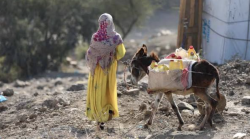
TAIZ, Yemen — Yemen’s Ministry of Human Rights said Monday that Houthi restrictions on water supplies from the al-Dabab basin were deepening a drinking water crisis in Taiz.
The ministry said in a statement that the crisis had worsened in recent weeks because of measures hindering the delivery of water into the city.
Workers transporting water face risks from attacks and shelling, the ministry said, limiting deliveries to residential neighbourhoods.
The ministry said the disruption threatens the city’s humanitarian and public health conditions.
Falling availability of essential goods, rising prices and families’ reduced ability to meet basic needs have worsened living conditions, according to the statement.
A shortage of clean water could bring health and humanitarian consequences if it persists, the ministry said, particularly for children, the elderly and displaced families.
The account of conditions at the al-Dabab basin rests on the ministry’s statement. Yemen Herald could not independently verify it, and the Houthis have not publicly addressed it.
The Associated Press reported on Oct. 24 that water trucks were largely being prevented from entering Taiz and that Houthi control of roads had cut residents off from wells outside the city.
Access to wells is limited and desalination plants serving the city are running low on fuel and operating well below capacity, the agency said.
Residents had long paid for water delivered by truck, which was mostly reliable until recently. The city’s water utility is struggling to maintain limited operations.
Families were paying as much as 75 percent more for bottled water than a few weeks earlier. Truckers who bring water in have in some cases tripled their rates.
Hadil al-Shahid, a Taiz resident who runs a hair salon, said her household’s daily 10 litres of bottled water now has to last about four days. Some families are buying on credit.
Hani Bafaqih, a water and sanitation expert with CARE in Yemen, said the price of cooking gas had more than quadrupled. Flour and rice cost about 50 percent more than over the summer, the agency said.
Three Houthi officials, speaking anonymously, told the agency the group controls about 80 percent of the countryside around Taiz and several neighbourhoods inside the city. The agency said it could not verify that account.
Afrah al-Zouba, Yemen’s foreign minister, acknowledged the Houthis’ tightening grip on the city, according to the same report.
Amnesty International has called on the Houthis to open roads into the city.
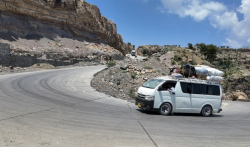
Human Rights Watch said on Oct. 26 that Houthi road blockades had restricted civilians’ movement and impeded essential goods, including water, along with humanitarian access.
The group said Houthi forces used explosives on Oct. 18 to damage the Hayjat al-Abd road, the main route carrying food, medicine and fuel into the city.
Human Rights Watch said it wrote to the Houthis on Oct. 21 about the road attacks and received no reply.
Jens Laerke, a spokesperson for the UN humanitarian office, said thirsty families were using unprotected wells that may be contaminated.
“The shortages feed into each other. Without fuel, water pumps, hospital generators and solid-waste collection stop,” Laerke said. He said the risk of disease, including cholera, was rising.
Waste collection has shut down, and piling rubbish adds to the risk of disease, according to the agency.
Fuel shortages have also disrupted community kitchens. Some families cook over fires made from wood, charcoal or cardboard.
Some displaced families are living in makeshift shelters or tents and eating one meal a day, he said.
Ahmed Abdel Gaber, a displaced resident, said he lives with nine other family members in the ruins of a building and hears explosions daily from fighting about 5 kilometres away.
Taiz province has taken in roughly half of the people displaced in Yemen since August, an estimated 124,000, according to UN migration experts cited by the agency.
Fuel shortages are disrupting water pumping and sanitation, raising the risk of cholera and other diarrhoeal diseases among displaced families, the World Health Organization said Monday.
Suspected cholera cases have fallen in recent weeks, the agency said, though it noted that reduced access to health facilities may be affecting reporting in Taiz.
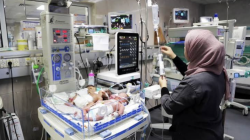
Christian Lindmeier, a WHO spokesperson, said 42 health facilities in Taiz city have reported acute shortages of fuel, oxygen, medicines and medical supplies.
Hospitals and ambulances in Taiz governorate need more than 156,000 litres of fuel a month, according to WHO. Shortages threaten oxygen production, emergency transport and vaccine refrigeration.
Yemen’s Ministry of Public Health and Population has described the situation as “critical,” according to the agency.
Taiz has been largely isolated since Oct. 3, with fighting blocking aid from entering and civilians from leaving.
Houthi forces have blocked key supply routes into the city, including the corridor linking Taiz to Aden.
More than 256,000 people were displaced across Yemen between Aug. 1 and Oct. 19, WHO said.
Communication network outages have hampered efforts to gather updated information from the city, the agency said.
Taiz is Yemen’s third-largest city, with more than 1 million residents. The Houthis have besieged it since 2015.
WHO and its partners support 10 diarrhoeal disease treatment centres across five governorates, including Taiz.
The agency holds stocks of water and sanitation materials in Aden for conflict-affected areas.
About the Author