

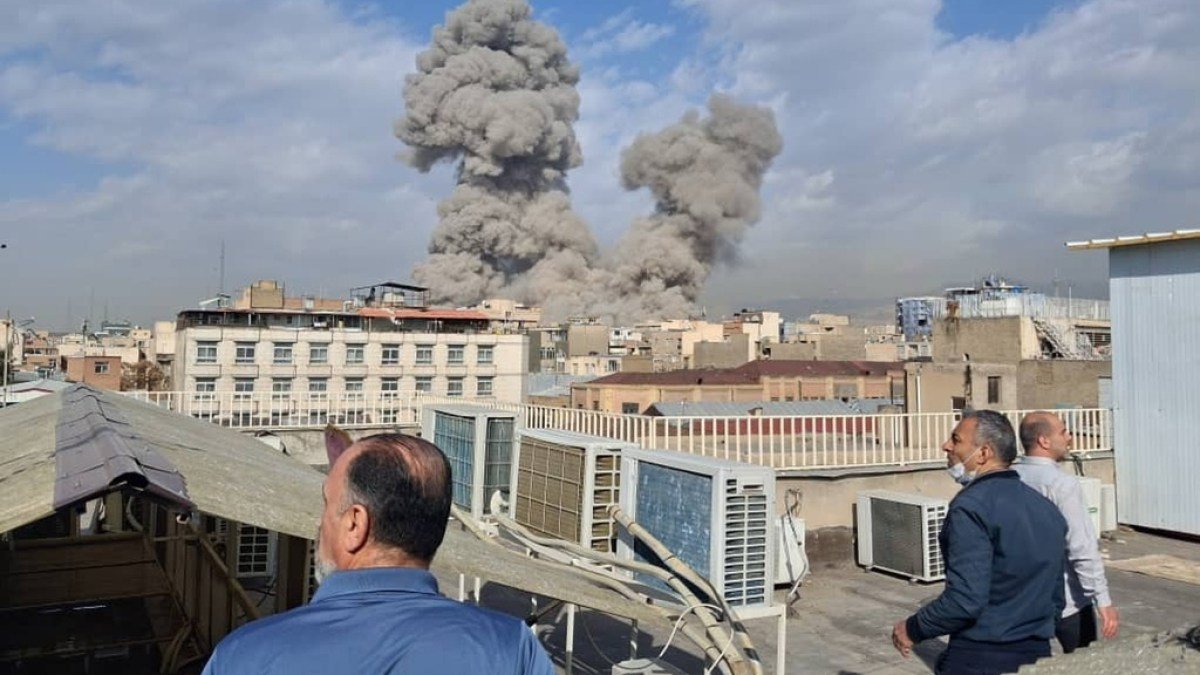
The legality of recent US and Israeli military strikes against Iran has come under scrutiny, with experts suggesting that these actions likely violate international law. The strikes, which have escalated tensions in the region, are viewed by some as lacking valid legal justification under the United Nations Charter, which prohibits acts of aggression. Ben Saul, the United Nations special rapporteur on human rights and counterterrorism, emphasized that the strikes do not constitute lawful self-defense, as they were not authorized by the UN Security Council, nor were they in response to an armed attack from Iran.
Critics argue that the rationale provided by the Trump administration for the military actions—asserting that Iran posed an imminent threat due to its missile and nuclear programs—does not meet the legal standards set by international law. According to Rebecca Ingber, a law professor and former adviser to the US Department of State, the use of force is only permissible in narrow circumstances, such as self-defense against an armed attack or with UN Security Council authorization. The strikes, which resulted in significant civilian casualties, including the deaths of Iranian Supreme Leader Ali Khamenei and numerous civilians, raise further concerns regarding compliance with international humanitarian law.
Yusra Suedi, an assistant professor in International Law, noted that the concept of “imminent threat” in international law requires an immediate and overwhelming danger that necessitates preemptive action. She argued that the US strikes did not reflect such a scenario, as there was no evidence of an imminent attack from Iran at the time of the strikes. Instead, the actions appear to have been preemptive, which is considered illegal under international law.
The attacks have also drawn criticism for their humanitarian implications, with reports of strikes on civilian infrastructure, including schools, leading to substantial civilian casualties. Annie Shiel, US Director at the Center for Civilians in Conflict, highlighted the alarming reports of attacks on critical civilian sites, warning that such military escalation could lead to a broader regional catastrophe.
As the situation continues to unfold, the implications of these military actions on international law and humanitarian principles remain a significant concern. Experts are calling for a reevaluation of the legal justifications used by powerful states in military conflicts, emphasizing the need to uphold the principles that govern international relations and protect civilian lives.