Zindani presses Aden customs officials to tighten Yemen’s anti-smuggling drive
 Yemen Herald News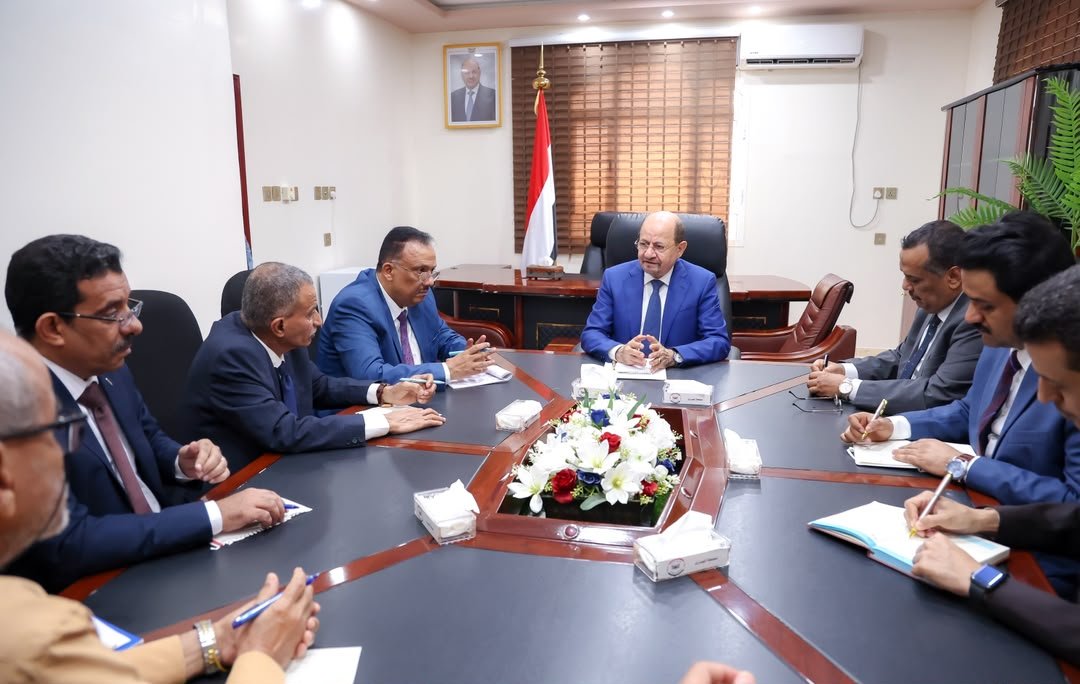
Yemen’s prime minister, Dr. Shaya Mohsen Zindani, told senior customs officials in Aden on Thursday that fighting corruption remains his government’s foremost priority, and that curbing smuggling in all its forms will require far closer coordination between the state agencies responsible for it. His remarks came during an inspection visit to the headquarters of the Customs Authority in the temporary capital, one of a series of visits to government institutions intended to assess performance, tighten revenue collection and shore up the national economy.
“Controlling smuggling is a shared national responsibility, coordination between the relevant agencies is imperative and efforts need to be joined and doubled,” Zindani said, according to the state news agency Saba. He described the Customs Authority as the first line of defence for the national economy, a safeguard for the local market and one of the key pillars supporting public revenue, adding that it is not merely an agency for collecting fees.
On arrival the prime minister was received by the head of the Customs Authority, Abdul Hakim al-Qabati, and toured departments handling customs transactions, where specialists briefed him on operational workflows and on measures intended to speed up processing and tighten oversight. He also visited the authority’s training centre and met participants in courses on countering smuggling that are being run in cooperation with the United Nations Office on Drugs and Crime.
In a subsequent meeting with the authority’s leadership, Zindani reviewed performance levels, the obstacles facing customs officers and the agency’s development plans. He asked the service to modernise its procedures to match current demands, and was briefed on progress on a new headquarters building that officials said is nearing completion. The authority’s leadership set out what it described as key gains over recent months, along with steps taken to strengthen customs supervision, and said it would carry out the prime minister’s directives.
Zindani framed the customs question in fiscal terms. Higher and more predictable collection, he argued, determines directly whether the government can meet its obligations and deliver services to citizens; smuggling, by contrast, strips the treasury of resources it cannot easily replace and opens channels for other illegal activity. He said he wanted the authority to become a model of institutional discipline, efficiency and revenue maximisation.
The visit is the latest in a sequence of steps the government has taken on customs and tax collection since Zindani took office. The Presidential Leadership Council named him prime minister in January, and he assumed the post in February 2026 after serving as foreign minister since 2024; he continues to hold the foreign affairs portfolio alongside the premiership. In March his office directed the relevant agencies to activate anti-smuggling legislation and to improve coordination between them, at a meeting of the High Committee for Anti-Smuggling in Aden. The cabinet has since approved a reform package covering both the customs and tax authorities that includes updating technical systems to improve collection efficiency.
Those measures have been accompanied by outside technical advice. The International Monetary Fund published a summary of a technical assistance engagement with Yemen in January 2026 under the heading of customs reform and emergency revenue mobilisation, an indication of the weight international institutions place on restoring the state’s capacity to raise money domestically rather than depending on external support that has proved intermittent.
The stakes are considerable. Years of conflict since 2015 have fragmented Yemen’s economy, split control of ports and land crossings between rival authorities, and left the internationally recognised government working from a narrow revenue base while the currency has lost much of its value against the dollar. Customs duties collected at the ports and crossings under its control are among the few dependable sources of income available to it, which is why the performance of the Customs Authority recurs so often in government messaging.
Smuggling has flourished in that environment. Where enforcement is weak or contested, goods routed around official crossings escape duty altogether, undercutting importers who pay it and eroding the tax base further. Officials have also linked smuggling routes to the movement of weapons and narcotics, although the government has not published figures setting out the scale of the losses, and independent verification of customs performance data remains limited.
What Thursday’s visit does not resolve is the harder question of implementation. Directives on inter-agency coordination have been issued before, and the government’s ability to enforce them depends on the reach of its authority on the ground and on the willingness of bodies with overlapping mandates to share information. Customs officers also work in conditions where salaries have been squeezed by inflation, a pressure that anti-corruption specialists consistently identify as one of the drivers of petty graft at border points.
For now the government is presenting the anti-corruption drive as a test of its credibility with citizens as much as with donors. The language Zindani used during the visit, built around discipline, efficiency and maximising revenue, points to an argument the administration has made repeatedly since February: that what the state manages to collect cannot be separated from what it is able to spend, and that public trust will follow visible enforcement rather than further announcements.
The Customs Authority, for its part, reaffirmed its commitment to raising performance and to supporting the national economy. Whether that translates into measurable increases in collected duty will become clear only when the government publishes revenue figures for the current fiscal year.
About the Author