Yemen’s first female foreign minister discusses de-escalation in call with Jordan’s Safadi
 Yemen Herald News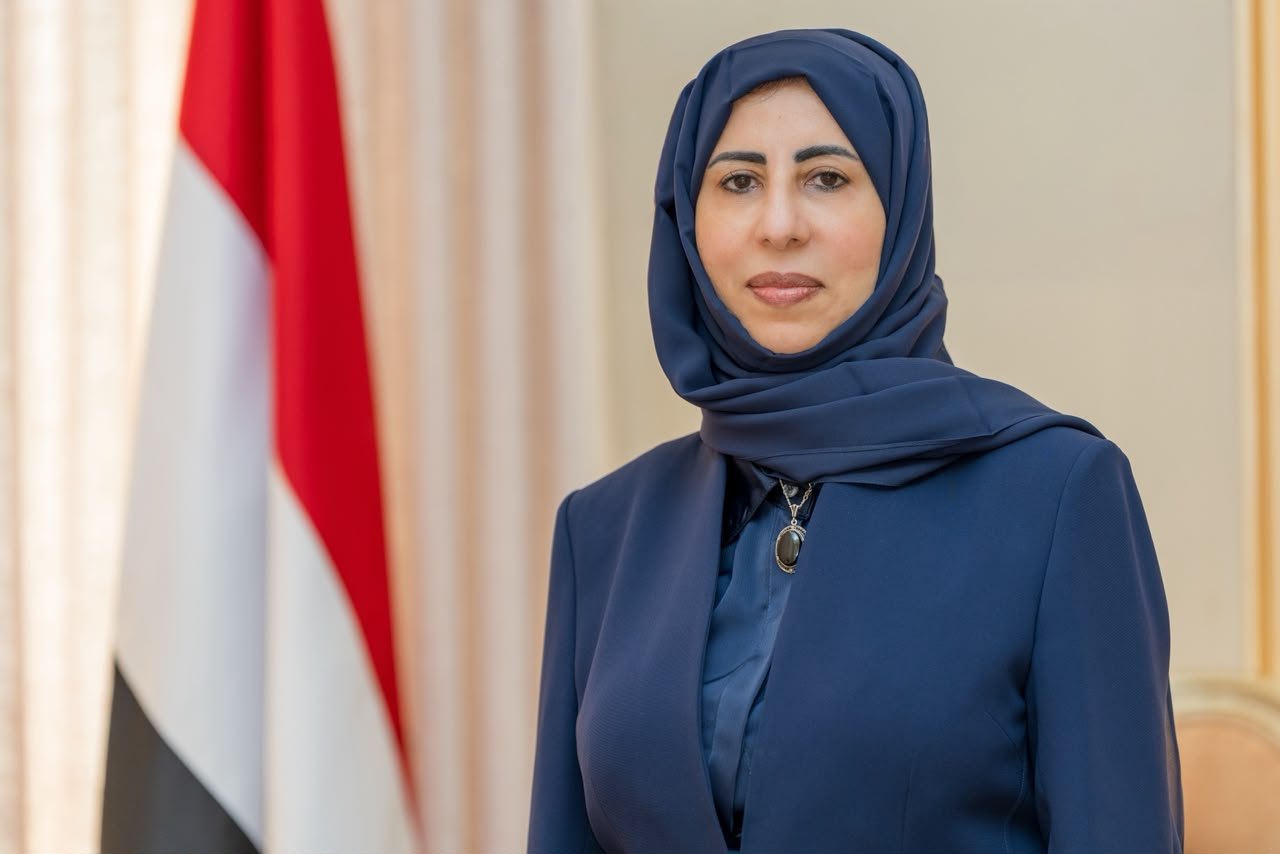
Yemen’s Foreign Minister, Afrah al-Zouba, has held a telephone call with Jordan’s Deputy Prime Minister and Foreign Minister, Ayman Safadi, in one of a series of contacts she has opened with regional counterparts since taking office as the first woman to lead Yemen’s foreign ministry.
According to readouts of the call, the two ministers reviewed relations between the two countries and ways of strengthening cooperation across fields of shared interest, alongside developments in the region and efforts to reduce tensions, restore calm and shore up security and stability. Safadi congratulated al-Zouba on assuming her new post.
Her appointment in late July 2026 was a first in Yemen’s diplomatic history. No woman had previously held the foreign affairs portfolio, and the decision drew attention both inside Yemen and among the states that deal with the internationally recognised government, in a political system where senior office has been almost exclusively male and where the war has narrowed rather than widened women’s formal participation.
The appointment came at a point when Yemen’s diplomatic representation abroad had been widely criticised, including by Yemeni commentators, as under-resourced and slow to respond to fast-moving regional developments. Al-Zouba’s first weeks in office have accordingly been read less as a change of policy than as an attempt to restore tempo, with a run of introductory calls compressed into a short period and a public emphasis on making the ministry’s positions heard in capitals where Yemen has struggled to hold attention.
Al-Zouba has framed her early weeks in office around what she has described as reactivating Yemeni diplomacy. She has held calls with counterparts in Egypt, Sudan and Djibouti focused in large part on Red Sea security, a grouping that reflects the geography of the problem rather than any formal bloc: those states, together with Yemen, sit along the corridor running from the Suez Canal down to the Bab al-Mandab Strait. She has also instructed Yemeni diplomatic missions to press host governments for stronger international action against the Houthis.
Much of the substance Safadi brought to the call concerned Jerusalem. He briefed al-Zouba on the outcome of a ministerial meeting Jordan hosted in support of the city and its holy sites, setting out the measures contained in the meeting’s joint statement in response to what the participating states characterised as unlawful Israeli actions at the sanctuaries. Jordan holds the historical custodianship of the Muslim and Christian holy sites in Jerusalem through the Hashemite trusteeship, and that role places the issue at the centre of its regional diplomacy in a way that few other files do.
According to the Yemeni account of the call, al-Zouba affirmed Yemen’s position against attacks directed at Jordan and stressed the importance of protecting Jordanian security and sovereignty. That element of the readout was carried by the Yemeni side and has not been independently detailed elsewhere.
The formal machinery of Yemeni diplomacy has been under strain throughout the war. The ministry’s headquarters in Sanaa passed out of the government’s hands when the capital fell under Houthi control, and its functions have since been distributed between Aden, Riyadh and a network of embassies operating with uncertain funding. Salaries at some missions have gone unpaid for extended periods, and a number of posts abroad have run with skeleton staffing. Rebuilding that apparatus is a precondition for the kind of sustained engagement al-Zouba has said she intends, and it is a slower undertaking than any single round of telephone diplomacy.
Al-Zouba also thanked Jordan for its continued support for Yemen, including humanitarian assistance and the treatment extended to the Yemeni community in the kingdom. That community is not small. Amman has for years hosted Yemeni students, patients seeking medical treatment unavailable at home, and a portion of the country’s displaced professional class, and Jordan has served as a working base for parts of the Yemeni government and for international organisations that cannot operate freely inside the country.
Jordan’s involvement in the Yemen file extends further back. It has hosted rounds of United Nations-brokered Yemeni negotiations, most notably prisoner-exchange talks that produced one of the few concrete confidence-building measures either side has implemented, and it has provided training to Yemeni personnel. Its position has been consistently supportive of the internationally recognised government while avoiding the more direct military involvement of some other Arab states.
The call fits a wider pattern of activity by the Presidential Leadership Council and its ministries, which have sought to rebuild diplomatic bandwidth at a point when Yemen competes for attention with several other crises in the region. Government officials have argued that the disruption of Red Sea shipping gave Yemen a hearing it had struggled to obtain on humanitarian grounds alone, and they have tried to convert that attention into support for state institutions, for the central bank and for the security forces rather than for maritime interdiction alone.
No specific agreements or initiatives were announced at the end of the exchange, and the call appears to have been introductory in character, of the kind a newly appointed minister conducts across a list of counterparts. Its interest lies less in any outcome than in the pace and direction of al-Zouba’s early contacts, which have concentrated on the Red Sea littoral and on Arab states with standing in the Jerusalem file, and in the signal that Yemen’s foreign ministry intends to be more visible than it has been for much of the past decade.
About the Author