Yemen’s ambassador to Indonesia seeks wider trade and university ties with West Java
 Yemen Herald News
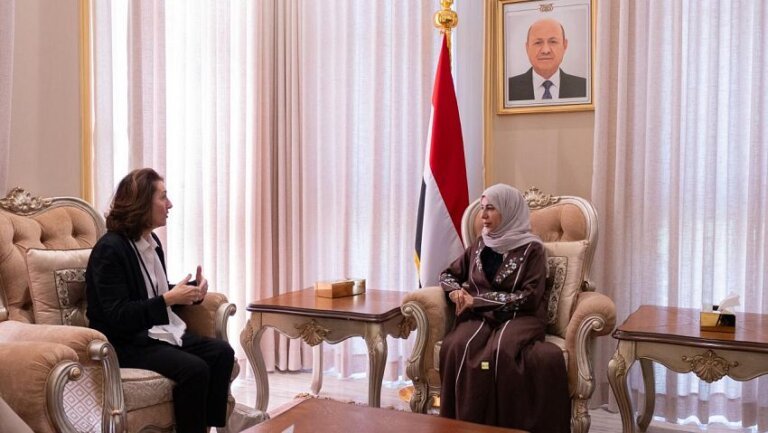
Yemen’s ambassador to Indonesia, Salem Ahmed Balfaqih, met the deputy governor of West Java, Erwan Setiawan, on Monday to discuss opening trade, education, cultural and tourism links between Yemen and Indonesia’s most populous province.
According to the embassy’s account of the talks, the two sides looked at introducing Yemeni products to West Java’s markets and at building direct contacts between Yemeni and Indonesian business owners. Yemen’s exportable goods are concentrated in a narrow range — coffee, honey, fish and some agricultural produce — and finding buyers for them has become harder as war has disrupted production, raised freight costs and complicated the banking arrangements exporters rely on to get paid.
Education formed the second strand of the discussion. The two officials considered partnerships between universities, which could open scholarship places and academic exchanges for Yemeni students. More than a decade of conflict has damaged Yemen’s higher education sector, interrupted teaching and pushed many academics abroad, and study places overseas have become one of the few routes available to students who would otherwise not complete their degrees. West Java is a plausible partner for that: Bandung, the provincial capital, is one of Indonesia’s main university cities and hosts several of the country’s leading technical and general institutions.
Cultural cooperation, also centred on Bandung, and tourism made up the rest of the agenda. Neither side announced an agreement, a memorandum, a budget or a timetable, so the meeting is best read as an early approach rather than a concluded arrangement.
Tourism is the most speculative item on the list. Yemen’s tourism sector has been effectively closed to ordinary visitors for more than a decade, with most foreign governments advising against all travel to the country, and the practical near-term prospect is movement in the other direction — Yemeni visitors to Indonesia, and religious or heritage travel connected to family ties between the two countries rather than conventional holiday traffic.
The context for it is a relationship with unusually deep roots and unusually little recent institutional content. Indonesia is home to a large community descended from Hadhrami migrants who travelled from what is now Yemen’s Hadramout region over several centuries, settling along the trading ports of Java and Sumatra. Those families became established in commerce, religious scholarship and, later, in Indonesian public life, and the connection remains a reference point in official contact between the two countries.
Formal cooperation has been thinner. Yemen and Indonesia maintain a joint committee intended to coordinate bilateral work, but it has met irregularly, and talks in Jakarta earlier this year focused on reviving the mechanism rather than on new initiatives under it. Balfaqih was appointed to the Jakarta post by President Rashad al-Alimi as part of a broader round of ambassadorial appointments, and has since met Indonesian deputy foreign minister Armanatha Nasir and senior officials in the foreign ministry’s Asian, Pacific and African affairs directorate to discuss restarting the relationship.
Approaching a provincial government rather than only the national one is a recognisable tactic for a diplomatic mission with limited resources. West Java has a population of roughly fifty million, its own trade promotion apparatus and its own university system, and provincial administrations in Indonesia hold real authority over investment facilitation and educational cooperation. A working relationship at that level can produce practical results — a scholarship allocation, a trade delegation, a sister-city arrangement — without waiting for the slower national machinery.
The obstacles are substantial. Yemen’s economy remains split between the internationally recognised government based in Aden and the Houthi authorities administering Sanaa and much of the north, with separate central bank operations and divergent exchange rates. The currency has lost much of its value in government-held areas, public salaries have gone unpaid for long stretches, and importers face high costs and irregular supply.
Shipping is the other constraint. Attacks on vessels in the Red Sea and the Gulf of Aden since late 2023 pushed insurance premiums up sharply and diverted much container traffic away from the Suez route around the Cape of Good Hope. That reroute adds substantial time and cost to any Yemen-to-Southeast Asia trade, and the security picture has not stabilised: the port of Mokha on Yemen’s Red Sea coast was hit by missiles and drones on 9 August, an attack the Yemeni military said killed seven people and wounded around thirty.
Education cooperation is less exposed to those problems than trade, which is one reason it tends to move first in relationships of this kind. Scholarship places and academic exchange require visas, funding and institutional agreements rather than working ports and predictable freight, and they produce visible results within a single academic year.
For Yemen’s government, expanding contacts in Asia also serves a wider purpose. Its diplomatic effort has concentrated on the Gulf, Europe and the UN Security Council, where the questions are dominated by the war and the terms of any settlement. Relationships built on trade, students and cultural exchange offer a different kind of engagement, and one that survives the shifts in the conflict better than positions taken on the war itself.
Whether Monday’s discussion produces anything measurable will depend on follow-up neither side has yet described. No working group was announced, no review date set and no named projects identified. As with much of Yemen’s current diplomacy, the meeting establishes contact and leaves the substance to be negotiated later.
About the Author