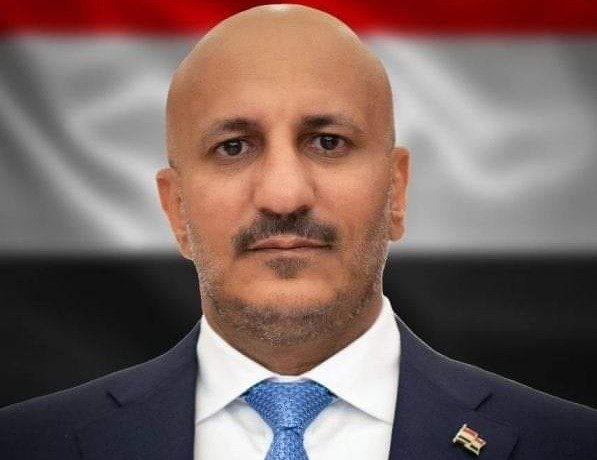
Higher Education Minister Amin Noman witnesses Saudi training agreement with Najran University
 Yemen Herald News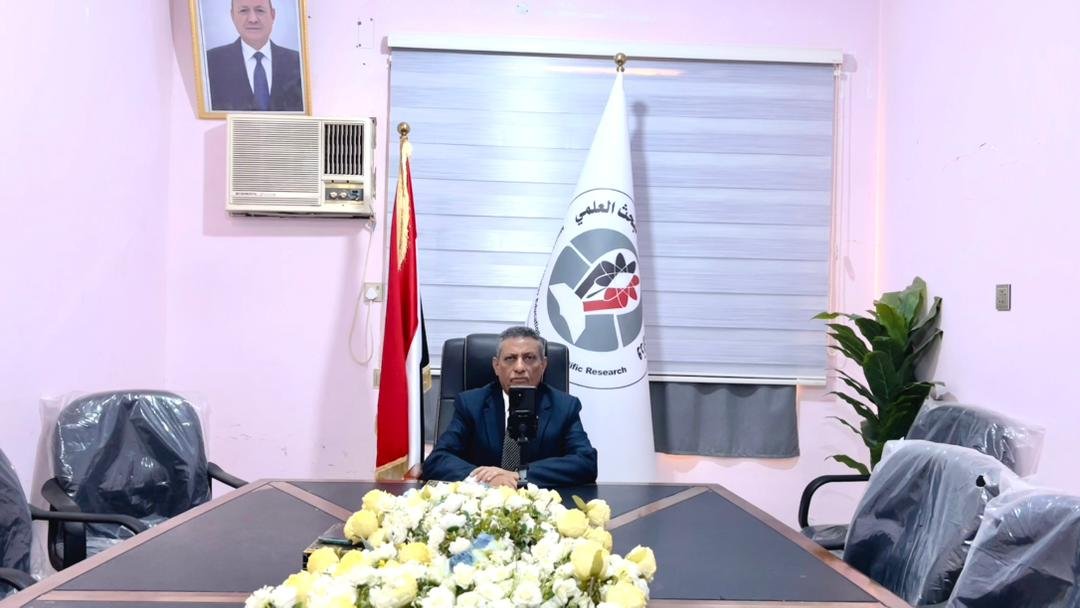
ADEN, Yemen — Yemen’s higher education minister witnessed the virtual signing on Tuesday of an agreement between a Saudi development programme and Najran University to train Yemeni students, Saba reported.
Amin Noman, minister of higher education and scientific research, attended the ceremony, according to the state news agency.
The agreement was signed by the Saudi Development and Reconstruction Program for Yemen and Najran University, in Saudi Arabia’s south.
Abdulrahman al-Khudairi, president of Najran University, signed for the university.
Hassan al-Attas, assistant supervisor general and head of the Saudi programme’s development projects sector, signed on its behalf.
The partnership will provide accredited training and support research, innovation and technical education, Saba said.
The training is to run through specialised colleges and centres at Najran University, with the agreement also covering human capacity building and the development of university teaching.
Its stated aim is to equip Yemeni students and institutions with skills matching what employers are looking for.
Noman welcomed the agreement and praised Saudi support for Yemen’s education sector, according to the agency.
He said it could lead to closer ties between Yemeni and Saudi universities and open further academic exchange.
The account rests on Saba, the news agency of Yemen’s internationally recognised government, and on the Yemeni broadcaster Yemen TV, which carried the same account. No independent confirmation of the agreement’s terms has been published, and neither signatory has released the text.
The Saudi programme was set up in mid-2018 by royal decree of King Salman bin Abdulaziz.
It runs development work across Yemeni governorates in sectors including education, health, water, energy, transport and agriculture.
Its education portfolio covers general education, higher education and technical training through 56 projects in 11 governorates, according to Saudi accounts of its work.
The programme says it has established and equipped more than 30 model schools in Yemen, along with 23 schools and centres for gifted pupils.
In higher education it has funded 28 laboratories, including what it describes as Yemen’s first advanced forensic research laboratory, at the University of Aden.
It has also worked on the faculties of medicine, pharmacy and nursing at Taiz University.
The programme signed a separate agreement with the U.N. Economic and Social Commission for Western Asia to support development planning in Yemen.
It has also signed an agreement on the digital training of Yemeni teachers, according to the Saudi Press Agency.
Najran University is a public Saudi institution in Najran province, which borders Yemen’s Saada governorate.
The agreement routes its training capacity to Yemeni students without requiring them to travel.
Yemen has 20 public and 66 private higher education institutions.
Research published by the Sana’a Center for Strategic Studies describes universities unable to pay staff salaries or meet obligations to contractors, with the quality of teaching and research falling as a result.
Enrolment has fallen with it. About 46 percent of Yemeni school leavers in recent years did not go on to university or vocational higher education, according to a study published in a Yemeni academic journal.
The same study put the dropout rate at 48 percent in areas administered from Sanaa and 43.13 percent in areas administered from Aden.
At Dhamar University, first-year enrolment in the geology, mathematics and physics departments of the College of Applied Sciences fell from more than 70 students before the war to three in 2022-23, the study found.
The education ministry in Houthi-administered Sanaa has put total losses and damage to the education sector between March 2015 and March 2026 at about 4.292 trillion Yemeni riyals, in figures carried by the Yemen Press Agency.
That account said 36 higher education facilities were destroyed outright and put losses in higher education alone above 1.018 trillion riyals. The figures come from one side of the conflict and have not been independently verified.
Al Jazeera reported on Aug. 28 that Yemen’s divided education system had left students uncertain which authority’s qualifications would be recognised.
Other donors have also targeted the sector. The Global Partnership for Education announced a partnership to improve education outcomes in Yemen backed by $40 million.
The scale of need is set out in the United Nations humanitarian plan for Yemen published in March, which put the number of people requiring assistance at more than 22 million.
The plan recorded 18.3 million people as acutely food insecure and more than 2.2 million children under five as acutely malnourished, of whom 516,157 were severely malnourished.
It counted 5.2 million internally displaced people and sought $2.16 billion to reach 12 million of those in need.
Noman heads the Ministry of Higher Education and Scientific Research in the internationally recognised government, which works from Aden.
Saudi Arabia is the main external backer of the internationally recognised government, which works from Aden and from Riyadh.
Saba did not say how many Yemeni students the training programmes would take, over what period, or how they would be selected.
Nor did it say whether the agreement carries a funding figure, or report any comment from Najran University or the Saudi programme beyond the fact of the signing.
The ceremony was held on Tuesday. Saba published its account the following day.
The agency filed its report from Aden.
About the Author