Al-Khanbashi and UNFPA Representative Discuss Expanding Humanitarian Work in Hadramout
 Yemen Herald News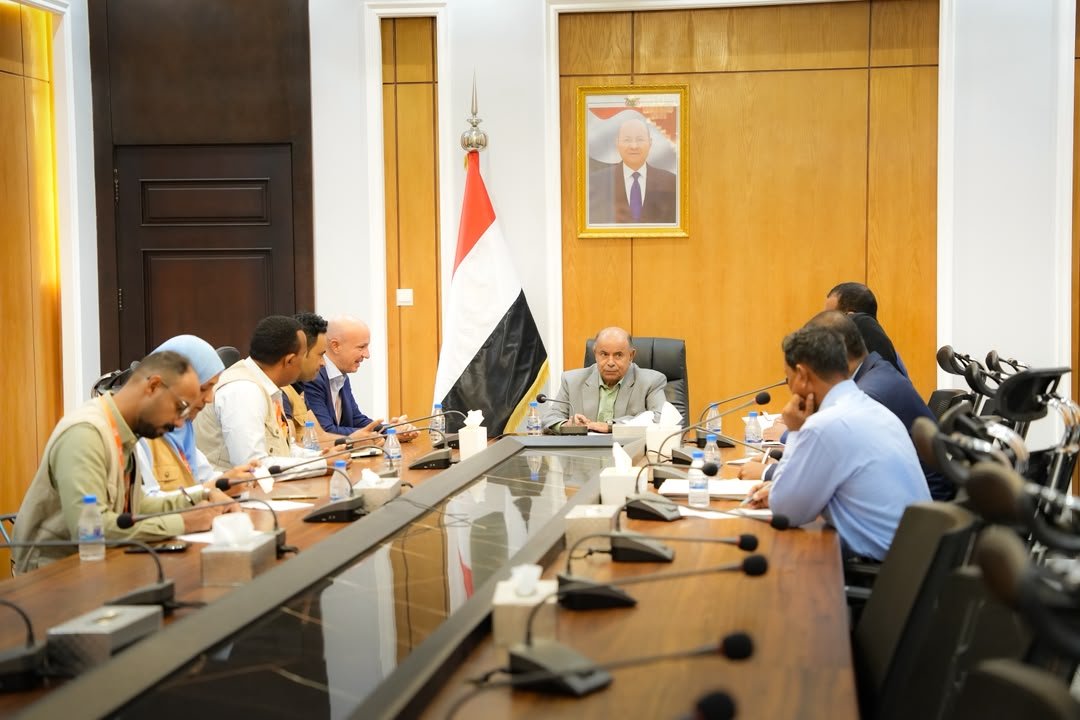
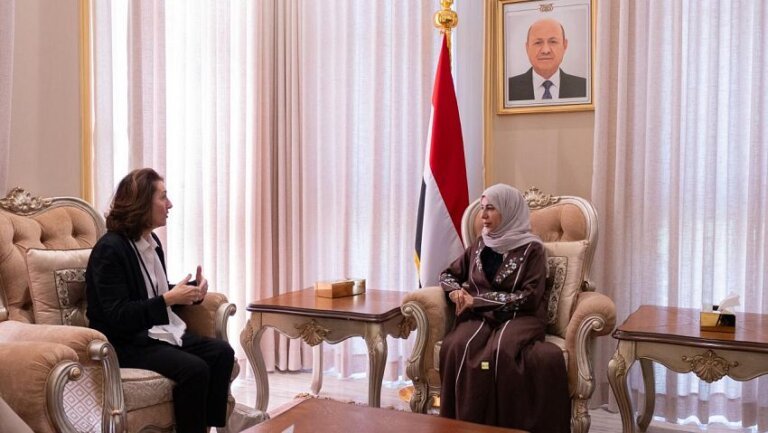
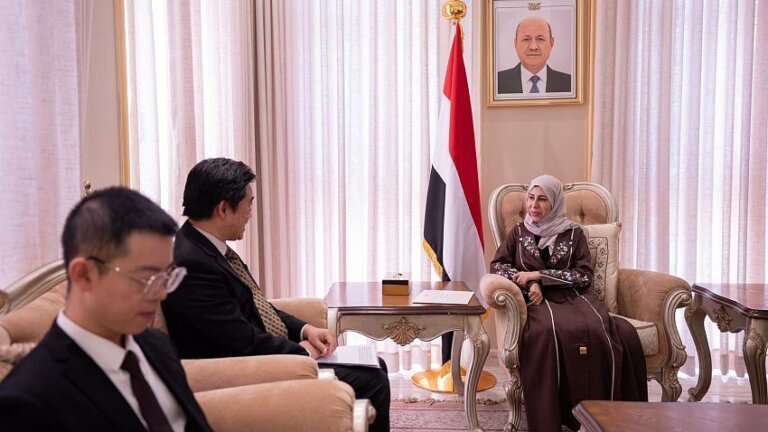
Presidential Leadership Council member and Hadramout Governor Salem al-Khanbashi met the United Nations Population Fund’s representative in Yemen, Francesco Galtieri, in Mukalla on Thursday to discuss expanding the agency’s humanitarian and development work across the governorate. The state news agency Saba said the two sides reviewed reproductive health services, women’s empowerment, youth support and the safe spaces UNFPA runs for women and girls, as well as future priorities and closer coordination with local authorities.
Al-Khanbashi used the meeting to press for a gradual change of emphasis, arguing that assistance in Hadramout should shift from emergency relief towards longer-term development. He said the governorate’s public services are under growing strain, in large part because it hosts substantial numbers of displaced people and refugees. Galtieri, according to the same account, reaffirmed UNFPA’s commitment to aligning its programmes with local needs and priorities and to deepening cooperation with the local authorities. Neither side announced new funding, a timetable or specific projects.
The governor’s standing gives the meeting more weight than a routine agency courtesy call. Al-Khanbashi was sworn in as governor of Hadramout by President Rashad al-Alimi, chairman of the Presidential Leadership Council, replacing Faraj Salmeen al-Bahsani. In January 2026 he was himself named to the council, and he has continued to run the governorate while sitting on Yemen’s collective presidency, an unusual combination that lets him raise provincial priorities directly at the top of the internationally recognised government.
He has spent much of the year courting UN agencies on the same theme. Saba has reported separate meetings between al-Khanbashi and the UN Office for Project Services on Hadramout’s development priorities, and with UNESCO on protecting the governorate’s archaeological sites and developing the museum in Mukalla. He has also given public assurances about the security environment for UN and international organisation staff working in the governorate, an issue that has repeatedly shaped how much international presence eastern Yemen can sustain.
The backdrop is a national emergency that has become harder to fund. The UN estimates that 22 million people out of a population of about 35 million need some form of assistance, one of the largest caseloads anywhere in the world. Women and girls account for roughly half of those in need, and about two-thirds of them are of childbearing age, which is why reproductive health sits close to the centre of the response rather than at its margins.
The consequences of gaps in that response are measurable. Yemen has the highest maternal mortality rate in the Arab region, and the UN says three women die every day from complications of pregnancy or during childbirth. UNFPA estimates that around two-thirds of those deaths could be prevented if the women concerned reached a midwife or a doctor in time. Access is hardest in rural and remote districts, where clinics are thinly spread and transport is expensive.
Galtieri has also pointed to worsening nutrition as a compounding factor. Malnutrition is rising, he told UN News in June, and pregnant women who go without adequate nutrition face significantly higher risks to their own health and to their babies’ development. Conflict and economic hardship, he added, have raised protection risks for women and girls alongside the medical ones.
Money is the binding constraint. Galtieri said around 40 per cent of UNFPA’s humanitarian funding was cut last year, forcing the agency to suspend or halt roughly a third of its services. Shelters it supports have this year been unable to take in new survivors of gender-based violence. In a country with Yemen’s maternal mortality figures, he warned, reduced services translate fairly directly into deaths that would otherwise have been avoided.
That makes the safe spaces discussed in Mukalla more than a symbolic item on an agenda. They offer psychosocial support, vocational training and economic empowerment schemes intended to help survivors rebuild their lives, and the agency also provides legal assistance to women pursuing cases through the Yemeni legal system. Expanding them in Hadramout would mean finding money at a moment when the agency is cutting elsewhere, and local authorities in Hadramout have limited budgets of their own to fill the gap.
The wider humanitarian picture has not improved. A UN-backed food security analysis published in June found that nearly half the population in government-controlled areas of Yemen faces high levels of acute food insecurity, with the situation expected to deteriorate further if international aid cuts continue. Agencies working on health and protection are competing for a shrinking pool of donor money against that food emergency.
Hadramout itself occupies an unusual position. It is Yemen’s largest governorate by area, stretching from the Arabian Sea coast around Mukalla deep into the interior, and it holds much of the country’s oil production. It has been spared the sustained front-line fighting seen in Marib, Taiz and Hodeidah, though it went through a period of security tension at the start of 2026 when government-aligned forces moved to take control of military positions there.
That relative stability is what makes al-Khanbashi’s relief-to-development argument plausible, and it is also what strains the governorate, since areas less exposed to combat absorb people fleeing areas that are. Whether UNFPA can act on the priorities set out in Mukalla will depend less on the meeting itself than on how much donor funding reaches Yemen in the months ahead.
About the Author