Yemen’s ambassador briefs Oman on Houthi escalation as Muscat reaffirms support
 Yemen Herald News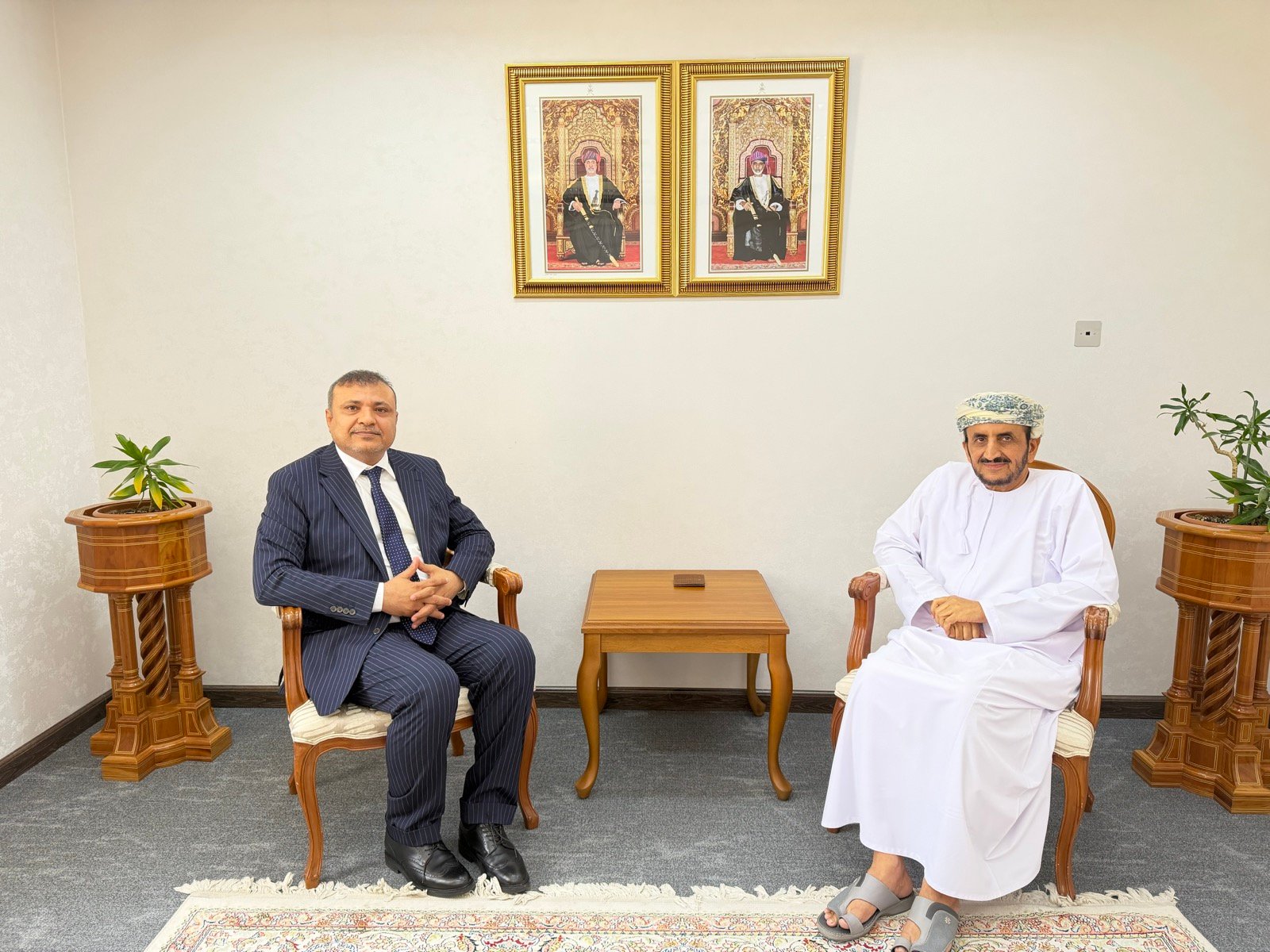
Yemen’s Ambassador to Oman, Dr. Khaled Shataif, met the Omani Undersecretary for Political Affairs, Sheikh Khalifa al-Harthy, in Muscat on Thursday for talks on bilateral relations and issues of mutual concern, the official Yemeni news agency Saba reported. The meeting came as Yemen faces its most dangerous military moment since the United Nations brokered a nationwide truce in April 2022.
Saba said the two officials reviewed developments inside Yemen and what the Yemeni government characterises as a renewed Houthi escalation, including attacks on civilian sites, infrastructure, displacement camps and military positions that it says have killed and wounded people across several governorates. Shataif told his host that the Presidential Leadership Council and the government continue to engage with peace initiatives responsibly and flexibly despite the fighting, according to the agency.
Al-Harthy, for his part, reaffirmed Oman’s firm support for Yemen’s security, stability, unity and territorial integrity, and the Sultanate’s commitment to strengthening cooperation and partnership with the Yemeni government on questions of shared interest. Neither side announced a new initiative, and the agency’s account did not indicate that specific proposals were tabled at the meeting.
The talks followed a fortnight of intensifying violence. In early August the Yemeni government said Houthi ballistic missiles and drones struck displacement camps and residential districts in the city of Marib, killing two civilians and wounding fourteen. Marib is among the most sensitive locations in the country: the province hosts more than two million of Yemen’s roughly five million internally displaced people, many of them living in camps clustered around the city itself.
Separate strikes in the same period targeted military camps and troop gatherings in Marib and Hadramawt. Government sources reported dozens of soldiers killed in a single missile attack, and government forces subsequently launched counter-operations against Houthi positions. The exchanges are the heaviest between the two sides in years, following a long period in which large-scale ground fighting had largely subsided.
Hans Grundberg, the UN Special Envoy for Yemen, said the attacks in Marib and Hadramawt, taken together with renewed attacks on commercial shipping in the Red Sea and the Gulf of Aden, had left the country at its greatest risk of a return to large-scale conflict since the truce agreed in April 2022.
The maritime dimension has sharpened that warning. On 11 August the cargo vessel Tihamah was attacked in the Bab al-Mandab Strait, killing six people. Reports identified three Pakistani and one Indonesian crew member among the dead, along with two personnel killed when a further missile struck during a rescue attempt. They were the first reported fatalities from attacks on Red Sea shipping in more than a year; such attacks had paused after the Gaza ceasefire of October 2025.
Against that backdrop, Oman’s position carries particular weight. The Sultanate was the only member of the Gulf Cooperation Council that declined to join the Saudi-led military coalition which intervened in Yemen in 2015, and it has since preserved working channels to every party to the conflict. Muscat has hosted contacts between Saudi Arabia and the Houthi leadership, and it is a regular stop for the United Nations envoy.
Al-Harthy is a senior figure in that effort. Appointed an Undersecretary of the Foreign Ministry by royal decree in 2019, he previously served as Oman’s Permanent Representative to the United Nations in New York and, before that, as ambassador to Egypt and permanent representative to the Arab League. Yemen files have featured heavily in his portfolio, and he meets regularly with foreign envoys accredited to Sanaa and Aden.
The bilateral relationship also has a concrete territorial dimension. Al-Mahra governorate shares a frontier of roughly 300 kilometres with Oman’s Dhofar region, and the two populations are linked by tribal, linguistic and commercial ties, with cross-border trade running through the port of Nishtun and the Al Mazunah Free Zone, established on the Omani side of the border in 1999. Omani charitable bodies have delivered medical supplies to hospitals in Al-Mahra, Saba reported this week.
The humanitarian consequences of the renewed fighting fall on a population already heavily dependent on aid. Yemen’s displacement crisis remains among the largest in the world, and relief agencies have repeatedly warned that access constraints and funding shortfalls limit what can be delivered to camps in and around contested areas such as Marib.
Analysts have argued that the militarisation of eastern Yemen is placing the border relationship under strain, testing Muscat’s long-standing doctrine of neutrality as outside actors compete for influence in Al-Mahra and Hadramawt. Omani statements have consistently framed the Sultanate’s role as facilitation rather than alignment with any Yemeni faction, a formulation al-Harthy repeated in substance on Thursday.
The Presidential Leadership Council that Shataif invoked was formed in April 2022 and is chaired by Rashad al-Alimi. Its membership has shifted over the past year; Salem Ahmed Saeed Al-Khanbashi is among those now serving on the council, and Saba has reported him meeting United Nations agencies this week on humanitarian and heritage files. The council remains the internationally recognised executive authority in Yemen.
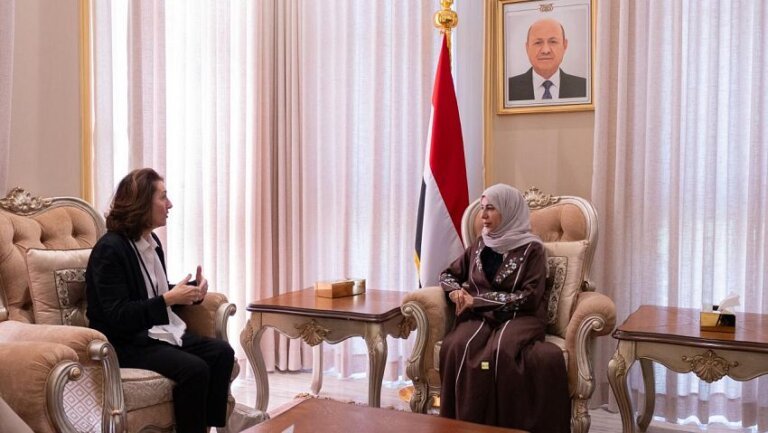
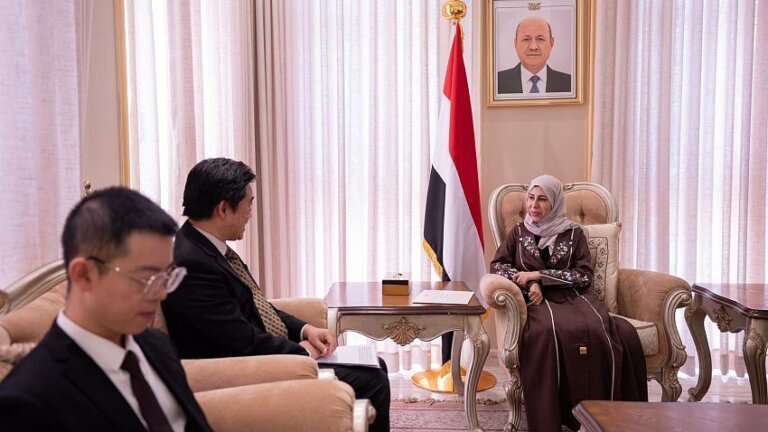
Thursday’s meeting formed part of a wider diplomatic push. Saba reported Yemeni officials holding parallel talks with Japanese and French counterparts in the same period, all pressing a similar message: that the government remains open to a negotiated settlement while asking partners to acknowledge the scale of the current escalation. No date has been announced for a resumption of formal negotiations.
About the Author