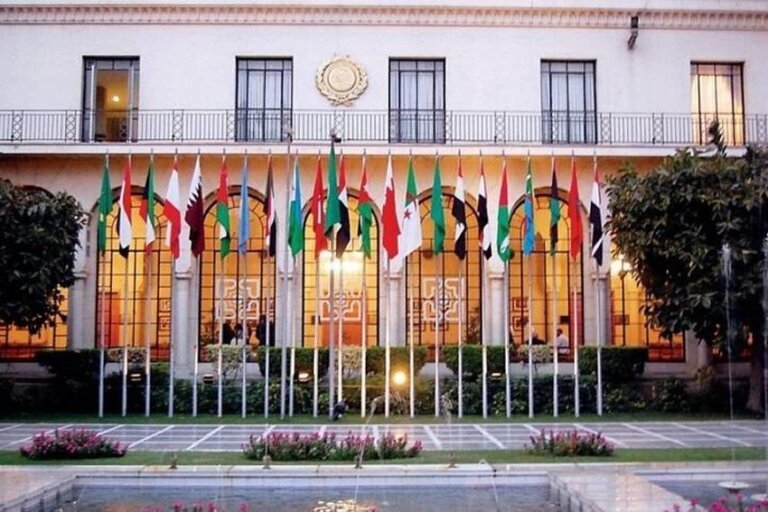
Russia urges immediate resumption of Yemen peace talks and condemns threats to shipping
 Yemen Herald News
Russia has called for an immediate resumption of negotiations on a peace roadmap for Yemen, arguing that international support should be offered without attaching further preconditions to a political dialogue that has been stalled for years.
The appeal was made by Maria Zabolotskaya, Deputy Permanent Representative of the Russian Federation to the United Nations, during the Security Council’s session on Yemen on 13 August. She told members that the prolonged stagnation of the peace process had left the Houthi movement to be drawn into a regional confrontation that she said the United States and Israel had initiated, and she argued that a political settlement will only be possible through dialogue that takes account of the interests of all the country’s leading political forces, including the Houthis.
Zabolotskaya offered the Council a sequence of events that differed from the one presented by most other speakers. She pointed to civilian aircraft landings at Sanaa on 3 July and at Hudaydah on 13 July as the catalyst for the current escalation, saying such flights should have been coordinated in advance with the official Yemeni authorities. She then described the response, in the form of bombing of the runway at Sanaa International Airport, as appearing excessive. Russia also pressed for a complete lifting of the blockade on Yemen.
On the maritime question the Russian position converged with those of members it otherwise disagreed with. Zabolotskaya said the freedom of maritime navigation must be ensured unconditionally and condemned threats to commercial shipping, language that aligns with Greece, Bahrain, France and the United Kingdom, even as those delegations differ over responsibility.
The UN Special Envoy for Yemen, Hans Grundberg, gave the Council a different reading of the same weeks. He described an unauthorised flight from Tehran towards Sanaa that was followed by airstrikes on the capital’s airport, missile attacks on Abha airport in southern Saudi Arabia and strikes on Saudi oil facilities. Both accounts identify the flights and the runway strike as pivotal; they diverge over whose conduct began the sequence, and neither version has been established by an independent inquiry.
Grundberg’s central warning was that Yemen faces a more serious risk of returning to large-scale conflict than at any point since the truce mediated by the United Nations in 2022. He said the conflict spreading across the Middle East had reached Yemen’s shores and that attacks on commercial vessels in the Red Sea and the Gulf of Aden risked deepening the country’s entanglement with the wider confrontation. He urged both the internationally recognised government and the Houthis to de-escalate immediately and work towards a ceasefire.
The envoy also pressed for what he called economic de-escalation, saying a resumption of oil exports accompanied by appropriate security guarantees would provide a critical source of income for Yemen’s recovery, and he repeated the demand that the Houthis release the 73 United Nations personnel still arbitrarily detained alongside colleagues from non-governmental organisations. He told members he remained convinced that a negotiated way out of the crisis is still available.
Other delegations framed the file around Iran. The United States representative said the Houthis had targeted more than seven Saudi-linked vessels in recent weeks along with energy infrastructure, and argued that this pointed to active cooperation with Tehran. Yemen’s own representative accused the group of turning the country into a platform for Iran’s Islamic Revolutionary Guard Corps and of attempting to build an air bridge between Iran and Sanaa to move munitions. The United Kingdom said Iran must end its long-standing support for the Houthis. Iran denies supplying the group with weapons.
The record of recent attacks was not in dispute. The Secretary-General’s latest report to the Council listed strikes on three vessels in July and early August: the Saudi-flagged Encelia on 22 July, the NCC Ghazal on 28 July and the Dominica-flagged Daisy on 5 August. On 20 July the Houthis announced what they called a naval blockade of Saudi Arabia. Three days before the Council met, a missile strike near Mokha hit the cargo ship Tihamah as it approached port, killing crew members and Yemeni rescuers.
The humanitarian stakes attached to that argument were set out at the same meeting by Tom Fletcher, the United Nations Emergency Relief Coordinator. He told members that six million people in Yemen are experiencing emergency levels of deprivation, the highest number recorded anywhere in the world, that nearly eleven million women and girls require humanitarian support, and that authorities in Marib have declared a health emergency in response to a measles outbreak. The country’s humanitarian appeal, he said, is barely a fifth funded.
Russia’s position carries weight beyond its rhetorical content because it holds a permanent seat and a veto. Moscow abstained when the Council adopted resolution 2722 in January 2024, the text demanding that the Houthis halt attacks on merchant shipping, and it has since consistently argued that the maritime crisis is a symptom of the wider regional war rather than a discrete problem the Council can solve on its own terms.
That framing sets the limits of what the Council can agree. Almost every member endorsed the general proposition that talks should resume; the disagreement is about sequencing, and specifically whether a ceasefire and an end to attacks on shipping must come before negotiations or can be negotiated alongside them. The session on 13 August closed without agreement on any new Council measure.
About the Author