Bahrain presses Security Council for firmer action on Houthi attacks at sea
 Yemen Herald News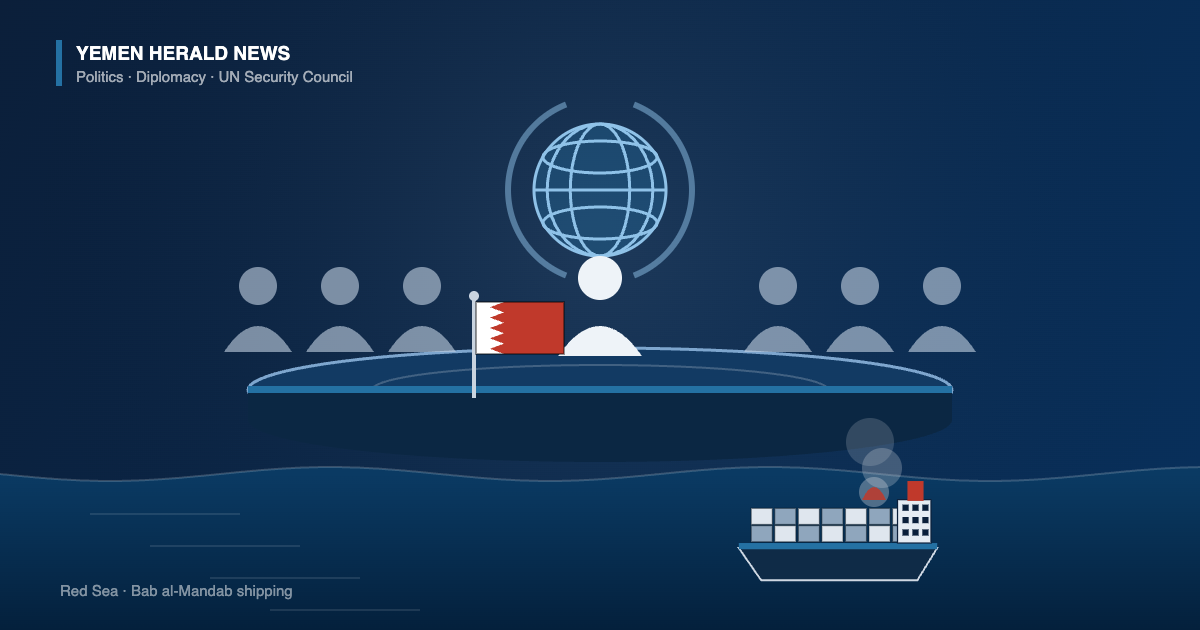
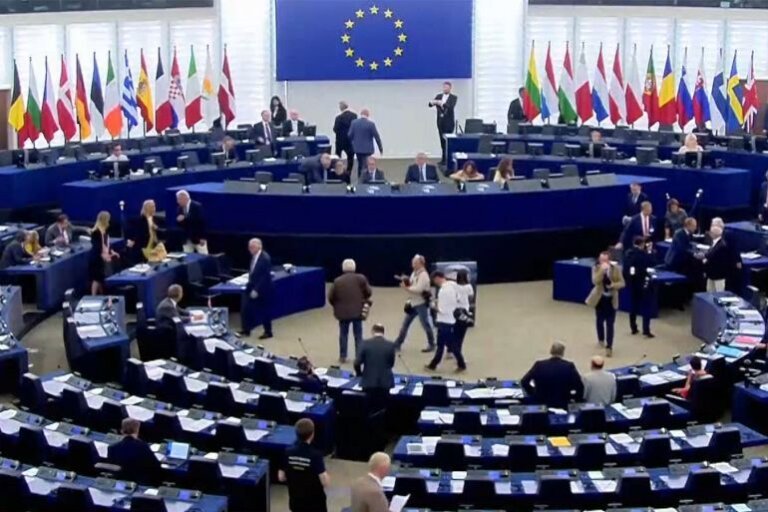
Bahrain has urged the United Nations Security Council to take a firmer stance against the Iran-aligned Houthi movement, telling members on 13 August that the Council must protect seafarers and hold accountable those responsible for attacks on vessels and shipping lanes off Yemen. Bahrain’s representative said that turning a blind eye to such attacks would only embolden those carrying them out, and condemned the group for pursuing foreign agendas at the expense of the lives, security and livelihoods of the Yemeni people.
The session, the Council’s 10208th meeting, came at one of the most precarious moments in Yemen since the United Nations brokered a truce in 2022. Hans Grundberg, the Secretary-General’s Special Envoy for Yemen, told the Council that the country now faces a more serious risk of returning to large-scale conflict than at any point since that truce took hold, and warned that the wider war spreading across the Middle East had reached Yemen’s coastline. Attacks on commercial vessels in the Red Sea and the Gulf of Aden, he said, risk deepening Yemen’s entanglement in the regional confrontation.
The most immediate trigger was the attack on the Tihamah, a small cargo vessel struck on 11 August as it transited the Bab al-Mandab Strait. Pakistan’s representative told the Council that three Pakistani crew members and one Indonesian crew member were killed. Yemen’s internationally recognised government said two members of the National Resistance Forces were also killed in a follow-up strike as they attempted a rescue, bringing the reported death toll to six. The Tihamah sails under the Tanzanian flag and is owned by Egyptian and Yemeni companies.
The Houthis claimed responsibility and said the ship was carrying military equipment. The Yemeni government rejected that account, saying the vessel was carrying commercial goods and food supplies, and accused the group of striking a second time once the search-and-rescue operation was under way. Several crew members and a rescue worker were injured in the fire that followed.
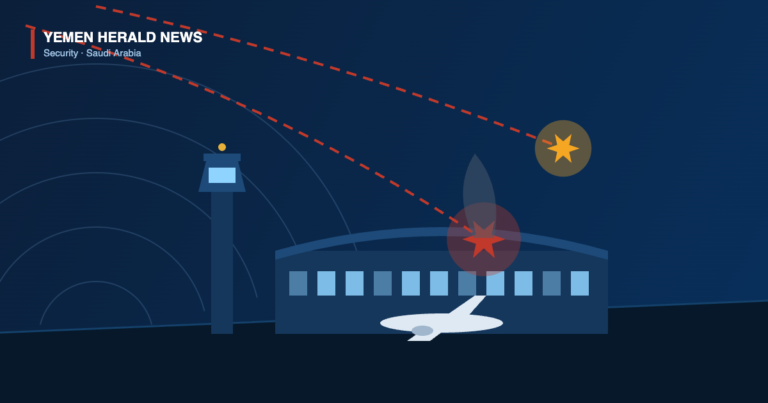
The attack capped weeks of escalation. Grundberg recounted a series of incidents in July, including an unauthorised flight from Tehran towards Sana’a that was followed by air strikes on Sana’a airport, missile attacks on Abha airport, and strikes on oil facilities inside Saudi Arabia. On 20 July the Houthis announced a naval blockade targeting Saudi-linked vessels transiting the Red Sea and Bab al-Mandab. The representative of the United States told the Council that more than seven Saudi-linked ships, along with key energy infrastructure, had been targeted in recent weeks.
Freedom of navigation dominated much of the discussion. Greece’s speaker described security in the Red Sea, the Bab al-Mandab Strait and the Gulf of Aden as a matter of critical international importance, arguing that recent attacks cannot be separated from wider maritime pressures in the region, including around the Strait of Hormuz. France recalled Council resolution 2722 of 2024, which called for respect for freedom of navigation, and said it would remain engaged through the European Union’s Operation Aspides, launched in 2024 to protect commercial shipping.
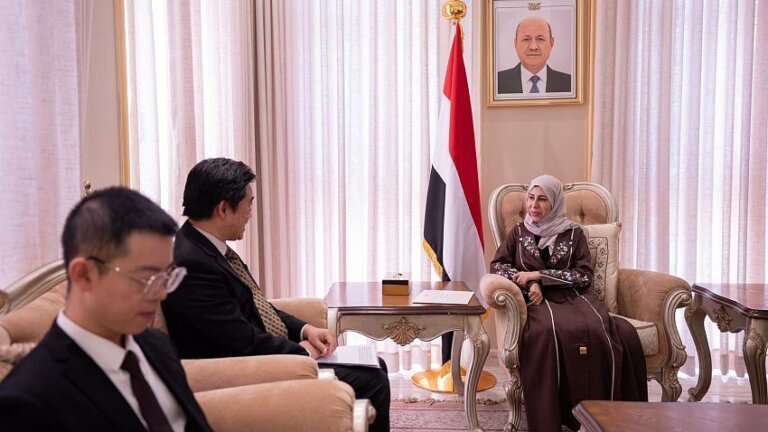
Saba reported that Bahrain also used the session to reaffirm its support for Yemen’s Presidential Leadership Council, the eight-member executive chaired by Rashad al-Alimi that has served as the internationally recognised authority since April 2022 and is based in the interim capital, Aden. Bahrain has consistently backed the Council alongside other Gulf states.
Detentions drew repeated criticism. Grundberg called on the Houthis to take urgent steps to release the 73 United Nations personnel still arbitrarily held, along with detained aid workers. Latvia’s representative described the continued detention of UN, diplomatic and civil society staff over a period of years as deeply disturbing and unacceptable.
The humanitarian picture presented to the Council was severe. Tom Fletcher, the Under-Secretary-General for Humanitarian Affairs, said six million people in Yemen are experiencing emergency levels of deprivation, the highest figure of any country, and that nearly 11 million women and girls require humanitarian support. Four in five women lack access to life-saving reproductive health services, he said, and an estimated three women die every day from preventable complications related to pregnancy. Authorities in Marib have declared a health emergency in response to a measles outbreak.
Funding is the binding constraint. Fletcher said this year’s humanitarian appeal is barely 20 per cent funded, warning that shortfalls translate directly into fewer food rations, closed clinics and services that disappear altogether. In 2025, he said, UN agencies reached an average of 5.3 million people each month.
Grundberg argued that a negotiated off-ramp remains possible, urging both the government and the Houthis to de-escalate immediately and work towards a ceasefire. He also pressed for economic de-escalation, saying a resumption of oil exports with appropriate security guarantees would give Yemen a critical source of revenue. Bahrain framed a durable settlement around the Gulf Cooperation Council initiative, the outcomes of the National Dialogue Conference and Security Council resolution 2216.
Not all members read the crisis the same way. Russia’s delegate argued that stagnation in the peace process had drawn the Houthis into a confrontation initiated by the United States and Israel, and called for negotiations that account for all leading political forces, including the Houthis. Yemen’s own representative accused the Houthis of turning the country into a platform for Iran’s Revolutionary Guard and of attempting to build an air bridge between Iran and Sana’a to move munitions, arguing that Council condemnations must be matched by action against weapons smuggling.
About the Author