IMO chief condemns deadly missile attack on cargo ship Tihamah off Yemen’s coast
 Yemen Herald News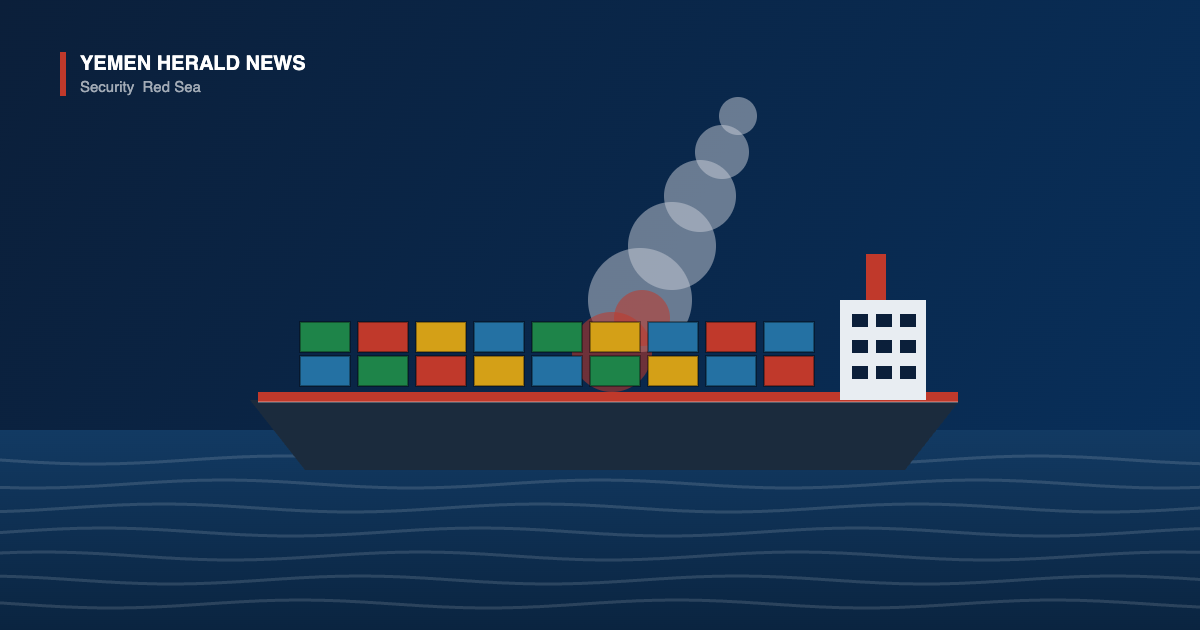
The Secretary-General of the International Maritime Organization has condemned the missile attack that killed several seafarers aboard a cargo ship off Yemen’s Red Sea coast, describing it as an indefensible assault on international shipping and warning that merchant crews are again paying the price for a conflict in which they play no part.
The vessel, the Tanzania-flagged and Egyptian-owned Tihamah, was hit as it approached port near Mokha, close to the southern end of the Bab al-Mandab Strait. Yemeni government officials said four crew members and two Yemeni rescuers were killed and around ten other people were wounded. The British maritime risk consultancy Ambrey and Yemeni sources reported that the dead included Pakistani and Indonesian nationals. Speaking at the United Nations Security Council on 13 August, Pakistan’s representative said three Pakistani crew members and one Indonesian crew member had been killed. The differing tallies reflect how rapidly the picture changed after the strike.
Crew members who survived told news agencies that a second missile struck while rescue work was already under way, adding casualties among the very people who had come to help. Their accounts describe fire spreading across the vessel and an evacuation carried out under continuing bombardment. Yemeni authorities attribute the attack to the Houthi movement, which controls much of the country’s north-west and has not been independently verified as the party responsible by international investigators.
In his statement, Arsenio Dominguez, the IMO Secretary-General, said it was a matter of sadness and regret that once more “innocent seafarers have lost their lives in an indefensible attack” on international shipping. He warned that continued violence against commercial vessels endangers crews and threatens the reliability of global supply chains, and he urged shipowners and ship operators to assess the risks thoroughly before sending vessels through the Bab al-Mandab Strait and other exposed waters. The organisation also renewed its call for the release of seafarers who remain in captivity as a result of attacks on shipping in the region.
The strait where the Tihamah was hit is one of the most consequential stretches of water in the world economy. It connects the Red Sea to the Gulf of Aden and, by most estimates, carries roughly twelve per cent of global trade. Any sustained threat there forces shipowners into a costly choice between accepting elevated war-risk insurance premiums or routing vessels around the Cape of Good Hope, a diversion that adds thousands of miles and days of sailing time to voyages between Asia and Europe. Much of the industry has already been operating under that calculation since attacks on commercial shipping in the Red Sea intensified in late 2023.
The attack on the Tihamah did not occur in isolation. Yemeni military sources said the port city of Mokha was struck over consecutive days by ballistic missiles, waves of drones and at least one explosive-laden boat, with local officials in Taiz Governorate reporting seven civilians killed and damage to the maritime pier and to facilities used for loading and unloading cargo and livestock. The Taiz authority described the assault as a war crime aimed at an economic and relief lifeline, a characterisation that reflects the government’s position rather than a finding by any court or independent inquiry.
At the Security Council session two days after the strike, the UN Special Envoy for Yemen, Hans Grundberg, told members that the country faces a more serious risk of returning to large-scale conflict than at any point since the UN-mediated truce of 2022. He said the wider regional confrontation had now reached Yemen’s shores and that attacks on commercial vessels in the Red Sea and the Gulf of Aden risked deepening the country’s entanglement in that confrontation.
The Secretary-General’s latest report to the Council recorded Houthi attacks against three vessels in July and early August: the Saudi-flagged Encelia on 22 July, the NCC Ghazal on 28 July and the Dominica-flagged Daisy on 5 August. On 20 July the group announced what it described as a naval blockade of Saudi Arabia, saying it would target Saudi-linked vessels transiting the Red Sea and the Bab al-Mandab. The United States representative told the Council that more than seven Saudi-linked vessels had been targeted in recent weeks.
Several Council members used the session to press for stronger protection of merchant crews. Greece’s speaker said the security of navigation in the Red Sea, the Bab al-Mandab and the Gulf of Aden was a matter of critical international importance. Bahrain’s representative argued that the Council must adopt a clear and firm stance to protect seafarers and hold those responsible to account. France recalled Security Council resolution 2722, adopted in 2024, which called for respect for freedom of navigation, and said it would remain engaged through the European Union’s Operation Aspides, launched that year to escort and protect commercial shipping in the corridor.
For Yemen the consequences are immediate and local as well as global. Mokha is one of the few functioning ports on the country’s Red Sea coast still operating outside Houthi control, and it handles commercial cargo and humanitarian relief for a population in which the United Nations estimates six million people are experiencing emergency levels of deprivation. Damage to its pier and handling facilities narrows an already constrained supply route at a moment when the humanitarian appeal for Yemen is barely a fifth funded.
About the Author