Yemen’s Mokha port halts operations after Houthi missile attacks kill seven
 Yemen Herald News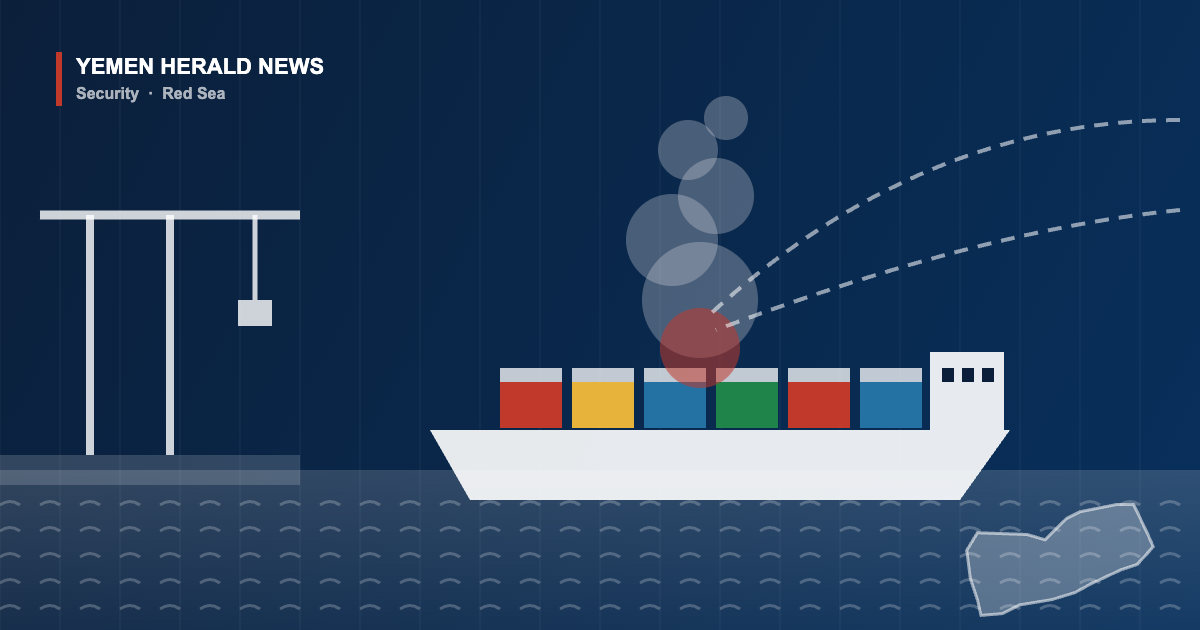
Yemen’s Mokha port has suspended commercial and maritime operations after being struck by more than 25 missiles in Houthi attacks over recent days, the facility’s director general said. Abdulmalik al-Sharabi told a news conference on Saturday that the strikes killed seven people and caused an estimated 16 million dollars in losses.
The port administration said those killed included four members of the port’s security detail and three port workers. Officials said the attacks destroyed several wooden vessels moored at the facility, along with a dredger that formed part of an expansion programme intended to deepen the approach channel and raise the terminal’s handling capacity. The full scale of the physical damage has not been independently assessed.
Mokha sits on Yemen’s Red Sea coast close to the Bab al-Mandab strait, the chokepoint linking the Red Sea to the Gulf of Aden and one of the busiest shipping corridors in the world. The port is held by forces aligned with the internationally recognised government and handles a smaller volume of cargo than Yemen’s main terminals at Aden and Hodeidah, but it has become an important secondary entry point for commercial goods and relief supplies into the country’s south-west.
The bombardment began in the second week of August and intensified over the following days. Yemen’s government said the Houthis fired six ballistic missiles at Mokha on Friday, killing at least four civilians and striking what it described as civilian, economic and maritime facilities. Further missile and drone attacks hit the outskirts of the city and a main road overnight into Sunday, killing four people and wounding eight, according to state media and the director of Mokha airport.
National Resistance forces, which control the surrounding coastal strip, said the cumulative barrage on Mokha city and its port amounted to as many as 40 ballistic missiles and 46 drones, alongside explosive-laden boats. That tally comes from one side of the conflict and has not been independently verified.
The Houthis have framed the campaign in military terms. The group’s military spokesman, Brigadier General Yahya Saree, said the strikes targeted Saudi military concentrations and weapons, as well as military boats belonging to what he called proxies and mercenaries, in Mokha. Government authorities and port officials reject that characterisation, saying Mokha is a civilian commercial facility whose berths, cranes and warehouses serve trade and humanitarian traffic rather than military shipping.
Government-aligned forces took Mokha from the Houthis in early 2017, and the city later became the base of the National Resistance, led by Tareq Saleh, a member of Yemen’s Presidential Leadership Council. The port’s partial revival was one of the more visible economic gains the internationally recognised government claimed during the years of relative calm that followed the truce of April 2022.
The economic consequences of the shutdown fall first on the workforce. Port officials said roughly 1,300 employees have been left without income while operations are suspended, in a city where the port is the dominant employer. The closure also freezes a rehabilitation programme valued by officials at about 130 million dollars, which had been intended to modernise the terminal’s infrastructure and expand what it can handle. Neither the employment figure nor the value of that programme could be independently confirmed.
The wider commercial effect depends on how long the suspension lasts. Mokha’s throughput is modest by regional standards, but its position near Bab al-Mandab means attacks there register quickly with shipowners and insurers already pricing risk into Red Sea voyages. Vessels calling at Yemeni Red Sea ports have faced elevated war-risk premiums for much of the past three years, and a sustained threat to a government-held terminal adds a further deterrent for operators weighing whether to transit the strait at all.
For aid agencies the closure narrows an already limited set of options. Humanitarian cargo bound for Yemen’s south-west can be routed through Aden, but the overland journey from Aden towards the Taiz highlands is long, costly and exposed to front-line closures. Mokha shortened that leg considerably. Its suspension pushes more traffic onto roads that have themselves been disrupted by the renewed fighting inland.
The attacks form part of the most serious escalation since the United Nations-brokered truce slowed the war in April 2022. That agreement was never converted into a political settlement, and mediation has been stalled for months. Earlier in August, Houthi strikes on military camps in Marib and Hadramout killed at least 30 government soldiers, the deadliest single episode of the conflict in years. Fighting has since resumed across several governorates, including Marib, al-Jawf, al-Dhalea and Taiz.
Yemen’s military said it carried out 181 operations against Houthi positions across several governorates over the weekend of 15 and 16 August, and its command has promised a tough response to the strikes on the port city. The Houthis, who have held Sanaa and much of the north since September 2014, acknowledged four dead over the same period without giving details of the circumstances.
Port officials have not said when commercial traffic might resume, and any restart is likely to depend less on repairing quays than on whether the missile threat over the city recedes. Shipping lines and insurers will want assurance that a vessel lying alongside at Mokha is not itself a target before cargo returns in volume. Until then the terminal stands idle at a moment when the country it serves can least afford another closed door.
About the Author