Yemeni forces repel Houthi push on Taiz northern front as Mokha comes under missile attack
 Yemen Herald News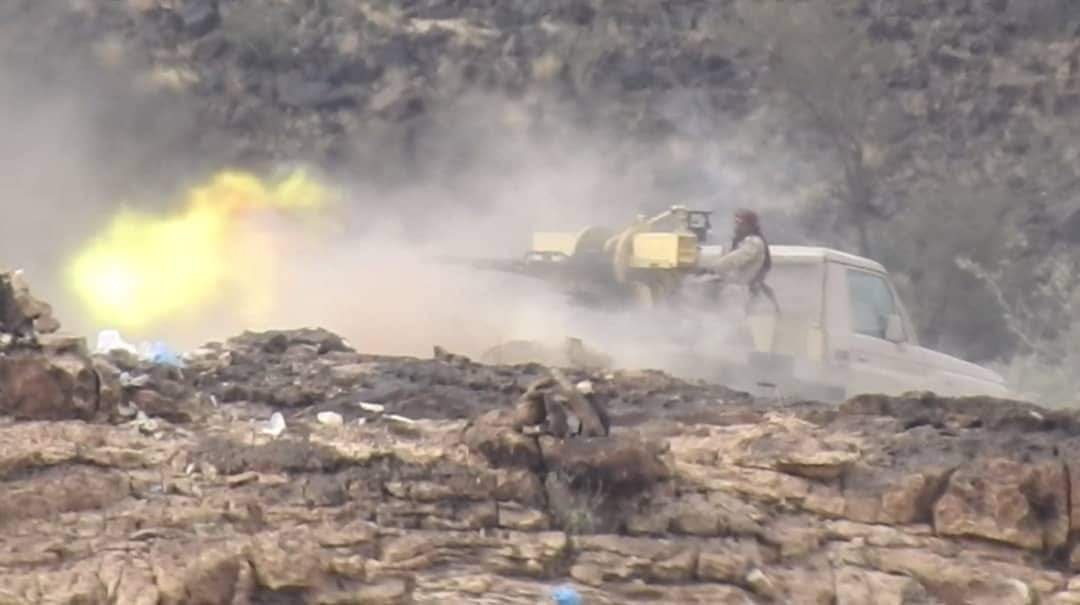
Yemeni government forces said on Sunday that they had repelled an attempt by the Houthi movement to mass fighters and reinforcements on the northern front of Taiz city, in what commanders described as one of the more determined pushes on that axis in recent weeks. Military sources attached to the Taiz Axis said the assault was broken up before it could consolidate, and that Houthi units sustained casualties and lost equipment as they withdrew. The account could not be independently confirmed, and the Houthi authorities in Sanaa have given a different version of the fighting along the same front.
Officers on the axis said the response combined direct engagement with sustained observation of Houthi positions, allowing artillery and drone crews to strike concentrations of fighters before they could move forward. Government forces reported shelling Houthi gatherings on the Hameer front in Maqbanah district, west of Taiz city, and on the Al-Aqrud front in Sabir al-Mawadim, as well as the Al-Mahroor area to the north-west of the city. Separately, the army said drone strikes on the Maqbanah front killed three Houthi fighters, among them field commanders.
The fighting was accompanied by an intensification of Houthi artillery fire on villages inside Maqbanah district. Local residents and the government media office in Taiz reported that around eleven shells landed on and near the settlements of Al-Ashmalah and Humair, along with sparsely populated ground nearby. No casualties were reported from that bombardment, but residents described damage to houses and farmland. Maqbanah has been one of the most persistently shelled rural districts of Taiz governorate, and its farming communities have repeatedly been displaced by exchanges of fire along a largely static front line. Aid access to the district has been intermittent for years.
On the coast, the Houthis renewed their bombardment of Mokha, the Red Sea port city in western Taiz governorate. The Yemeni army said the latest salvo involved two ballistic missiles and six drones. It followed a far larger assault on 9 August, when the army said the group fired 25 ballistic missiles at the city alongside successive waves of drones and an explosive-laden boat, killing seven civilians. A further attack on 14 August killed at least four people, according to the internationally recognised government.
The significance of Mokha is disproportionate to its size. The port sits on the Red Sea approach to the Bab al-Mandab strait, one of the most heavily used maritime chokepoints in the world, and it serves as a logistics hub for forces along Yemen’s west coast. Sustained strikes on the city threaten both the aid and commercial traffic that moves through it and the shipping lanes beyond, which have already been disrupted by Houthi attacks on vessels transiting the southern Red Sea. Insurers have repeatedly adjusted war-risk premiums for the corridor over the past two years.
The clashes in Taiz form part of a broader escalation that has pushed Yemen closer to full-scale war than at any point since the United Nations brokered a truce in April 2022. Government forces say Houthi units have reinforced positions and built new fortifications along several combat axes in recent days, and have reported movements of reinforcements towards the eastern front of the governorate. Fighting has flared at the same time in Marib, al-Jawf, Hajjah and al-Dhalea. Analysts describe the current period as carrying the highest risk of a return to large-scale conflict since the truce took effect.
In Marib, the government said Houthi forces fired missiles into areas close to camps housing displaced families, an allegation that drew condemnation from several governments. Marib has absorbed hundreds of thousands of people displaced from northern Yemen, and its camps sit near front lines that had been largely frozen since 2022. The government says the recent strikes on the city and its outskirts caused civilian casualties; the Houthis have generally described their operations as directed at military targets.
Both sides have accused the other of initiating the current round. Officials in Aden say the Houthis used the years of relative calm to rebuild and redeploy, while the group’s leadership in Sanaa has framed its operations as a response to government and coalition activity. Independent verification of front-line claims remains difficult, as access for journalists and monitors to contested areas of Taiz is severely restricted and casualty figures released by either side are rarely corroborated by neutral observers.
The renewed fighting compounds a humanitarian emergency that United Nations agencies already describe as among the most severe anywhere. More than 18 million people in Yemen are estimated to need some form of assistance, and roughly 4.5 million remain internally displaced. Aid organisations have warned that fresh displacement from Taiz and Marib would strain a response that is chronically underfunded, and that renewed hostilities restrict the movement of convoys along routes that were only tenuously reopened after the truce.
Politically, the pressure falls on the Presidential Leadership Council, the body based in Aden that has headed the internationally recognised government since 2022. Its constituent factions, which include forces loyal to the Southern Transitional Council and units deployed on the west coast, have often operated with considerable autonomy, and analysts have long identified that fragmentation as a structural weakness. Whether the council can present a unified military and diplomatic front will shape how far the current escalation runs before either side returns to negotiations.
About the Author