Yemen’s Prime Minister Relaunches the Official Gazette in Aden After an 11-Year Suspension
 Yemen Herald News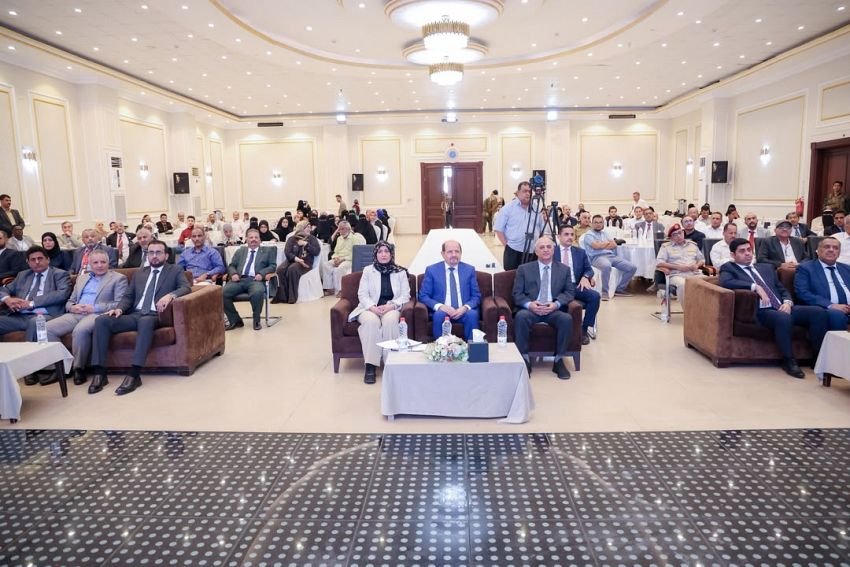
Yemen’s Prime Minister, Dr. Shaya al-Zindani, launched the reissue of the Republic’s official gazette in the interim capital Aden on Thursday, restoring a publication that had been suspended for more than 11 years. The state news agency Saba reported that the gazette stopped appearing after the Houthi takeover of state institutions and the war that followed at the end of 2014. Its return gives the internationally recognised government a formal channel through which laws, decrees and regulations can once again be entered into the public record.
The launch took place at a ceremony organised by the Ministry of Legal Affairs under the slogan “The Official Gazette… The Reference for Legislation and the Rule of Law”. In a speech marking the occasion, al-Zindani said the return of the gazette carried what he called great legal and institutional value, and framed the step as considerably more consequential than the resumption of a routine government bulletin.
The launch, he said, amounted to “the reopening of the legal and legislative window of the state”, describing the gazette as the official platform for publishing laws, decisions, regulations and decrees. The formulation reflects a persistent concern of the Aden-based government, which has spent much of the past decade attempting to demonstrate that it retains functioning institutions despite having lost control of the capital and much of the north.
Al-Zindani went on to argue that the resumption showed the Yemeni state and its institutions remained capable of restoring their role whatever the circumstances, and said that what he described as the Houthi militia’s attempt to impose authority by force of arms could never become a substitute for constitutional legitimacy and state institutions. That characterisation is the government’s own; the Houthi authorities in Sanaa maintain their own administrative structures and reject the Aden government’s claim to exclusive legitimacy.
The Prime Minister also presented the gazette as an instrument of transparency, saying the government regards it as one of the mechanisms upholding the right to know and to access information. He argued that the more regularly and clearly laws and decisions are published, the less room remains for confusion and unchecked interpretation, adding that accountability is strengthened and the application of law becomes more consistent when the record is publicly available.
The emphasis on publication is not merely symbolic. In most legal systems an official gazette performs a specific constitutional function: it is the point at which a statute or decree becomes formally knowable and, in many jurisdictions, the moment it takes legal effect. Where that channel lapses, courts, ministries, lawyers and businesses are left relying on circulated copies, informal notification or press reports to establish what the law actually says at any given moment.
That is broadly the situation Yemen has faced since the end of 2014, when the Houthi movement consolidated its hold on Sanaa and the government was displaced. Ministries were split between rival administrations, archives were interrupted, and the ordinary machinery of legislative publication ceased. Decrees continued to be issued by the recognised government, including presidential decrees on senior appointments, but without a consolidated official record of the kind the gazette is designed to provide.
The recognised government has operated primarily from Aden since then, with the Presidential Leadership Council, chaired by Rashad al-Alimi and formed in April 2022, serving as the executive authority. Its presence in the city has been intermittent at times, and its institutions have had to be rebuilt in parallel with those that remain in Sanaa. Rebuilding the legal record ranks among the less visible parts of that effort, and among the more technically demanding.
The practical consequences of the gap have been felt well beyond government offices. Commercial actors, aid organisations and litigants have had limited means of confirming which regulations are current, which have been amended and which were superseded during a decade in which two administrations issued overlapping instructions. Restoring a single authoritative publication does not resolve that fragmentation, but it establishes a reference point from which subsequent legislation can be traced.
Al-Zindani became prime minister in January 2026, having previously served as foreign minister. His government has undergone at least one further reshuffle since, including the appointment in July 2026 of Dr. Afrah al-Zouba as minister of foreign affairs and expatriates, the first woman to hold that portfolio in Yemen. The gazette launch fits a wider pattern of institutional restoration measures the cabinet has sought to publicise.
The Ministry of Legal Affairs, which organised the ceremony, is the body responsible for drafting and reviewing legislation and for advising the cabinet on legal questions. Placing the relaunch under its authority signals that the gazette is intended to operate as a formal legislative instrument rather than a communications exercise run out of the prime minister’s office, though the practical arrangements for compiling and verifying its contents were not detailed in the official account of the event.
Saba’s account did not specify how frequently the gazette will be issued, whether past issues will be reconstructed for the period since 2014, or how it will be distributed in territory outside government control. Those questions will determine how much practical effect the relaunch has. For now the government has re-established the instrument itself, and the test of the decision will be whether publication proves regular and comprehensive enough to serve the purposes al-Zindani set out.
About the Author