Yemen’s foreign ministry welcomes R4 statement condemning Houthi attacks on Saudi Arabia
 Yemen Herald News
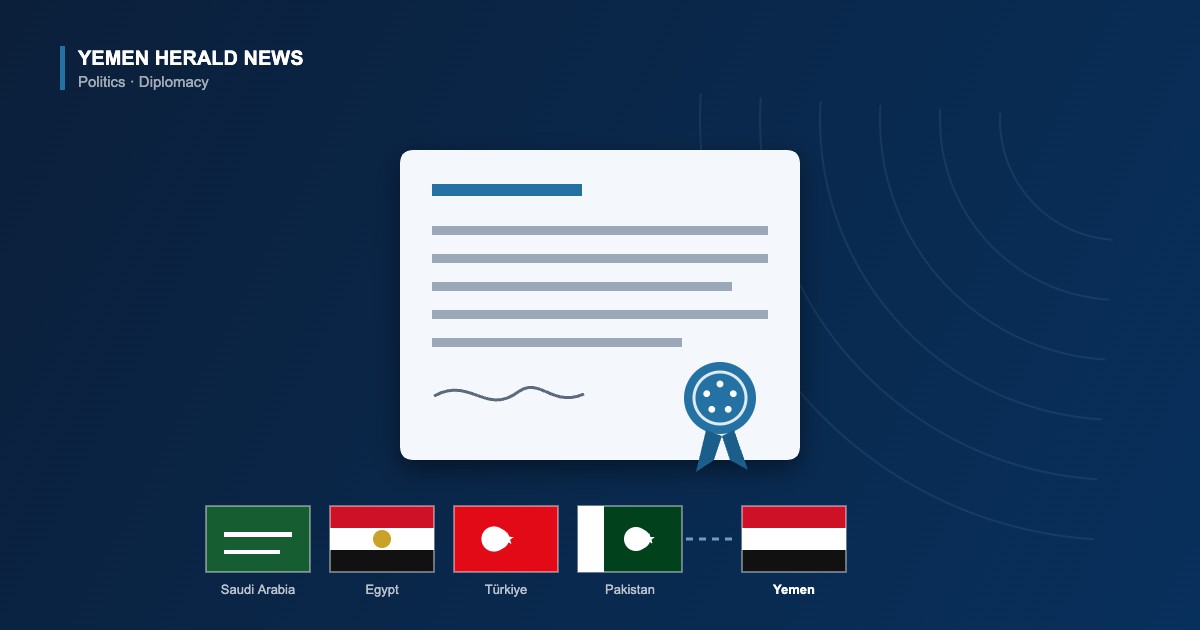
ADEN, Yemen — Yemen’s foreign ministry welcomed a joint statement by the foreign ministers of Saudi Arabia, Egypt, Türkiye and Pakistan condemning Houthi attacks on the kingdom and on international shipping.
The Ministry of Foreign Affairs and Expatriates issued its response on Saturday.
The four ministers had met in Istanbul the previous day.
They met as the Regional Four, a grouping also known as the R4.
Saudi Foreign Minister Prince Faisal bin Farhan, Egyptian Foreign Minister Badr Abdelatty and Turkish Foreign Minister Hakan Fidan attended, along with Pakistan’s deputy prime minister and foreign minister, Ishaq Dar, The National reported.
Their statement condemned Houthi attacks on Saudi Arabia, on civilian infrastructure and on commercial shipping in the Red Sea and Bab al-Mandab, according to a report by Al Arabiya English.
It called for an immediate end to the attacks and for a return to the political process.
The ministers expressed solidarity with the Yemeni government and with Saudi Arabia.
They warned that disruption to shipping lanes could affect global food security and energy supplies.
Bab al-Mandab separates Yemen from the Horn of Africa and carries traffic between the Gulf of Aden and the Red Sea.
The ministers called for the swift restoration of safe and uninterrupted passage through the Strait of Hormuz.
The statement also addressed the Palestinian question. It said the Israeli occupation remained a fundamental source of regional instability, Al Arabiya English reported.
The ministers backed Palestinian self-determination and an independent state on the 1967 borders, with East Jerusalem as its capital.
They voiced concern about violence against Palestinians, settlement expansion in the West Bank and Jerusalem, and attempts to alter the legal status of Jerusalem and the character of the city.
They urged implementation of the two-state solution in line with relevant UN resolutions.
Addressing what it called the US-Israeli war on Iran, the statement said dialogue and diplomacy were needed to prevent further escalation. It called for a return to the Islamabad Memorandum of Understanding.
Yemen’s foreign ministry said the Istanbul meeting reflected positions supportive of the government’s efforts to restore state institutions and to preserve the country’s sovereignty and unity.
It said the security of Yemen, Saudi Arabia and the region was interconnected.
The ministry reaffirmed what it called full solidarity with Saudi Arabia in facing Houthi attacks.
It backed the kingdom’s right to protect its security and sovereignty.
The ministry described Saudi Arabia as the leader of the Coalition to Support Legitimacy and thanked it for supporting the government.
It called the attacks terrorism. That wording is the Yemeni government’s own characterisation.
The ministry set out three references for its position: the Gulf Initiative and its executive mechanism, the outcomes of the Comprehensive National Dialogue Conference, and UN Security Council resolutions, particularly Resolution 2216.
It praised the four countries’ diplomatic efforts to protect freedom of navigation and maritime corridors.
It called for continued consultation and coordination on regional issues.
The account of Yemen’s position rests on the ministry’s own statement, carried by Saba, the state news agency of the internationally recognised government, and relayed by Yemeni outlets. Yemen Herald found no independent confirmation of it beyond the ministry’s own text.
Türkiye signed a defence pact with Saudi Arabia in August. The agreement was submitted to the Turkish parliament this month.
Turkish Defence Minister Yasar Guler said his country did not expect its troops to fight the Houthis.
“We absolutely do not foresee entering into any conflict with the Houthis,” Guler said, in remarks reported by The National.
He said any military support for Saudi Arabia would be intended to add deterrence.
He said Türkiye would assess any Saudi request and decide the scope of assistance after parliament ratified the pact.
The pact’s second article covers attacks by another country or a group of countries, wording that has raised questions over whether it would apply to Houthi strikes, The National reported.
Fighting continued over the weekend. Houthi-run media said Saudi-led coalition aircraft struck Sanaa and the port of Mocha on Saturday.
The Xinhua news agency reported strikes on both.
The coalition said it destroyed two ballistic missiles fired toward Yanbu and Taif. Saudi civil defence said debris from intercepted missiles fell in the Mecca and Medina regions.
The Houthi military spokesman, Yahya Saree, claimed a series of attacks on Saudi targets. The coalition did not confirm those claims.
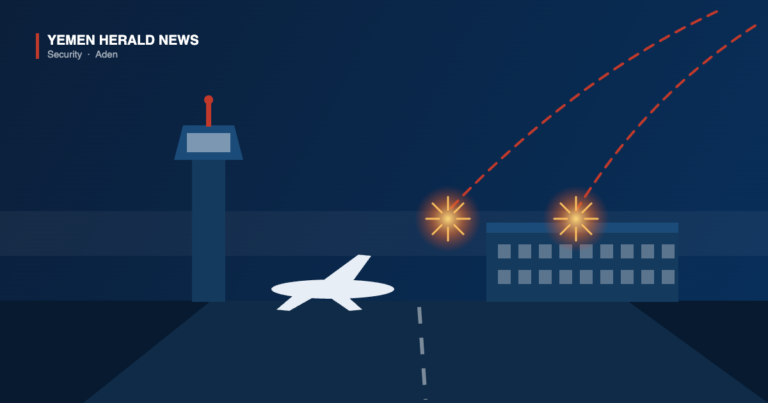
Yemen’s interior ministry said missiles struck coast guard buildings in Aden.
The Gulf Initiative was signed in Riyadh in November 2011. Saleh transferred power to his deputy, Abd Rabbu Mansour Hadi, under the agreement.
The Comprehensive National Dialogue Conference ran in Sanaa from March 2013 to January 2014. It was convened under the initiative’s executive mechanism.
Resolution 2216 was adopted in April 2015 with 14 votes in favour and one abstention. It demanded that the Houthis withdraw from seized areas and imposed an arms embargo targeting the movement’s leaders.
The United Nations humanitarian plan for Yemen published in March 2026 counted more than 22 million people in need of assistance. It recorded 18.3 million as acutely food insecure and sought 2.16 billion dollars to reach 12 million people.
The R4 ministers also held bilateral talks on the sidelines of the Istanbul session, The National reported.
About the Author